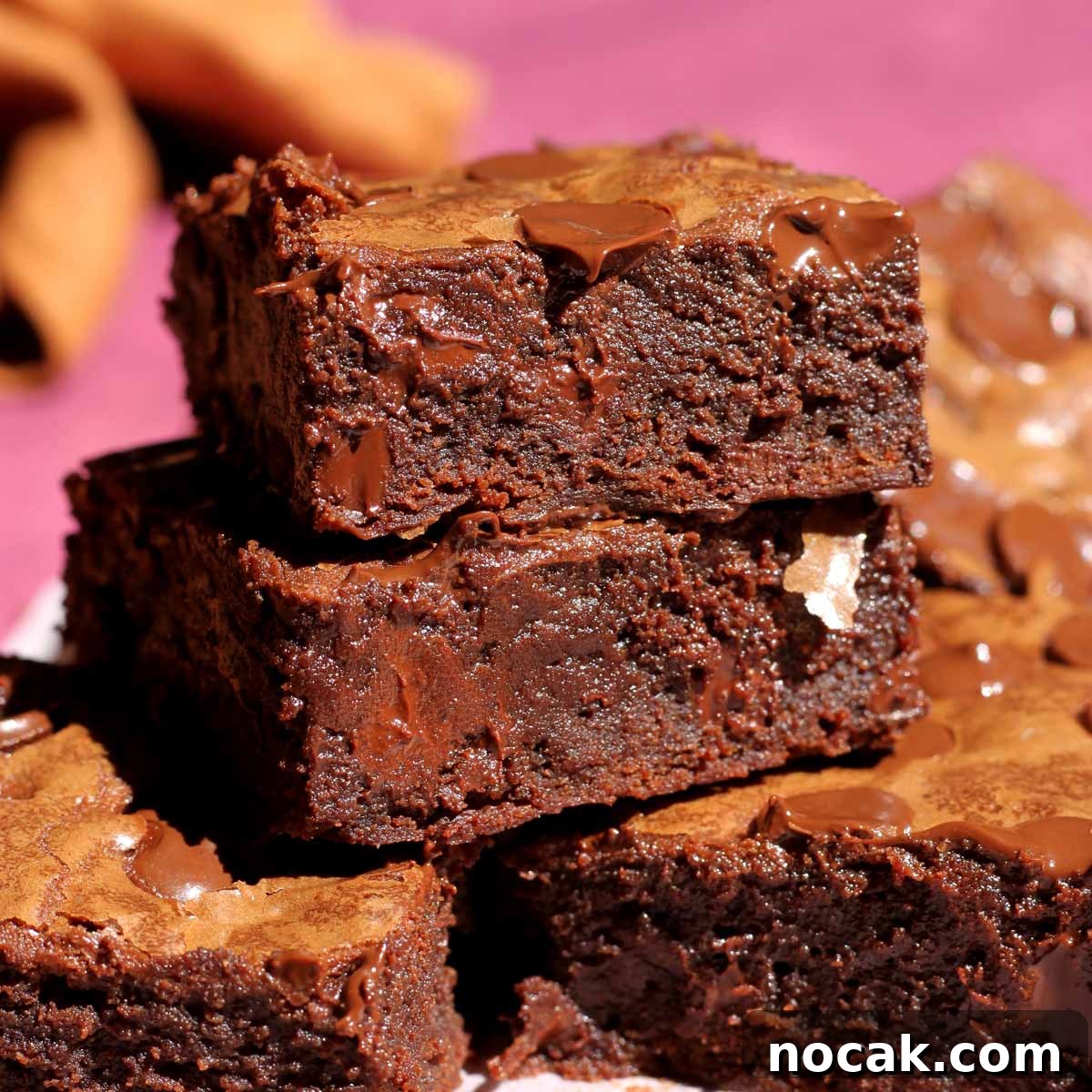
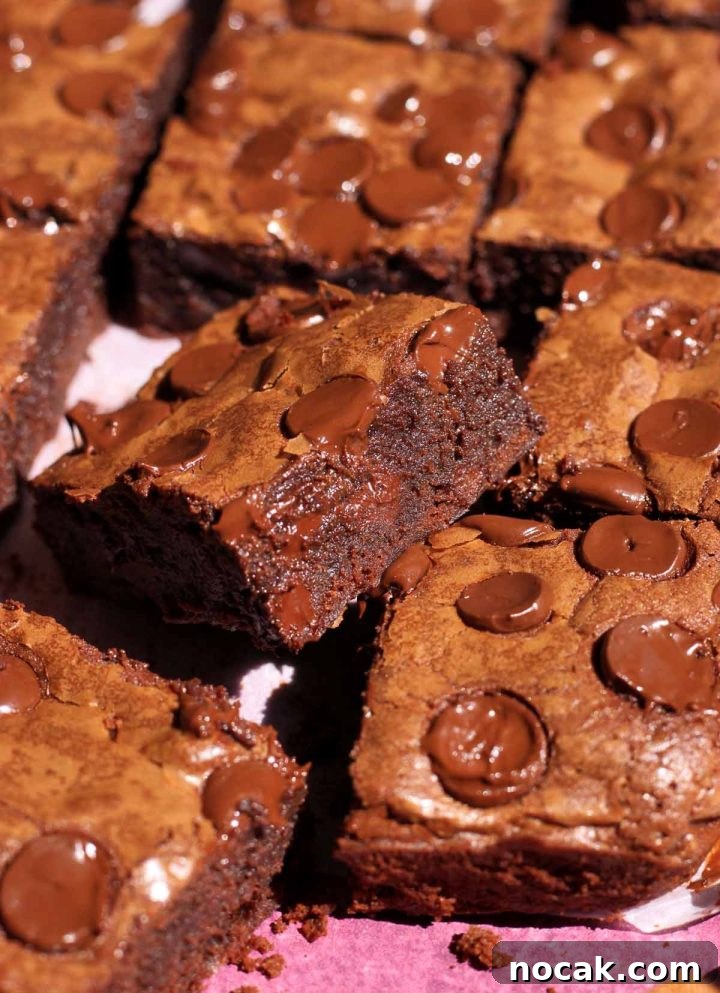
I realize that’s a bold claim, but these Fudgy Low Sugar Brownies deliver the classic dense, moist brownie texture using almost half the sugar of typical recipes. Sugar plays functional roles beyond sweetness, so reducing it requires technique — but this recipe preserves a shiny crinkly top and an ultra-fudgy interior while using only about 115 g (½ cup + 1 tbsp) of granulated sugar.
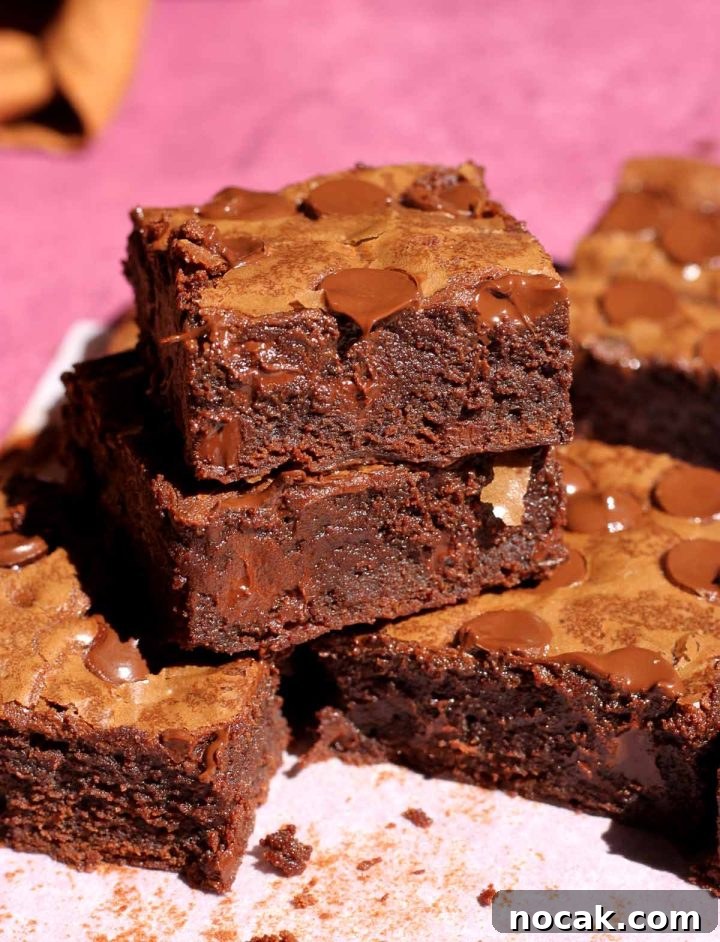
WHY YOU WILL LOVE THIS RECIPE
- Easy, no mixer required – This is one of the simplest brownie recipes. Six ingredients, five straightforward steps, one bowl and a whisk (or a hand mixer if you prefer).
- Lower sugar – The recipe uses just over ½ cup (115 g) of sugar, nearly half the amount found in many classic brownies. Follow the method closely to keep the fudgy texture and shiny crust.
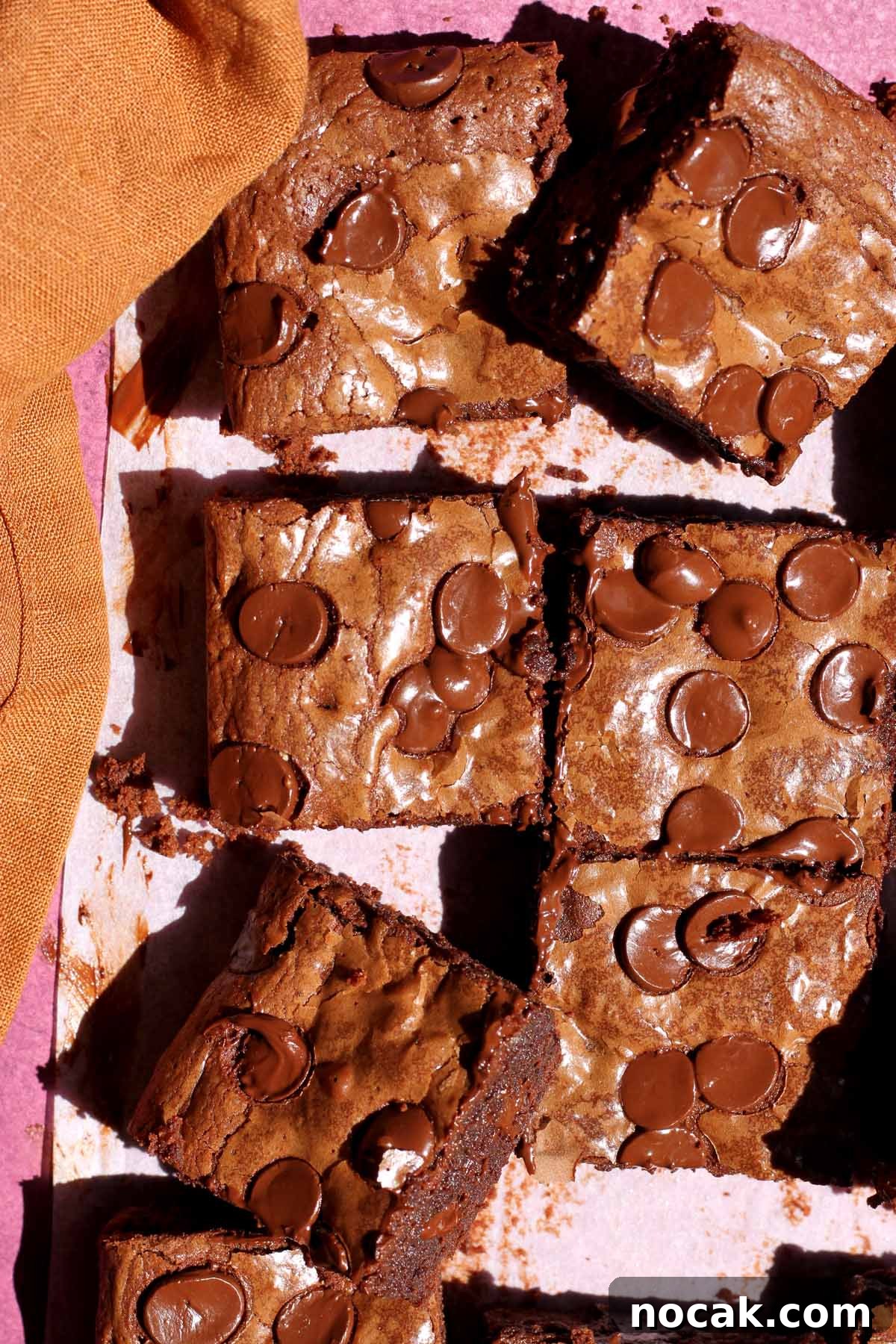
- Shiny crust – You can still achieve that crackly, glossy top even with reduced sugar by dissolving the sugar into the eggs before whipping.
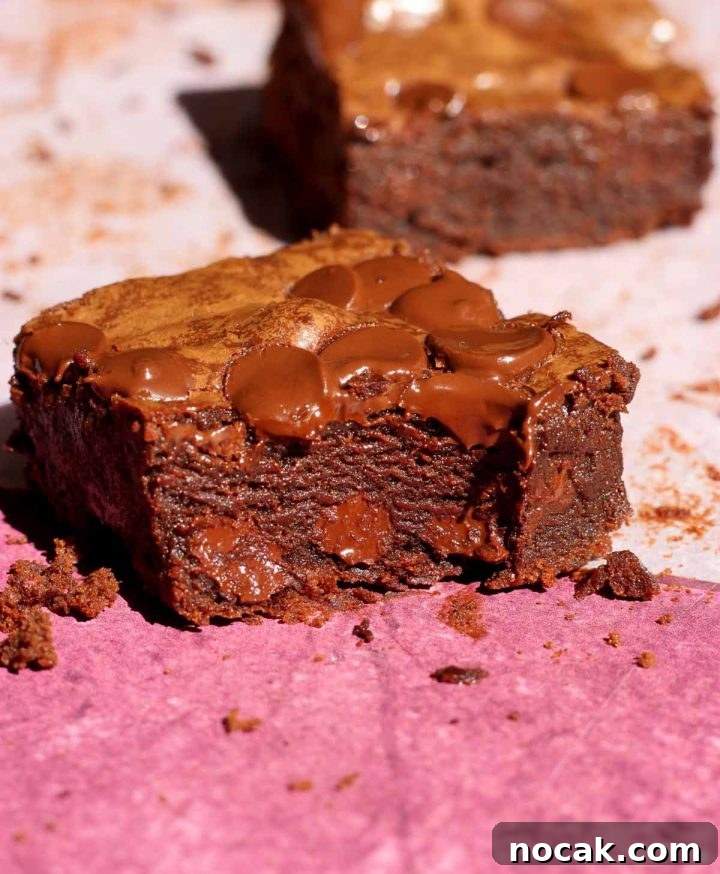
- Fudgy, moist texture – These brownies are intensely chocolatey, dense and moist, staying soft for days when stored properly. They are not cakey and rely on a combination of quality chocolate, a small amount of flour and careful baking.
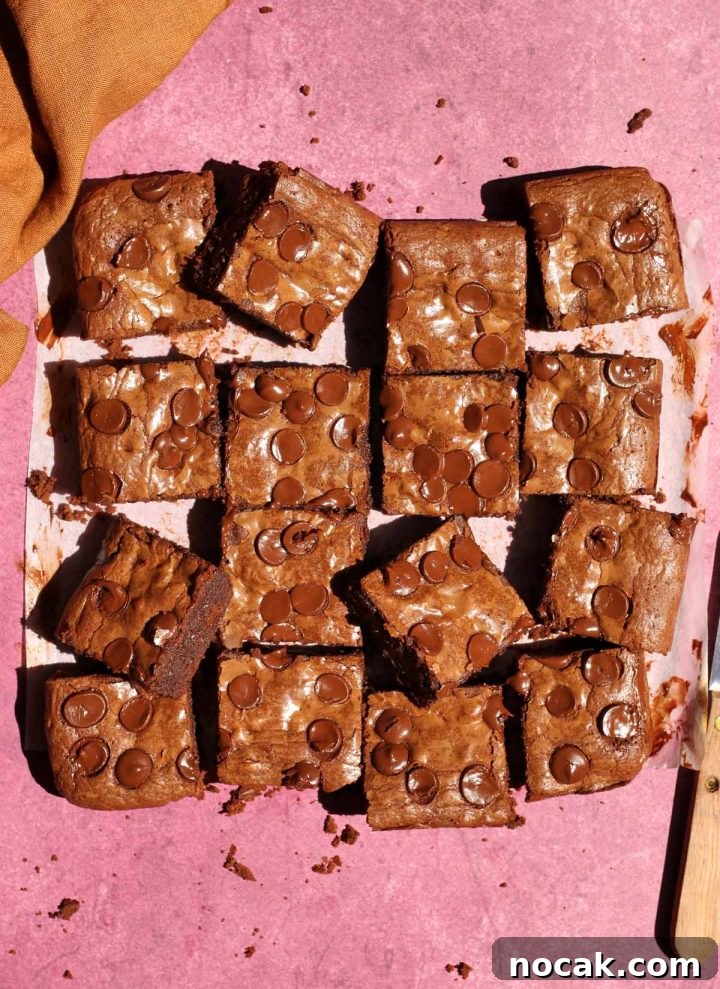
INGREDIENT NOTES
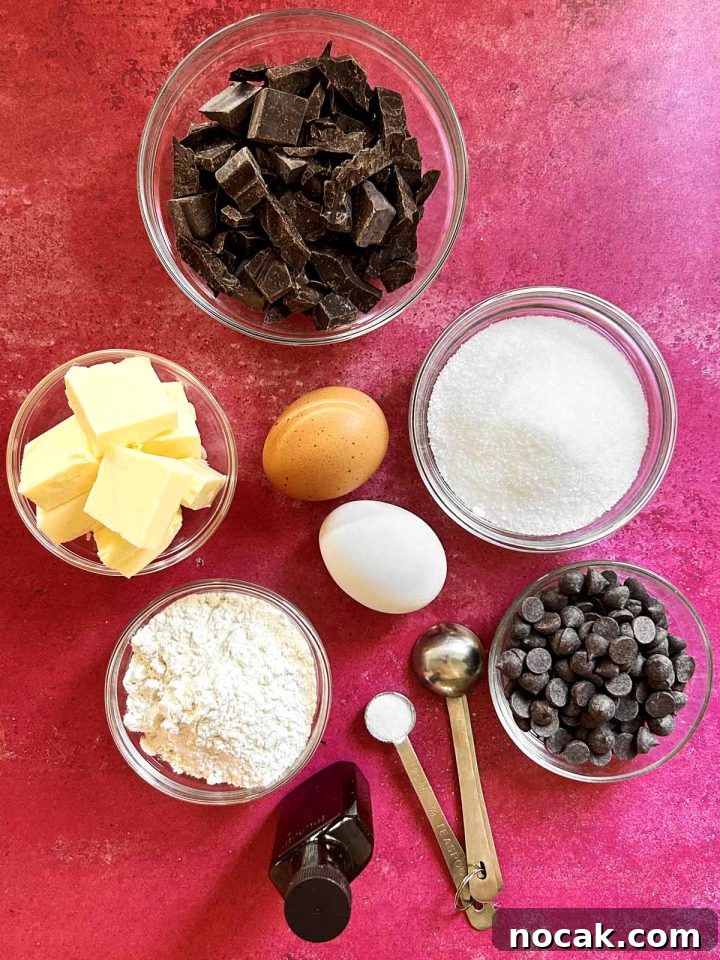
Below are notes about key ingredients. The full quantities are included in the recipe card further down.
- All-purpose flour – Use regular unbleached all-purpose flour for a dense, fudgy crumb.
- Pure vanilla extract – Vanilla brightens the chocolate flavour. Use a good-quality pure vanilla for best results.
- Unsalted butter – Butter gives brownies a rich, chewy, fudgy texture.
- Granulated sugar – Fine white granulated sugar works well. If you have caster sugar (superfine), it dissolves more readily and helps create the shiny crust.
- Eggs – Two large eggs provide structure and moisture.
- Dark chocolate – Use a chocolate between 50% and 70% cocoa solids. Bittersweet or semisweet dark chocolate yields the best intense chocolate taste; avoid milk chocolate because it contains too much sugar and too little cocoa.
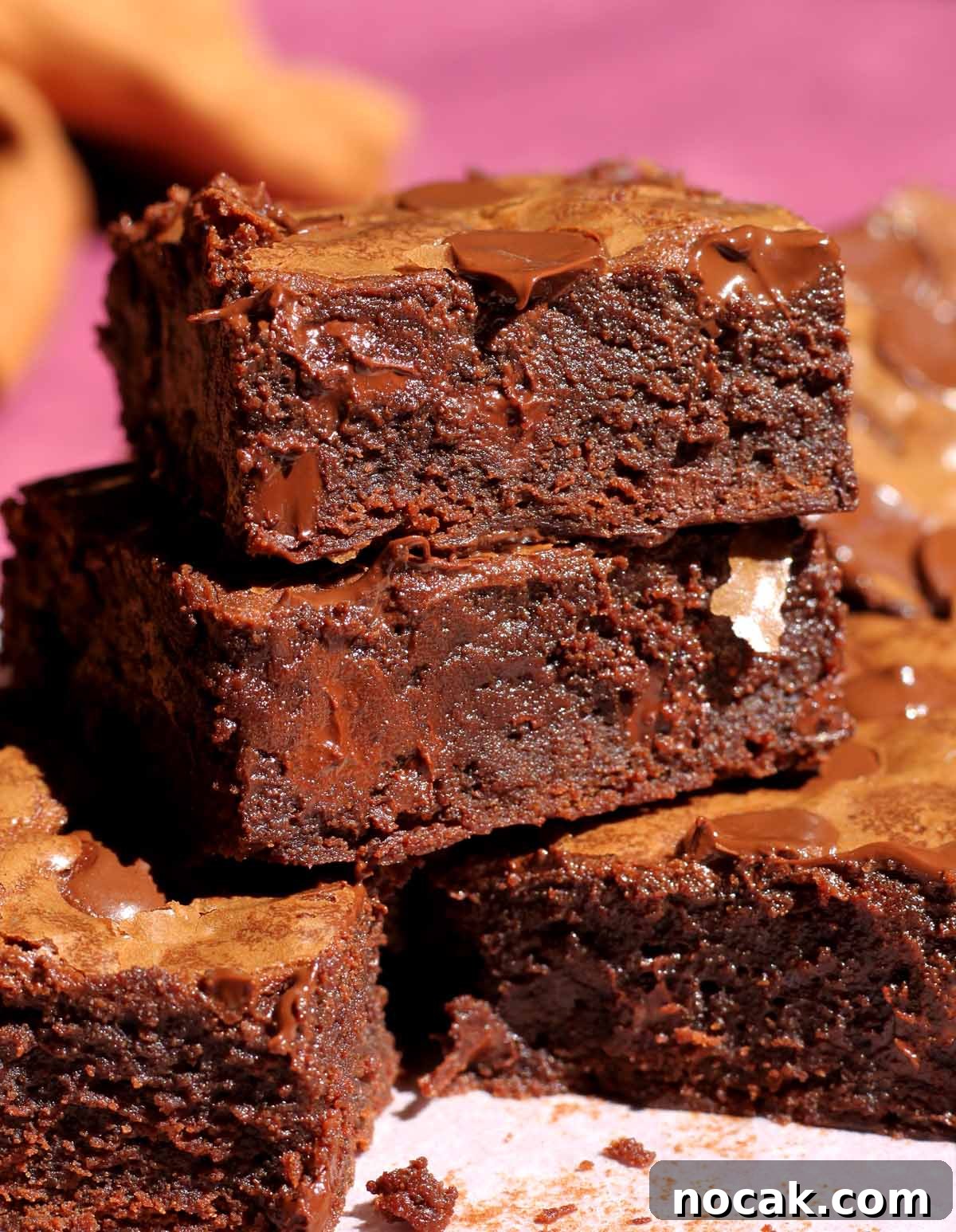
STEP-BY-STEP INSTRUCTIONS
- Step 1 – Melt the chocolate: Gently melt chopped dark chocolate with butter in a heatproof bowl set over simmering water, stirring until smooth and glossy. You can also microwave in short bursts, stirring often to prevent burning.
- Step 2 – Dissolve the sugar: Combine the eggs and sugar in a heatproof bowl set over a saucepan with about ½ inch of simmering water. Whisk constantly until the sugar is fully dissolved and the mixture feels smooth between your fingers (no grit).
- Step 3 – Whip the eggs: Use a hand mixer or stand mixer with the whisk attachment to beat the egg-sugar mixture on high for 2–3 minutes until pale, thick and ribboning. When the mixture falls from the beaters it should form a slowly disappearing ribbon.
- Step 4 – Combine chocolate and eggs: Add the warm chocolate-butter mixture to the whipped eggs, mixing until combined. Stir in vanilla and salt.
- Step 5 – Add the dry ingredients: Fold in the flour until smooth and evenly incorporated. Fold in chocolate chips if using. Pour the batter into the prepared pan and smooth the top; sprinkle extra chips if desired.
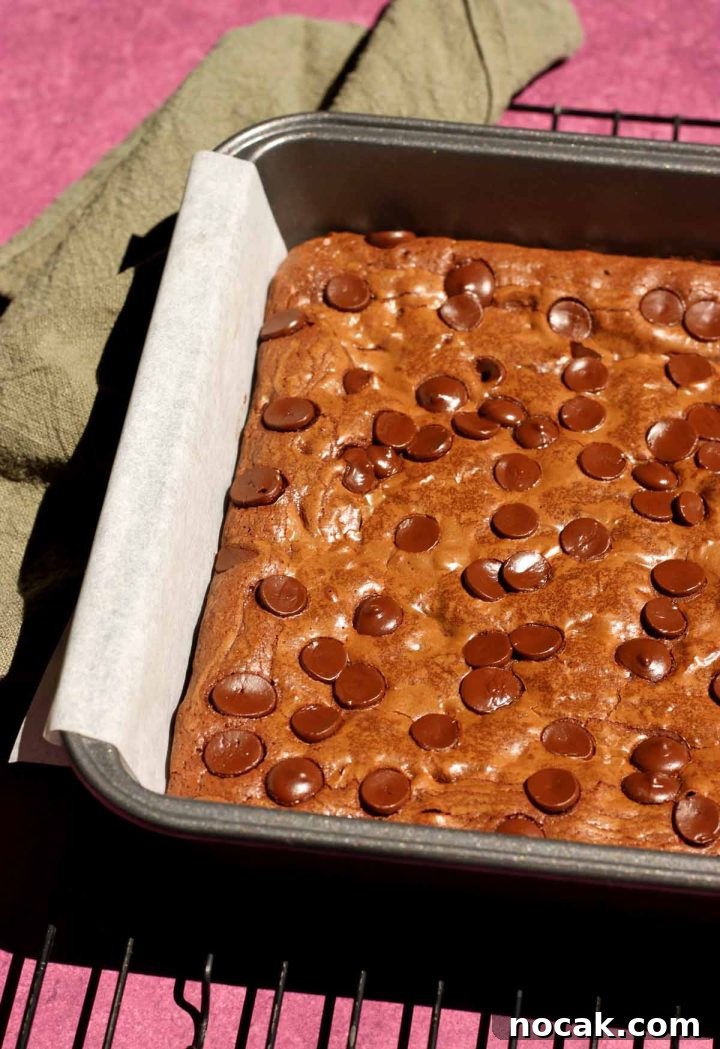
- Step 6 – Bake: Bake for 17–20 minutes at 350°F (177°C). The brownies are done when slightly puffed and a toothpick inserted between the edge and center comes out with a few moist crumbs—not clean and not wet batter. Cool completely in the pan on a wire rack.
EXPERT BAKING TIPS
- Avoid leavening agents. Do not add baking powder or baking soda; brownies should be dense. Leavening creates gas that can dry the crumb.
- Dissolve sugar in the eggs first. Sugar dissolves in the water in the eggs, not in fat. Heating and dissolving sugar first is crucial to maintain moisture and create the shiny crust.
- Keep chocolate warm. Adding warm chocolate to the whipped egg mixture will not scramble the eggs; the chocolate is not hot enough to cook them and the sugar protects the eggs. A warm batter also helps dissolve remaining sugar.
- Measure flour accurately. Too much flour yields a dry brownie. Use a kitchen scale for precision or the spoon-and-level measuring method.
- Watch baking time closely. With less sugar, the brownies bake faster and are more likely to overbake. Start checking at 17 minutes. The correct doneness is a skewer with a few moist sticky crumbs attached.
RECIPE FAQ
What type of chocolate should I use?
Use dark chocolate between 50% and 70% cocoa solids. Bittersweet or semisweet chocolate provides the best chocolate intensity. Avoid milk chocolate, which is too sweet and too low in cocoa.
How do these brownies stay moist with less sugar?
Sugar acts as a humectant, binding water and keeping baked goods moist. Dissolving the sugar into the eggs before whipping ensures the sugar can perform this function effectively even at reduced amounts.
Can I reduce the sugar further?
This recipe is dialed in to balance texture and flavor with lowered sugar. Reducing sugar further will likely produce a dry, crumbly brownie, so it is not recommended.
How do I get a shiny crust?
The shiny crust comes from dissolved sugar and whipped eggs. Heating the eggs and sugar slightly so the sugar fully dissolves, then whipping until ribboning, encourages the crackly, glossy top. The longer you whip (within reason), the thinner and shinier the crust.
How do I know when the brownies are done?
They are done when the surface is slightly puffed and a skewer inserted off-center comes out with a few moist crumbs. If it comes out clean the brownies are overbaked; if it has wet batter, they need more time.
How should I store these brownies?
Store at room temperature in an airtight container for a couple of days. For longer storage, refrigerate to preserve freshness.
Why did my brownies turn out dry?
Over-baking is the most common cause. With reduced sugar they cook faster—check at 17 minutes. Accurate flour measurement (58 g) and not over-whipping the eggs will also help prevent dryness.
If you enjoy brownies, try other variations in your collection to explore different textures and chocolate intensities.
Fudgy Low Sugar Brownies
Christina Marsigliese
Ingredients
- 6 oz (170 g) dark chocolate, coarsely chopped (50–70% cocoa)
- 7 tbsp (100 g) unsalted butter
- 2 large eggs, room temperature
- ½ cup plus 1 tbsp (115 g) granulated sugar
- 1 tsp (5 ml) pure vanilla extract
- ⅓ cup plus 1 tbsp (60 g) all-purpose flour
- ¼ tsp salt
- ½ cup (85 g) dark chocolate chips, plus extra for topping
Instructions
- Preheat oven to 350°F (177°C). Line a 7×7-inch or 8×8-inch metal baking pan with parchment paper leaving a 2-inch overhang and butter the exposed sides.
- In a heatproof bowl set over simmering water, melt chocolate and butter together until smooth and glossy. Remove from heat.
- Place eggs and sugar in a heatproof bowl set over simmering water and whisk constantly until the sugar dissolves and the mixture feels smooth.
- Beat the egg-sugar mixture with a hand mixer or stand mixer on high for 2–3 minutes until pale, thick and ribboning.
- Beat in vanilla and salt, then stir in the warm chocolate mixture until evenly combined. Fold in the flour and chocolate chips until smooth.
- Pour batter into the prepared pan, smooth the top, and sprinkle extra chocolate chips. Bake 17–20 minutes until slightly puffed and a skewer has a few moist crumbs attached. Cool completely on a wire rack before slicing.