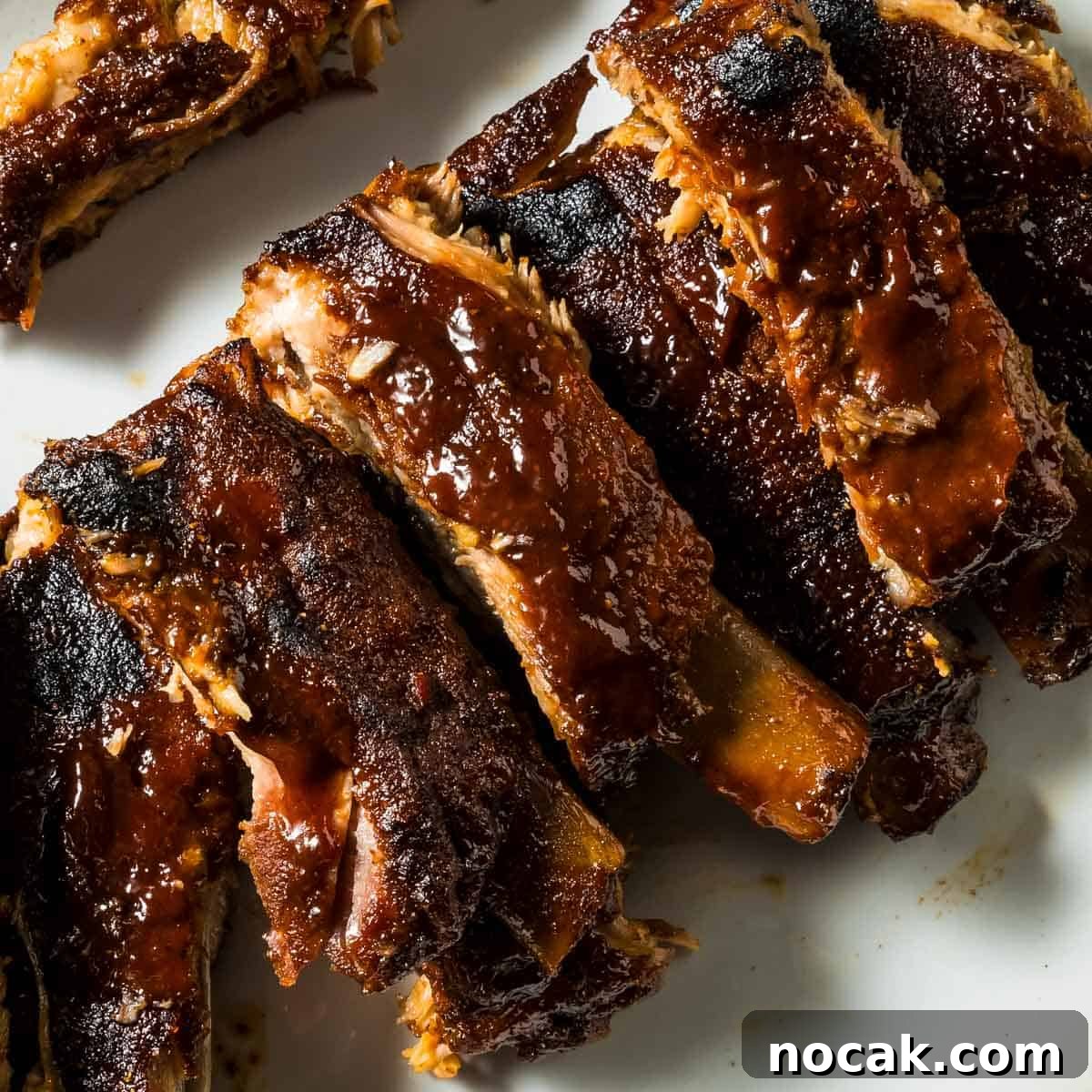
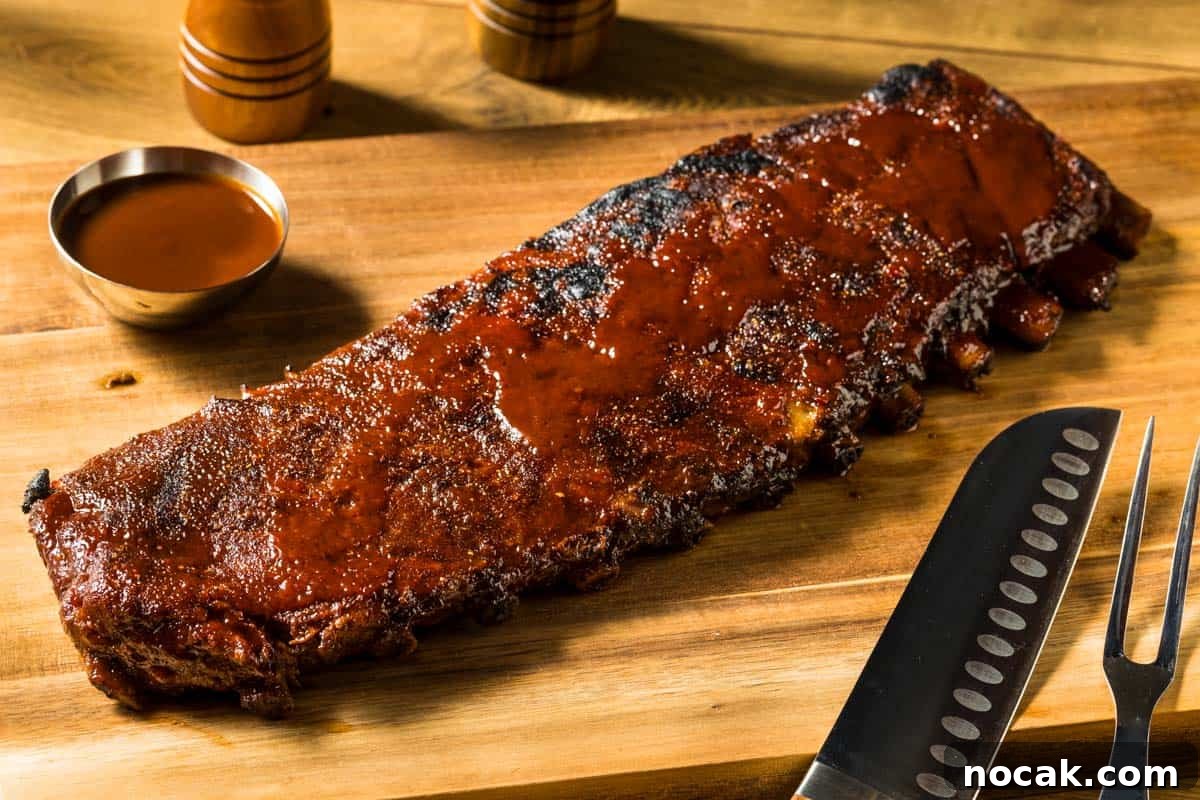
Learning how to cook ribs in the oven makes it possible to enjoy tender, juicy, fall-off-the-bone ribs year-round without a grill. Using a simple dry rub, a low-and-slow baking method, and a quick caramelizing finish under the broiler delivers ribs that are deeply flavored and satisfyingly tender.
A thin smear of yellow mustard helps the rub adhere, several hours in a low-temperature oven breaks down connective tissue, and a final glaze of barbecue sauce under high heat creates a sticky, caramelized crust.
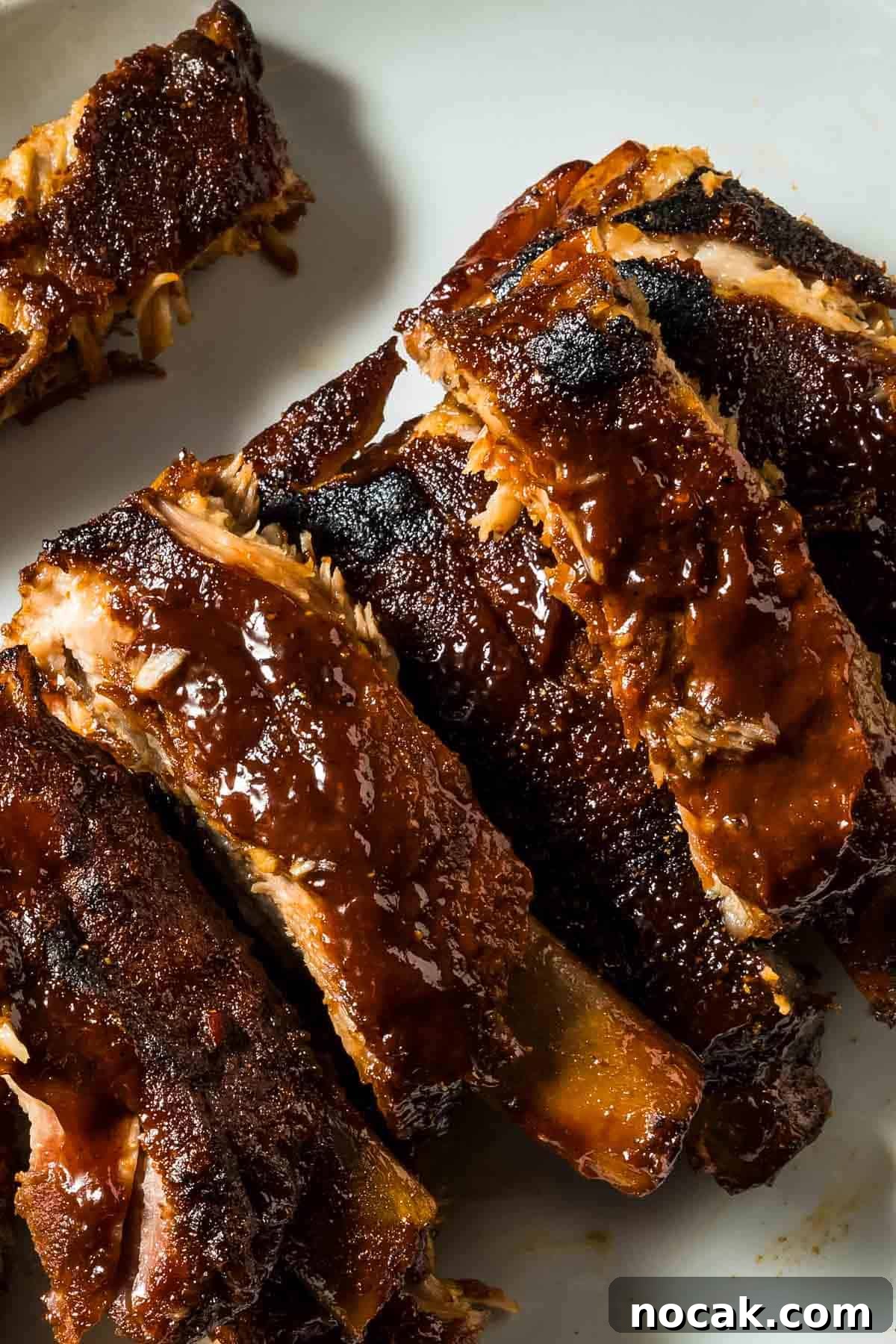
This version uses a straightforward five-spice dry rub and pairs beautifully with hearty sides like stuffed baked potatoes.
Ingredients
Essentially you need three main components: the ribs, a spice rub, and barbecue sauce. Mustard or a light oil is optional to help the rub stick.
Ribs
- 2 racks St. Louis style ribs (baby back ribs work too; they’re leaner and cook faster—see time chart).
Mustard (optional): A thin layer of yellow mustard helps the rub cling to the meat. A little cooking oil works as an alternative.
Spice Rub (or use your favorite store-bought rub)
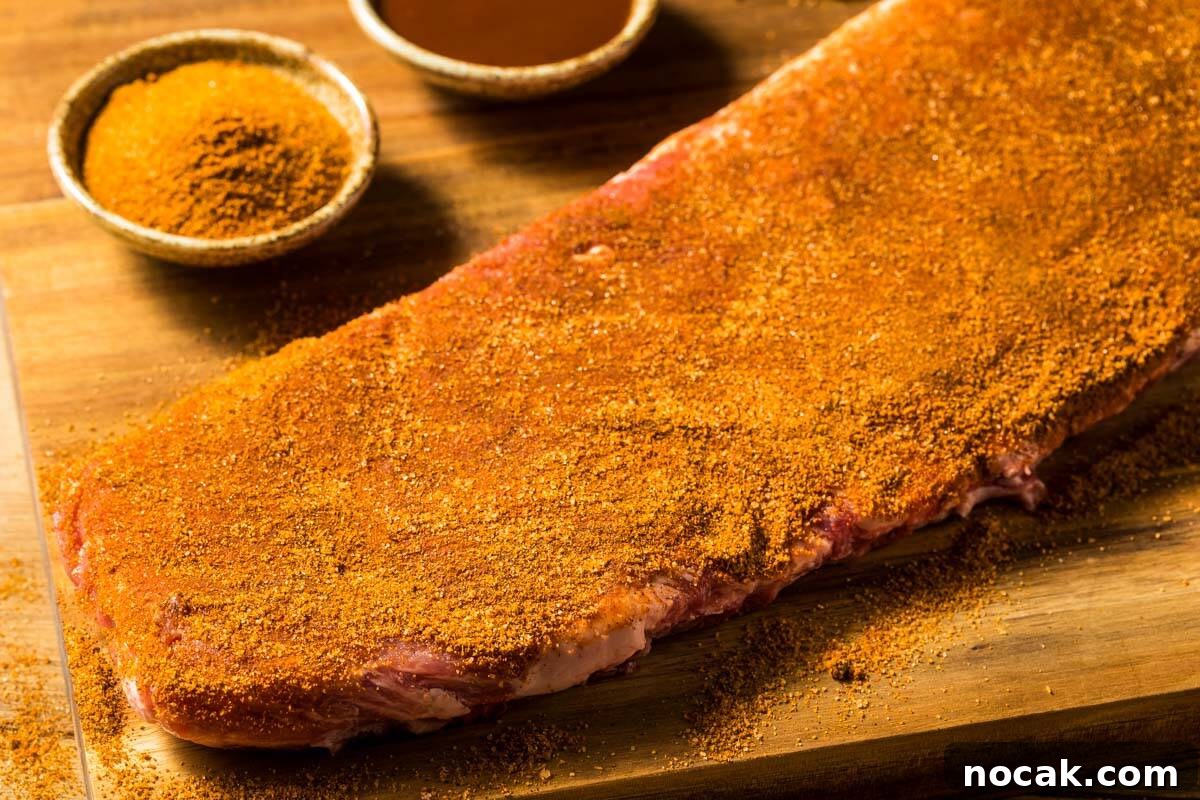
- 3 tablespoons light brown sugar — provides sweetness and aids caramelization.
- 1 tablespoon kosher salt — seasons the meat through and enhances flavor.
- 1 ½ tablespoons crushed black peppercorns — adds bite.
- 1 ½ tablespoons smoked paprika — gives a smoky depth without a grill.
- 2 teaspoons garlic powder — brings savory balance.
Barbecue Sauce
- Use your favorite barbecue sauce, homemade or store-bought. Brush it on before broiling for a sticky, caramelized finish.
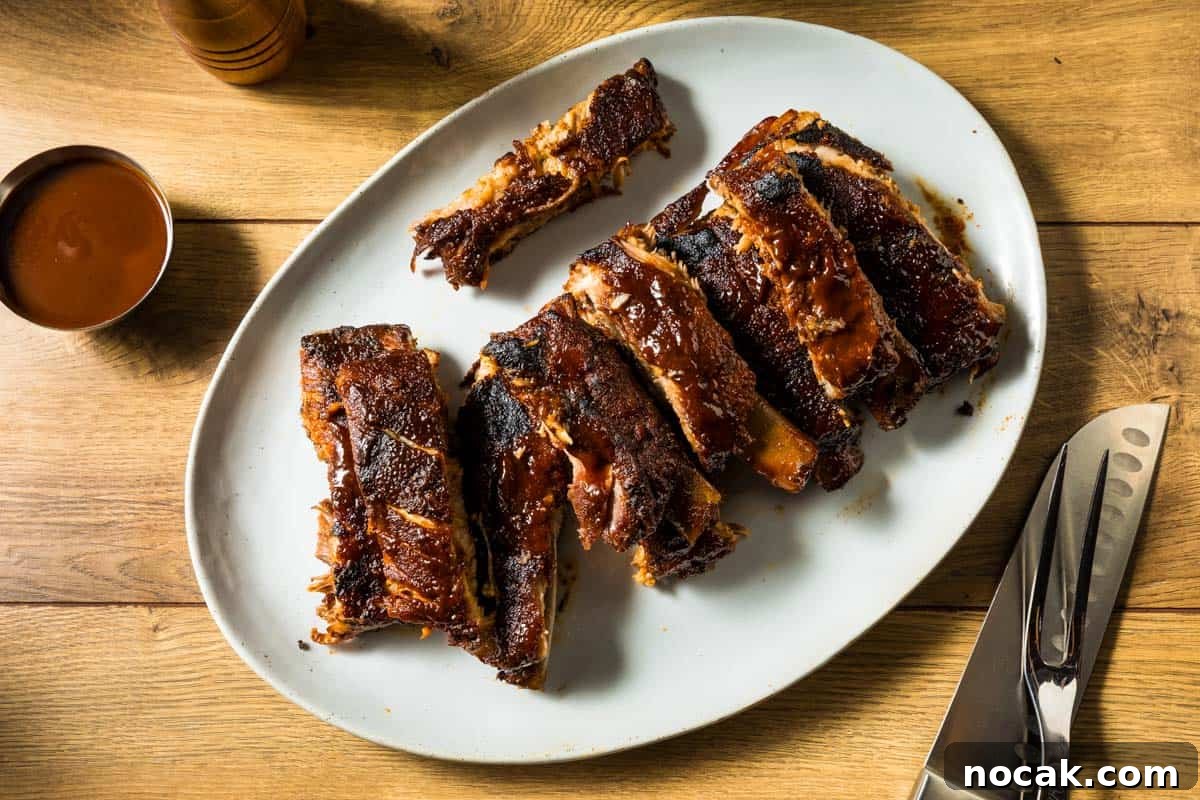
How to Cook Ribs in the Oven
Oven-baked ribs are simple to prepare and repeatable once you learn the basic steps. Follow these instructions for reliably tender results:
- Preheat the oven to 300°F. Line a large baking sheet with foil for easy cleanup.
- Prepare the ribs: Remove the thin membrane from the bone side to help seasoning penetrate and to improve tenderness. Pat the ribs dry with paper towels.
- Season the ribs: Apply a thin layer of yellow mustard (or a light oil) and rub the dry spice mix evenly over the meat. Place the ribs on the foil-lined sheet; cutting them into halves or quarters makes fitting easier.
- Cover and bake: Loosely tent the ribs with foil, crimping the edges to retain moisture. Bake until the meat is tender and beginning to pull back from the bones—about 2½–3½ hours depending on thickness. Start checking at the two-hour mark.
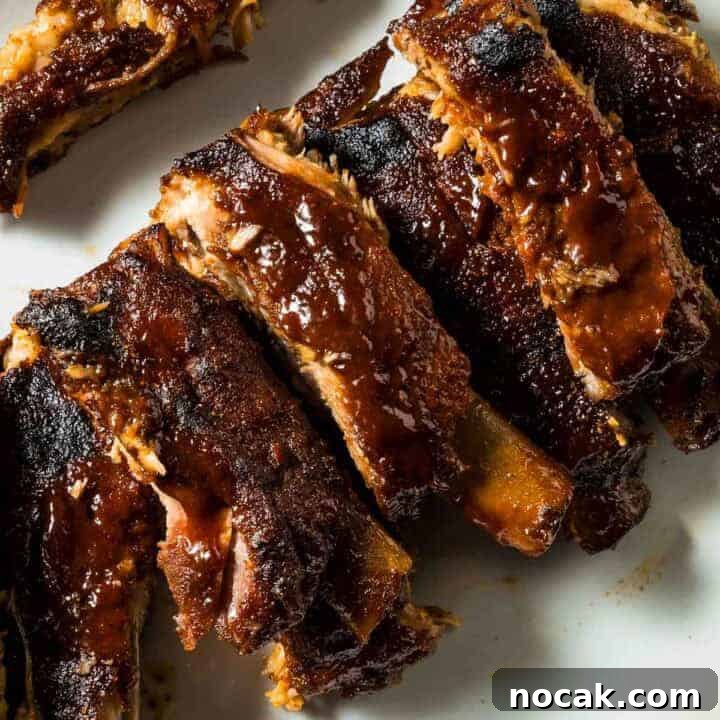
- Finish with sauce and broil: Remove the top layer of foil, brush the ribs generously with barbecue sauce, and broil on high for about 5 minutes, or until the sauce is caramelized and sticky.
- Rest and serve: Let the ribs rest a few minutes, then slice between the bones. Serve with extra sauce and your favorite sides.
Oven Ribs Cooking Time & Temperature Chart
For best texture, cook ribs at 300°F or lower. Thicker ribs and different styles require adjustments—use this chart as a guideline and rely on visual cues and a thermometer for doneness.
Times vary with rack thickness and oven accuracy. Low-and-slow yields the most tender results.
| Oven Temperature | Baby Back Ribs | St. Louis Ribs |
| 225 °F | 5 Hours | 6 Hours |
| 250 °F | 4 Hours | 5 Hours |
| 300 °F | 2 ½ – 3 Hours | 2 ½ – 3 ½ Hours |
| 350 °F | 2 Hours | 2 ½ Hours |
| 400 °F | 1 Hour | 1 ½ Hours |
| 450 °F | 45 Minutes | 1 Hour |
Tips
- Remove the membrane to improve tenderness and allow seasonings to penetrate.
- Low and slow is key: longer cooking at lower temperatures produces juicier, more tender ribs.
- Check doneness visually and with a thermometer: meat should pull back from the bones and an internal temperature of 185–200°F yields tender ribs.
- Use a dry rub for depth of flavor and a flavorful crust even if you plan to sauce the ribs.
- Add barbecue sauce at the end to avoid burning while still getting a sticky glaze.
- Let ribs rest a few minutes before slicing to retain juices.
- Line the baking pan with foil for easier cleanup after broiling.
Substitutions & Variations
- Rib types: This method works for St. Louis and baby back ribs; beef ribs require longer cook times.
- Dry rub: Use a store-bought rub if you prefer. Add chipotle powder or extra smoked paprika for more smoke, or increase brown sugar for sweetness.
- Sauce options: Any barbecue sauce works. You can also serve the ribs with just the dry rub and sauce on the side.
- Liquid smoke: A few drops in the sauce can mimic outdoor smoke flavor.
- Finish on the grill: Instead of broiling, finish the ribs on a hot grill for a charred edge.
- Spicy variation: Add cayenne or chili powder to the rub or sauce.
- Keto-friendly: Replace brown sugar with a low-carb sweetener and choose a sugar-free barbecue sauce.
Equipment Needed
- Sturdy baking sheet(s) to hold the ribs.
- Aluminum foil for covering and lining the pan.
- Sharp knife for loosening the membrane.
- Paper towels to dry the meat and grip the membrane.
- Mixing bowl for the rub.
- Pastry brush for applying barbecue sauce before broiling.
- Meat thermometer to check for an internal temperature of 185–200°F.
- Tongs for handling hot ribs safely.
Storage & Reheating
- Refrigerator: Store leftovers in an airtight container or wrapped tightly in foil for 3–5 days.
- Freezer: Freeze wrapped ribs for 2–3 months; thaw overnight in the fridge before reheating.
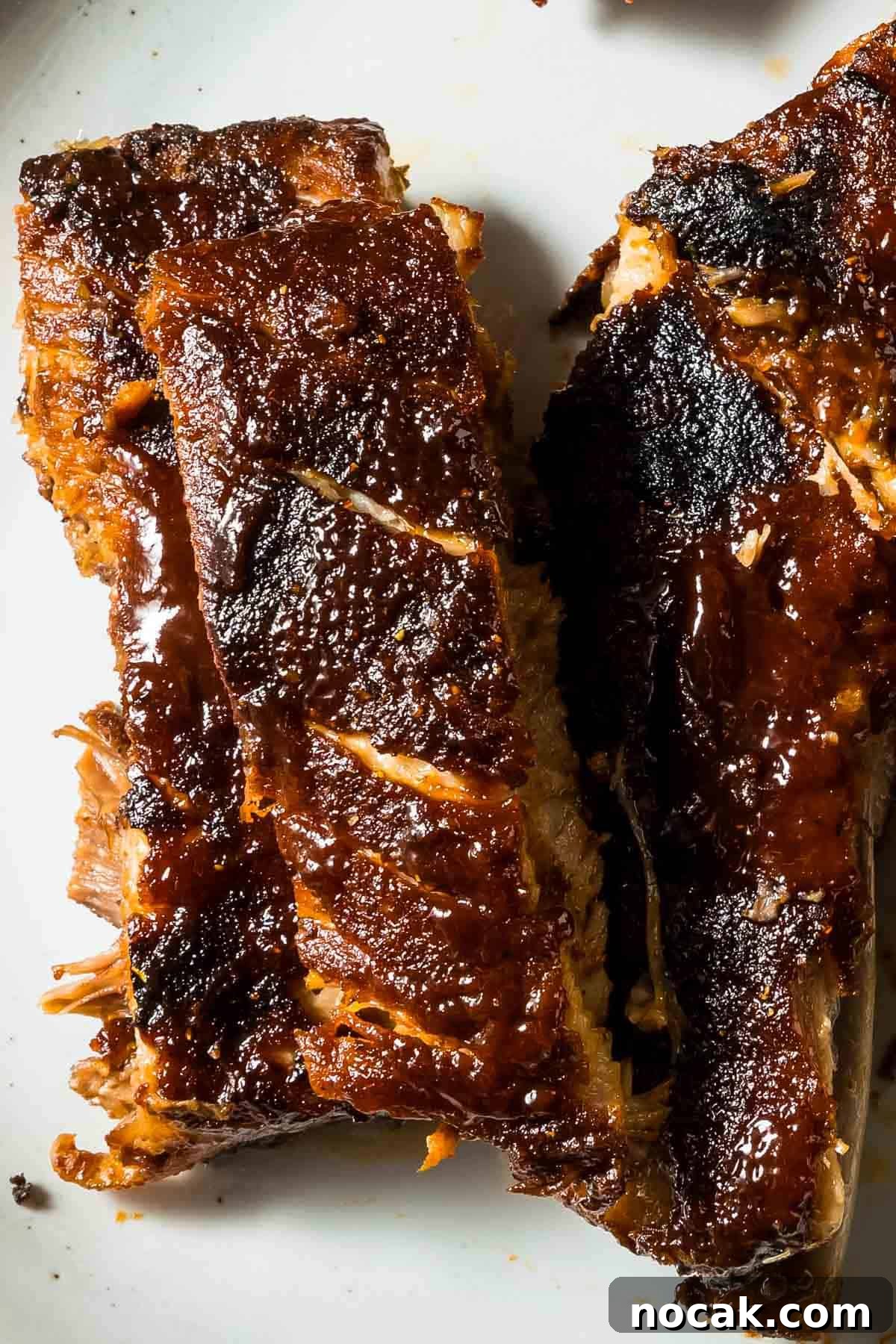
- Oven reheating (best): Preheat to 250°F, brush ribs with extra sauce to retain moisture, wrap tightly in foil, and warm for 20–30 minutes until heated through.
- Air fryer: Reheat at 350°F for 5–8 minutes, brushing with extra sauce first.
- Microwave: Heat in short 30-second bursts, covered, just until hot to avoid drying out the meat.
Tip: Add a bit of extra barbecue sauce before reheating to keep ribs moist.
Frequently Asked Questions
What temperature is best for cooking ribs in the oven at home?
300°F is a great balance between cooking time and tenderness. Refer to the time chart for other temperature options.
How do I know when ribs cooked in the oven are done?
Ribs are done when the meat pulls back from the bone ends, a toothpick slides in easily, and internal temperature reaches roughly 185–200°F for tender ribs.
Do I need to remove the membrane?
Removing the thin membrane prevents chewiness and lets seasonings and sauce penetrate the meat for better flavor and tenderness.
Can I make oven-baked ribs ahead of time?
Yes. Cook until tender, cool, wrap in foil, and refrigerate. Reheat with sauce in the oven, then broil briefly to caramelize before serving.
What’s the difference between St. Louis style ribs and baby back ribs?
St. Louis ribs are larger and meatier and typically take longer to cook. Baby back ribs are smaller, leaner, and cook more quickly. Both work well with oven cooking; adjust times accordingly.
Should I cook ribs covered or uncovered?
Start covered to retain moisture while the connective tissue breaks down, then remove the foil near the end and broil or grill to caramelize the sauce.
Can I make ribs without barbecue sauce?
Absolutely. A well-seasoned dry rub creates a delicious crust. Serve sauce on the side if desired.
Once you master how to cook ribs in the oven, you can enjoy consistent, barbecue-style flavor no matter the season.
Related
Looking for more recipes like this one? Try these:
- Smoked Pork Butt Recipe (Tender, Juicy & Full of Flavor!)
- Blackened Salmon with Roasted Tomatoes
- Broiled Salmon with Honey and Garlic
- Tomahawk Steak Recipe
Pairings
Favorite side dishes to serve with oven-baked ribs:
- Crispy Baked Potato Wedges
- Loaded Mashed Potatoes
- Sauteed Green Beans and Mushrooms
- Mexican Sweet Corn Cake – Soft, Buttery & Scoopable!
How to Cook Ribs in the Oven
4-6 servings
15 minutes
2 hours 30 minutes
2 hours 45 minutes
Once you make ribs in the oven, you’ll be making them all year long. They’re simple, require minimal cleanup, and rival grilled ribs in flavor.
Ingredients
- 2 racks St. Louis style ribs
- Salt and pepper
- ¼–½ cup yellow mustard
- 2 cups barbecue sauce
Dry Rub (or use your favorite store-bought rub)
- 3 tablespoons light brown sugar
- 1 tablespoon kosher salt
- 1 ½ tablespoons crushed black peppercorns
- 1 ½ tablespoons smoked paprika
- 2 teaspoons garlic powder
Instructions
- Preheat the oven to 300ºF and line a large sheet pan with foil.
- Remove the membrane from the bony back side of the ribs.
- Pat ribs dry and place them on the foil-lined sheet pan.
- Spread a thin layer of mustard over the ribs, then apply the dry rub evenly.
- Cover the ribs with foil and crimp the edges to seal.
- Bake until the bone starts to show and the meat is tender, about 2½–3 hours. Begin checking after two hours.
- Remove the foil, slather the ribs in barbecue sauce (reserve extra if desired),
- Broil on high for about 5 minutes to caramelize the sauce.
- Let rest a few minutes, then slice between the bones and serve.
Nutrition Information:
Yield: 6
Serving Size: 1
Amount Per Serving:
Calories: 235Total Fat: 4gSaturated Fat: 1gTrans Fat: 0gUnsaturated Fat: 2gCholesterol: 6mgSodium: 1998mgCarbohydrates: 48gFiber: 3gSugar: 37gProtein: 4g
This data was provided and calculated by Nutritionix.