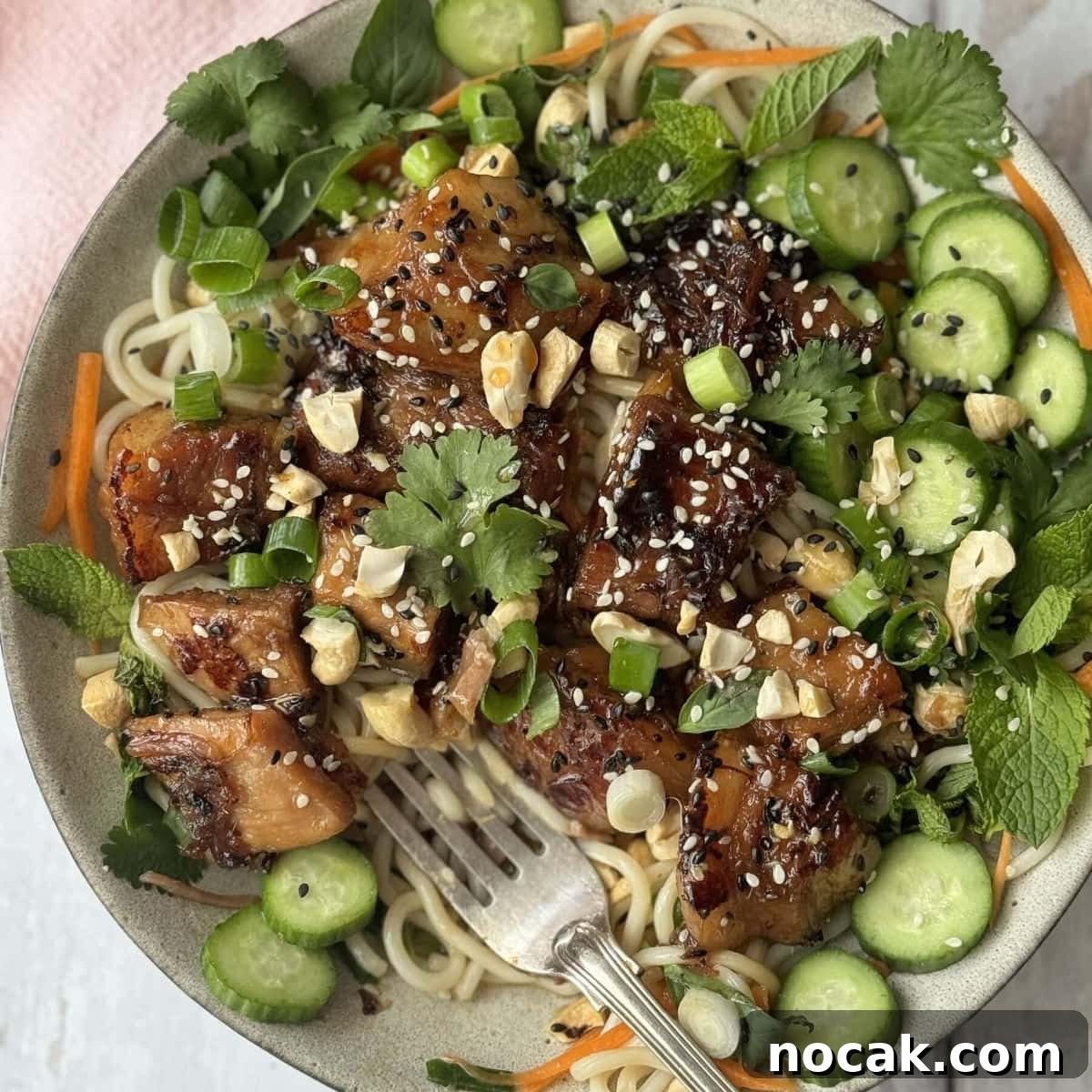
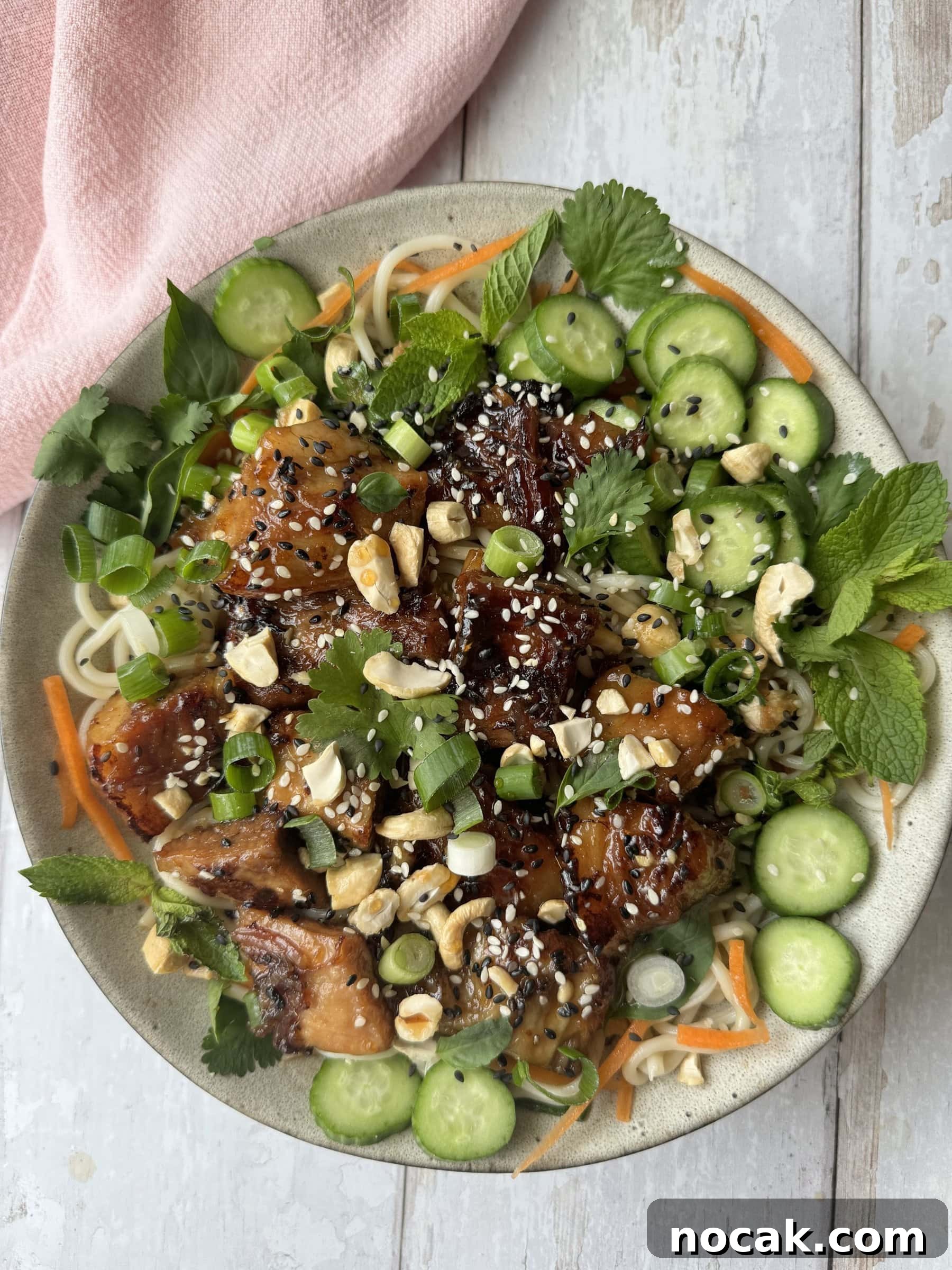
This is a real showstopper: Sticky Japanese Pork Belly Noodles. Sweet, deeply flavorful and impressive, this dish highlights pork belly — a rich, fatty cut that benefits from slow cooking. Low, gentle heat softens the fat and transforms the meat into meltingly tender pieces rather than tough slices. The recipe takes a few hours overall, but active time is minimal: it’s the kind of dish you start and mostly leave to cook.
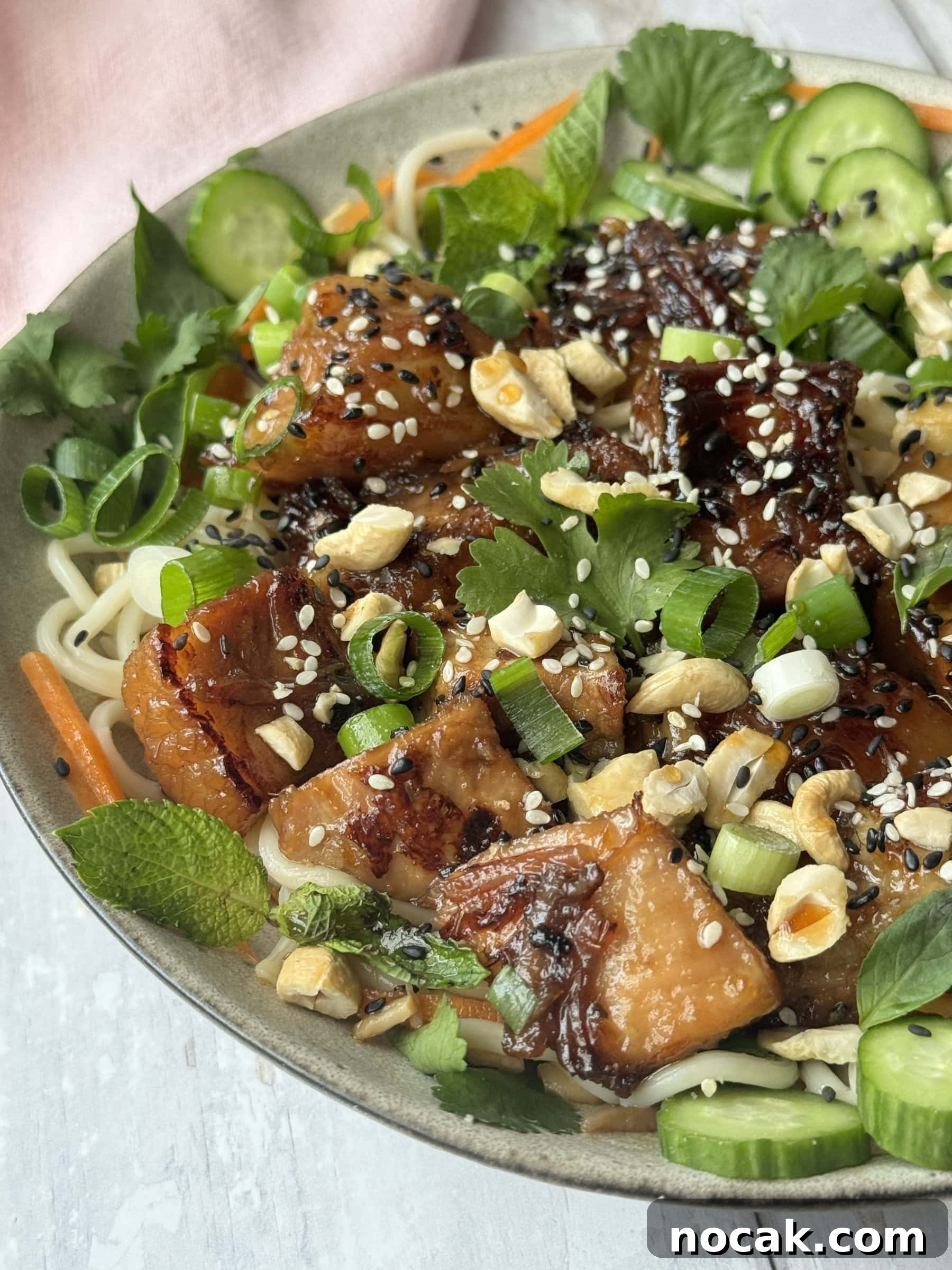
Slow-cooked meat is ideal for entertaining — it’s simple, forgiving and always gets a great reaction. This pork belly reheats very well, so it’s perfect for making ahead and saving time on the day you serve it.
Table of Contents
- Why You’ll Love This Recipe
- Ingredients
- Substitutions and Variations
- Here’s how to make Pork Belly Noodles
- Cooking Tips
- Frequently Asked Questions
- More recipes you might enjoy
- Japanese Braised Sticky Pork Belly Noodles Recipe
Why You’ll Love This Recipe
- Very hands-off — most of the time the oven or stove does the work for you.
- Slow-cooked pork belly is forgiving and often improves with time, so minor timing differences won’t spoil the result.
- Bold, balanced flavors — fresh ginger, soy and brown sugar create a glossy, sticky sauce that clings to the meat and noodles.
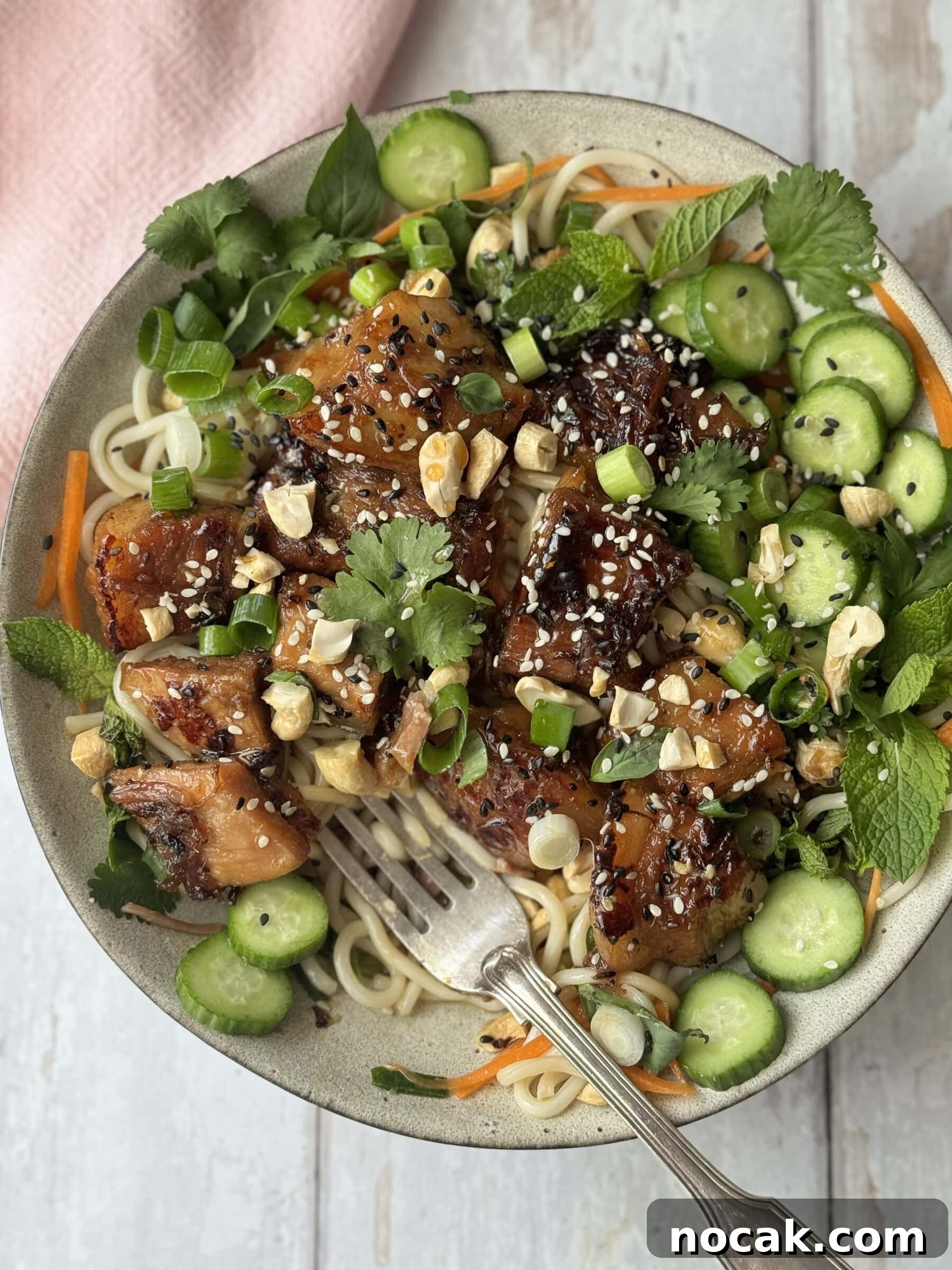
Ingredients
See the recipe card below for exact quantities and the full ingredient list.
Skin-on pork belly – about 1 kg is ideal; butcher-cut pieces often have better flavour than smaller supermarket cuts.
Fresh ginger – used both for poaching and in the sticky sauce. Grating or using a microplane helps the ginger melt into the sauce.
Noodles – any you prefer: egg noodles, rice noodles or udon all work well.
Soft brown sugar – helps thicken the sauce and gives the signature glossy, sticky coating.
Substitutions and Variations
Pork alternatives – pork shoulder or ribs can substitute if you prefer; pork belly remains the most indulgent option thanks to its fat content.
Sugars and sweeteners – honey and brown sugar can be swapped or used separately depending on what you have on hand.
Serving options – while great with noodles, this sauce and pork also pair well with sticky rice or fluffy basmati.
Here’s how to make Pork Belly Noodles
Below is a clear, step-by-step overview. The full recipe with measurements is in the recipe card at the bottom of the page.
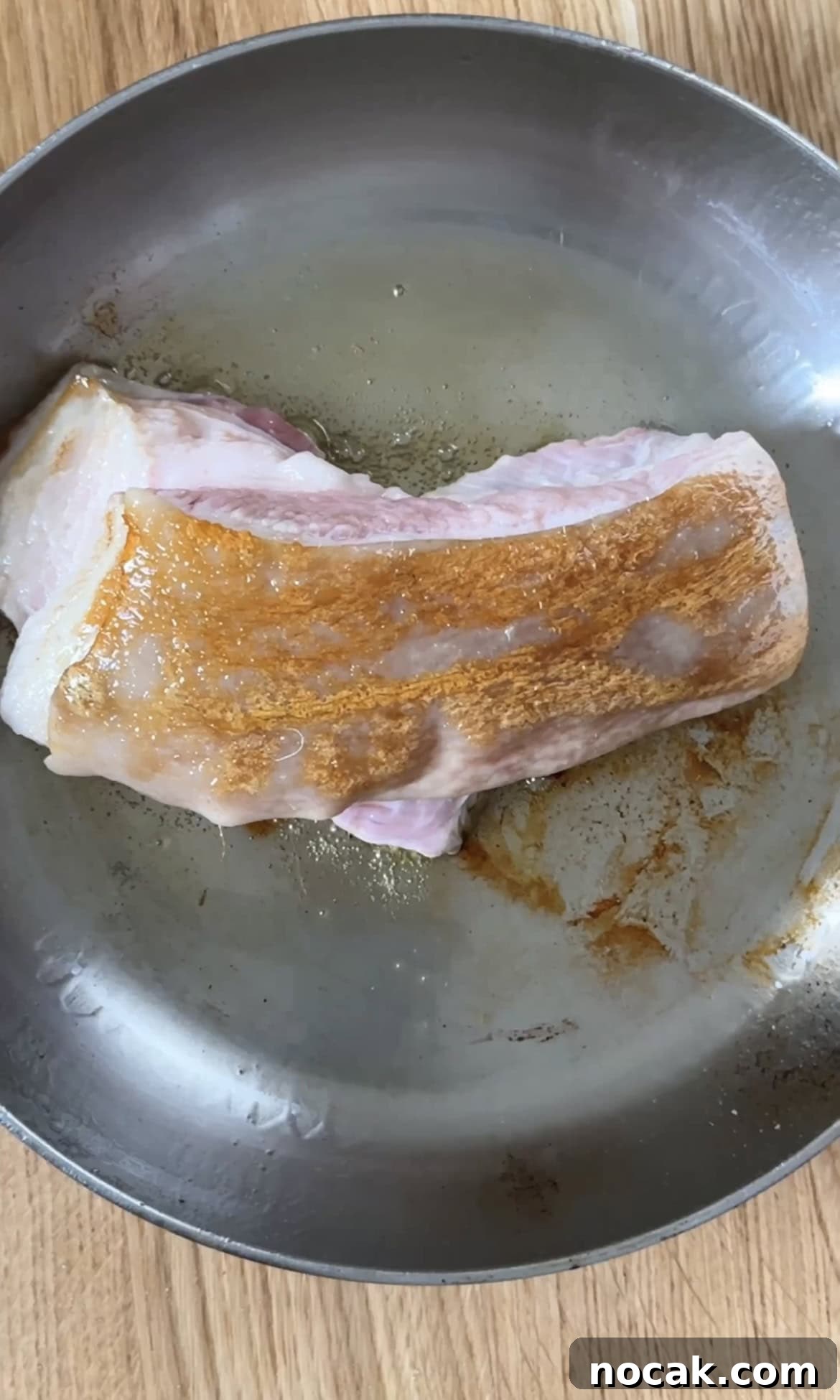
ONE: Heat oil in a frying pan, then sear the whole pork belly skin-side down until golden. Turn and sear the other sides to develop colour — you’re adding flavour, not cooking it through.
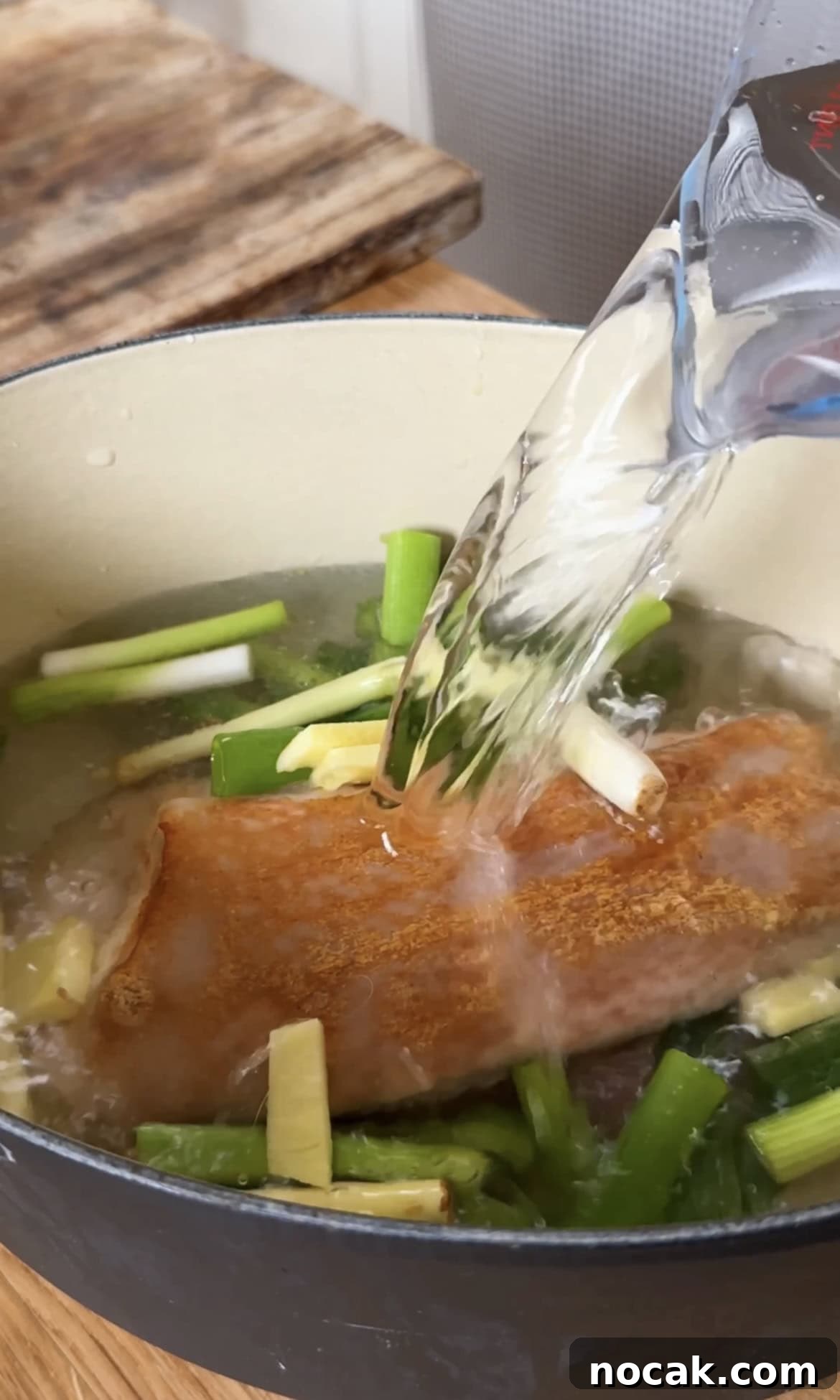
TWO: Transfer the seared pork to a heavy-bottomed pot, cover with water and add spring onion, ginger, lemongrass and red chilli. Bring to a boil, then simmer, covered, for about 2 hours, skimming excess fat as needed.
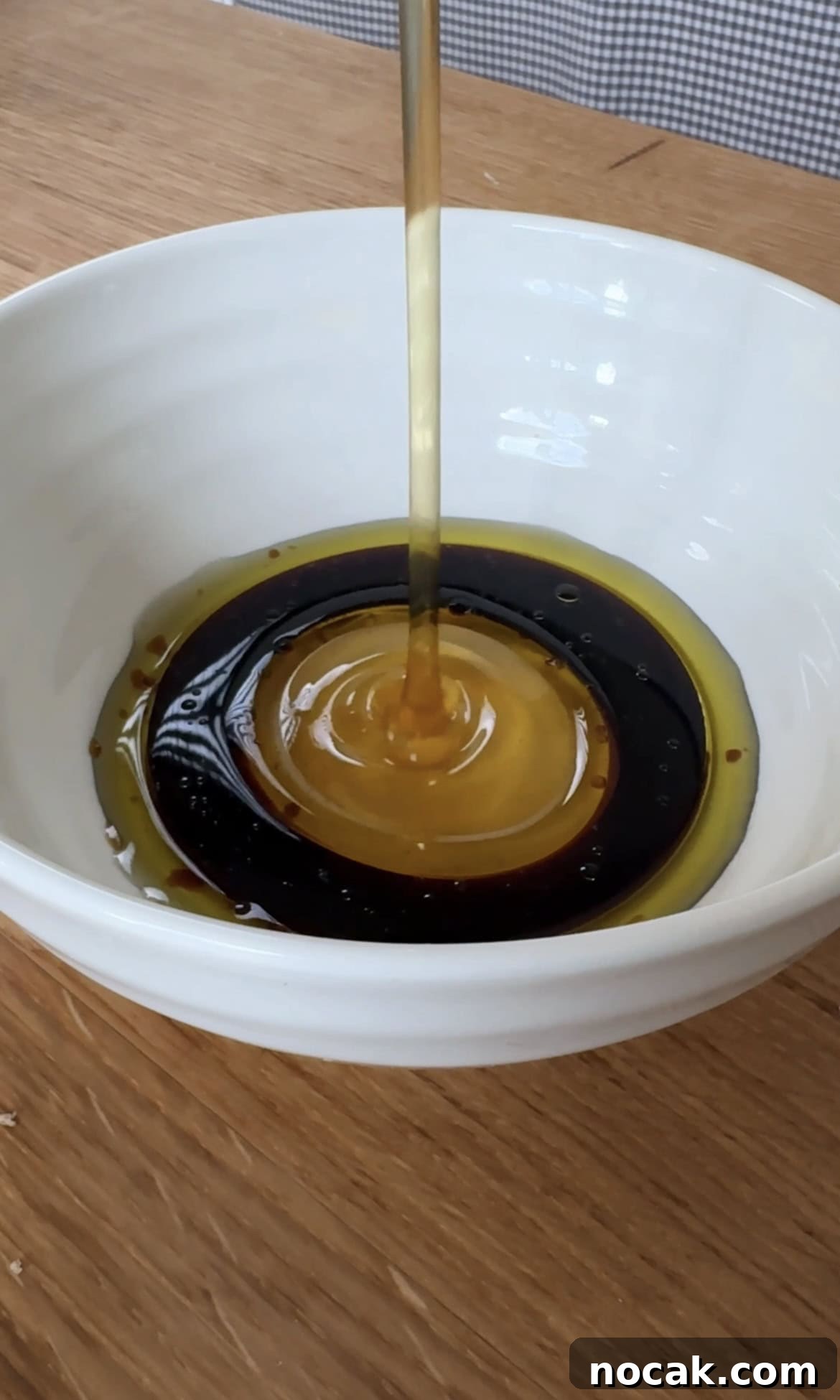
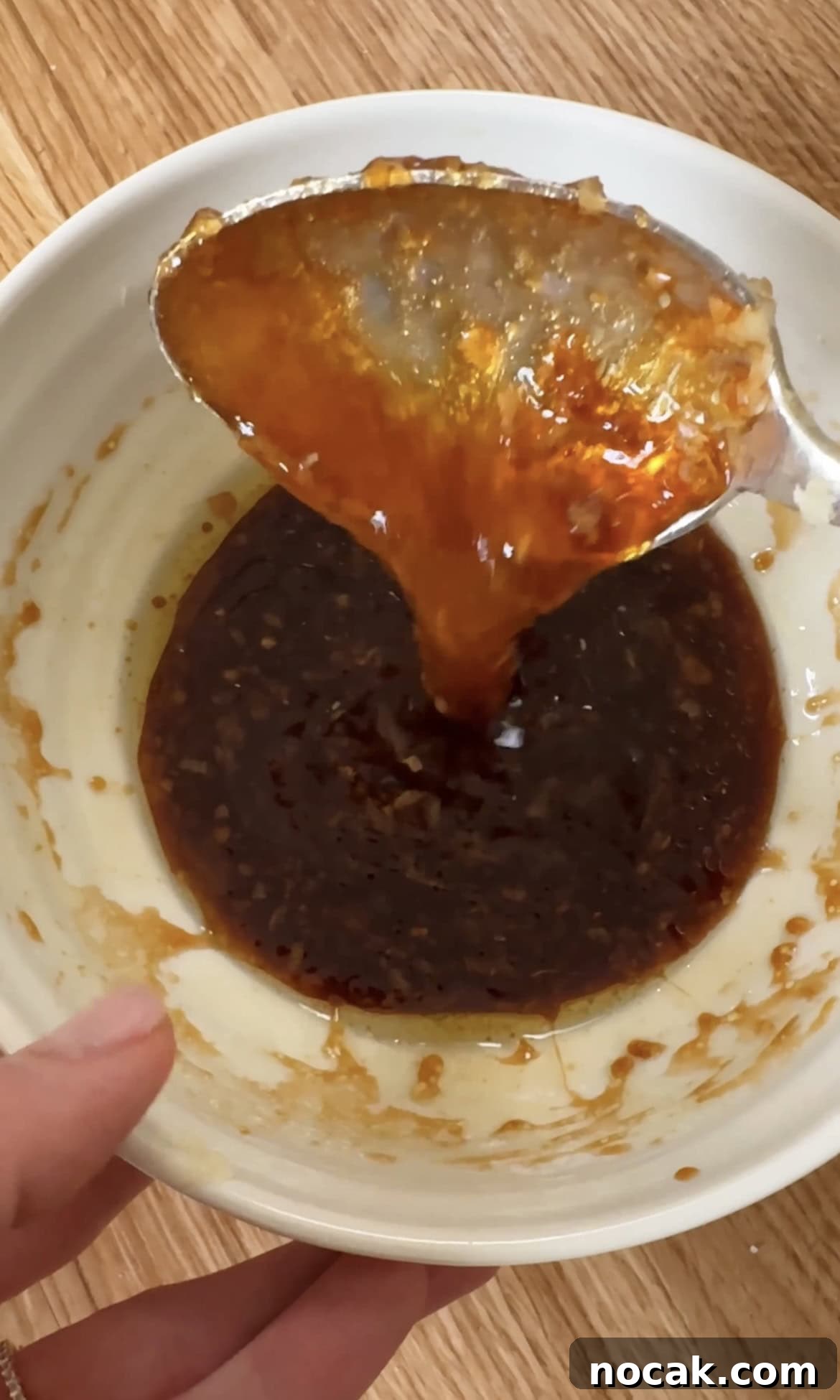
THREE: Whisk together vegetable oil, soy sauce, honey, brown sugar, grated garlic and grated ginger to make the sticky sauce.
FOUR: Remove the pork from the poaching liquid and let it cool until you can cut it into roughly 2-inch chunks.
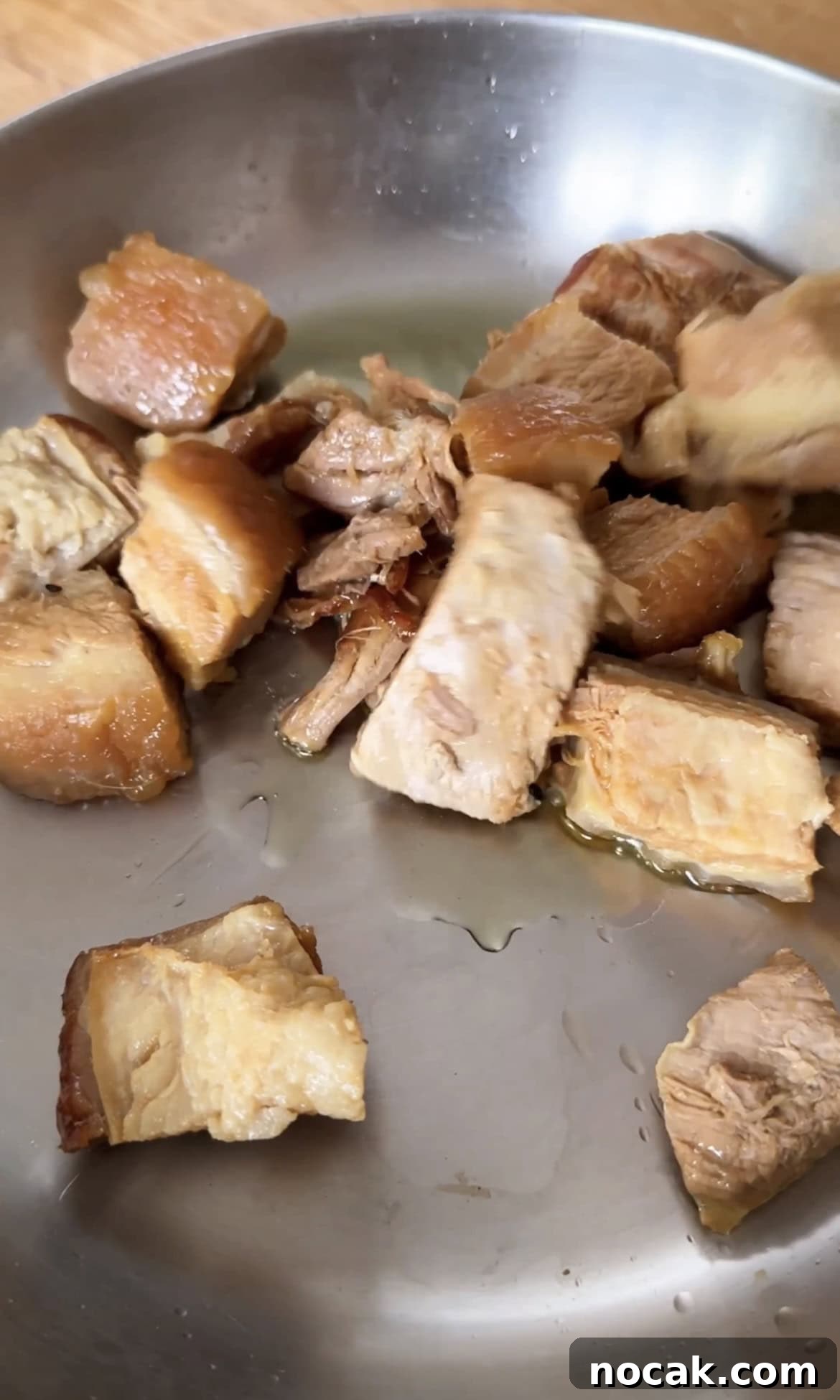
FIVE: In a hot frying pan with a little oil, fry the pork cubes until golden and the skin starts to crisp.
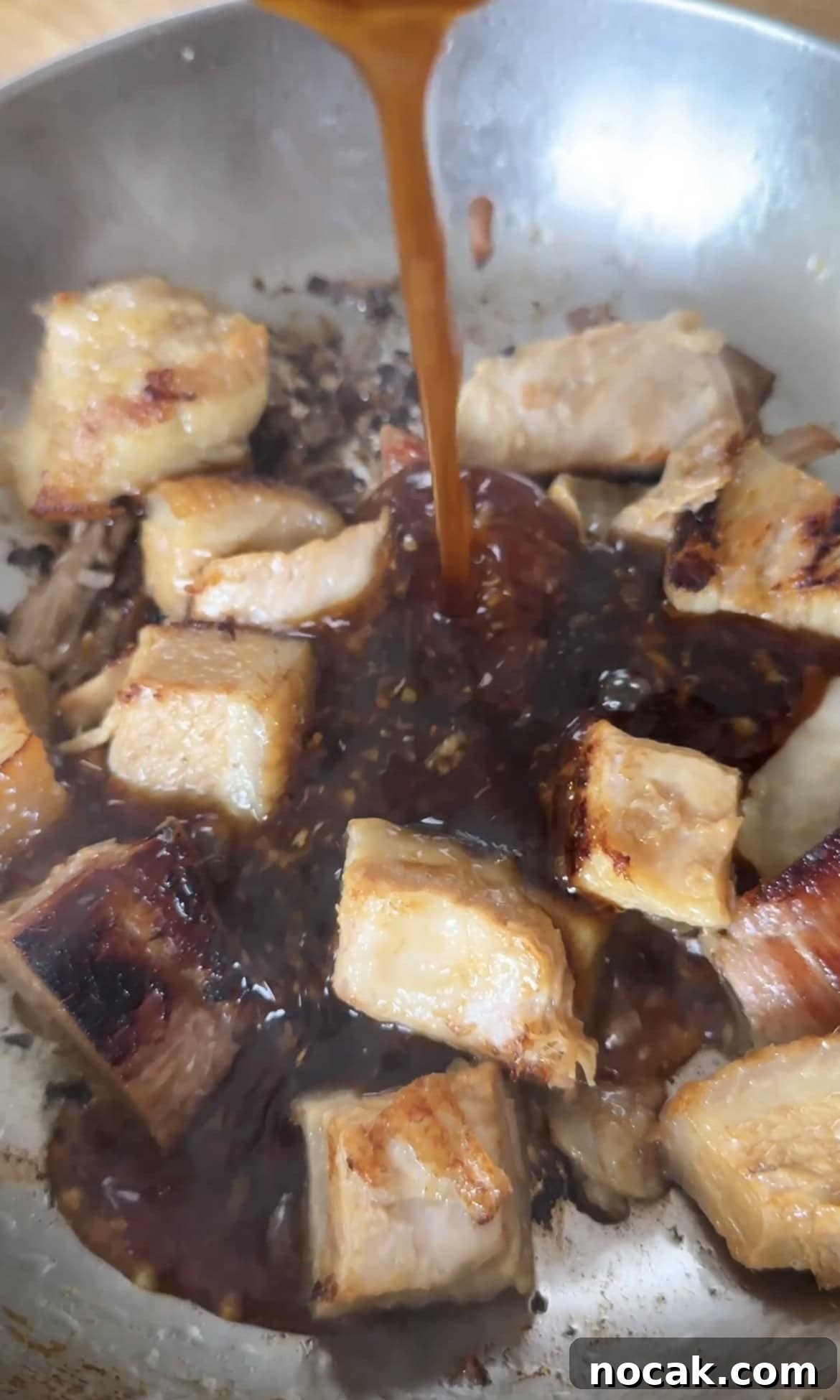
SIX: Pour the sticky sauce over the pork and cook for a couple of minutes, stirring constantly so the sugars don’t burn and the pork becomes glossy and coated.
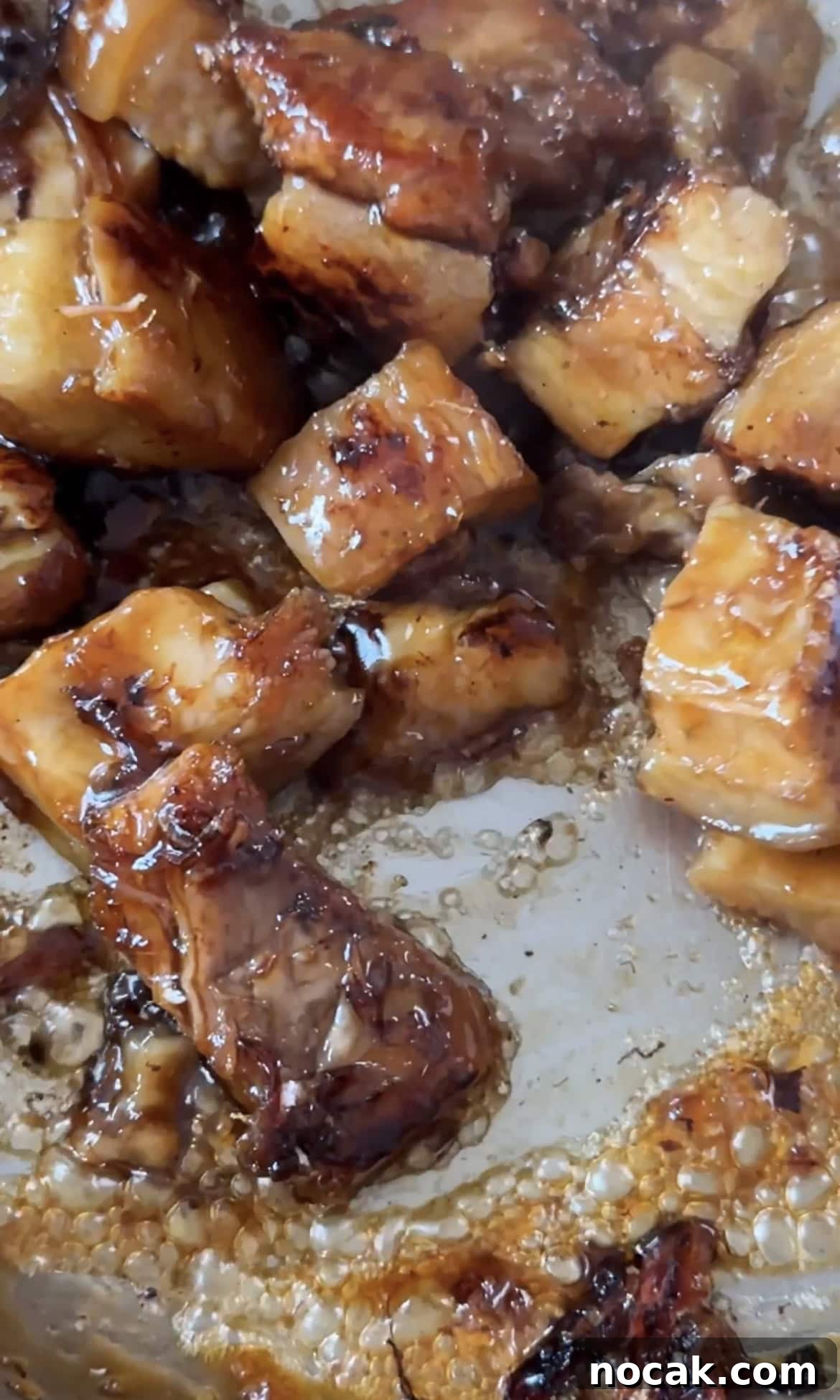
SEVEN: Keep the heat at medium to medium-high and stir so the sauce thickens without burning. The pork should look sticky and golden. Meanwhile, cook the noodles according to the packet instructions.
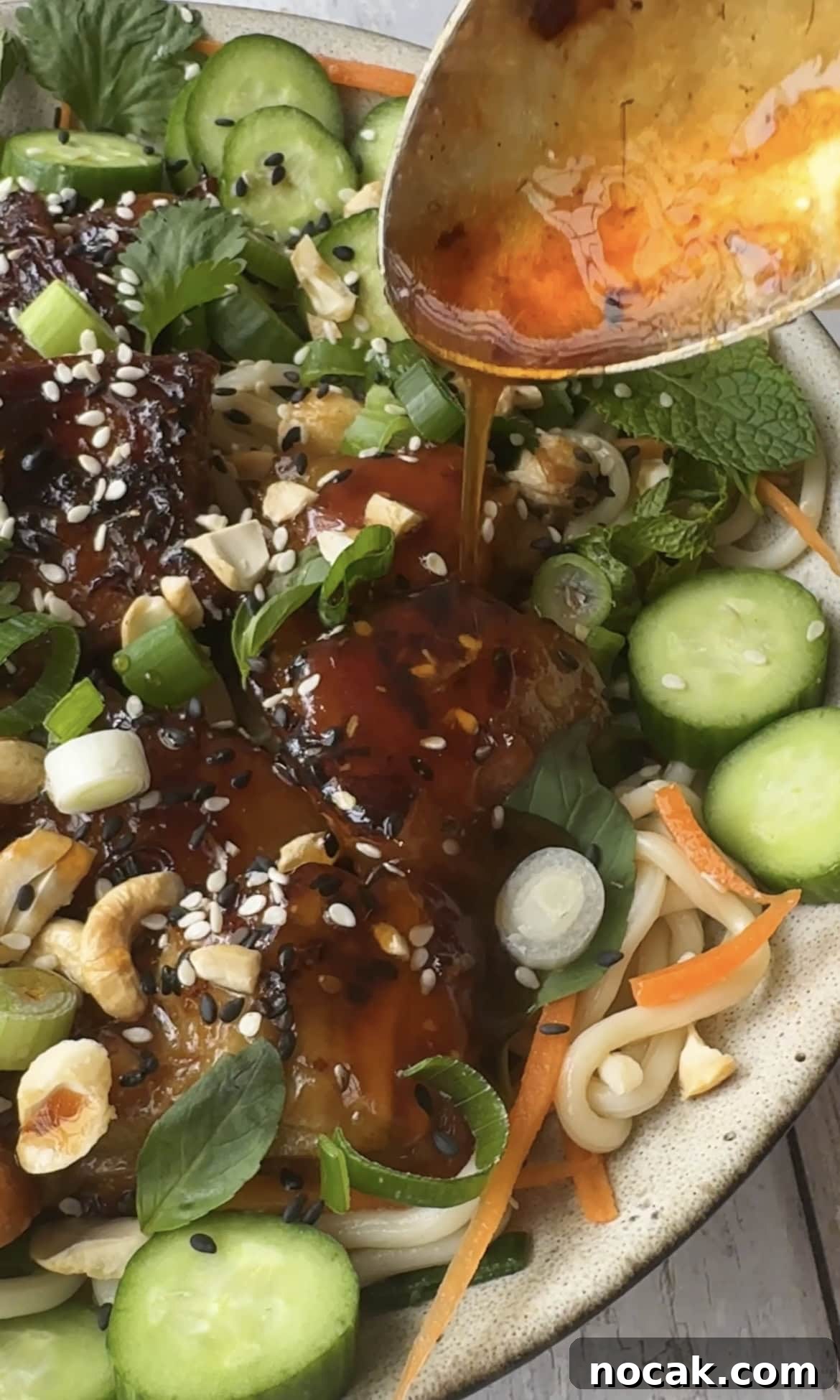
EIGHT: Add the julienned carrots to the noodles one minute before they finish. Drain and toss the noodles and carrots with a few spoons of the pork sauce so everything is nicely coated. Serve topped with sliced cucumber, spring onions, sesame seeds and chopped chilli if you like heat.
Cooking Tips
Slow poaching is forgiving: Poaching the pork makes it very hard to overcook — aim for around two hours of a gentle simmer, then cut and crisp the pieces.
Flavorful stock: You can cook the noodles briefly in the poaching liquid for added depth, then toss them in the sticky sauce to coat.
Prevent burning: When you add the sauce, keep the heat at medium or medium-high so the sugars caramelize without burning.
Tools for carrots: If you don’t have a julienne peeler, use a vegetable peeler, grater or knife to make ribbons or thin strips.
Frequently Asked Questions
Noodles tossed in the sticky sauce are classic. The pork also works in bao buns or served with a crisp slaw and steamed greens for contrast.
Yes. Poach the pork the day before, chill in the fridge, then cube and reheat gently in the sticky sauce when ready to finish the dish.
Store pork in an airtight container in the fridge for up to 3 days. Noodles keep for a few days as well — reheat until piping hot.
Reheat gently in a frying pan with a splash of water to loosen the sauce, or heat in the microwave until thoroughly hot.
Freeze the sticky pork (not the noodles) for up to two months. Thaw overnight in the fridge and reheat in a pan with a little water to loosen the sauce.
More recipes you might enjoy
If you like these sticky pork belly noodles, try other savory bowls, spiced fishcakes or bao-style fillings. If you try this recipe, please leave a comment to let us know how it turned out!
Easy Dinner Recipes
Crispy Air Fryer Pork Belly with Crackling
Weeknight Supper
Quick and Easy Shin Ramen with Crispy Pork
Lunch Recipes
Mason Jar Noodles
Less Than 20 Minutes
Korean Spicy Ramen Noodles with Cheese
If you tried these Sticky Pork Belly Noodles or another recipe from the site, please leave a comment and tell us how it went!
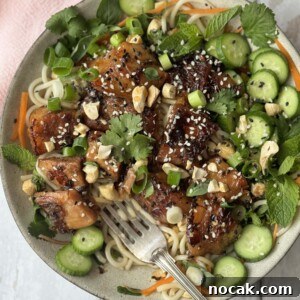
Japanese Braised Sticky Pork Belly Noodles
Rate Recipe
Print Recipe
Ingredients
For the initial sear and simmer:
- 1 kg pork belly with the skin on
- 1 tbsp olive oil
- 2 spring onions, roughly chopped in half
- 1 inch ginger, peeled, and roughly chopped
- 1/2 red chilli, roughly chopped
- 2 sticks of lemongrass
For the sticky sauce:
- 1 tbsp vegetable oil
- 2 tbsp honey
- 1 tbsp soft brown sugar
- 3 tbsp soy sauce
- 1 clove garlic, grated
- 1 inch ginger, grated
To serve:
- 1 carrot, julienned into thin ribbons
- Egg noodles: 1 nest per person
- 2 x sliced baby cucumber
- sprinkling of sesame seeds, roughly chopped cashew nuts, sliced red chilli and spring onion, for garnish
Instructions
-
Heat oil in a frying pan over medium-high. When hot, place the whole pork belly skin-side down and sear until golden. Turn and sear the other sides to develop colour.
-
Place the seared pork in a heavy-bottomed pot, cover with water and add spring onion, ginger, lemongrass and red chilli. Bring to the boil, then reduce to a gentle simmer, covered, for about 2 hours, skimming fat as it rises.
-
Remove the pork from the liquid and let it cool until you can cut it into roughly 2-inch chunks.
-
Combine oil, soy sauce, honey, brown sugar, grated ginger and garlic to make the sticky sauce.
-
Heat a frying pan over medium-high with a little oil and fry the pork cubes for a few minutes until golden and the skin crisps.
-
Pour the sticky sauce into the pan and cook for another 2 minutes, stirring constantly to prevent burning. Meanwhile, cook the noodles according to the package.
-
Add julienned carrots to the noodles one minute before they finish. Drain and toss the noodles and carrots with a few spoons of the pork sauce to coat.
-
Serve with sliced cucumber and garnish with chopped chilli, spring onions and sesame seeds.
Notes
This is an excellent make-ahead dish for dinner parties: prepare the pork a day early, chill overnight, then rewarm and finish in the sticky sauce when needed.