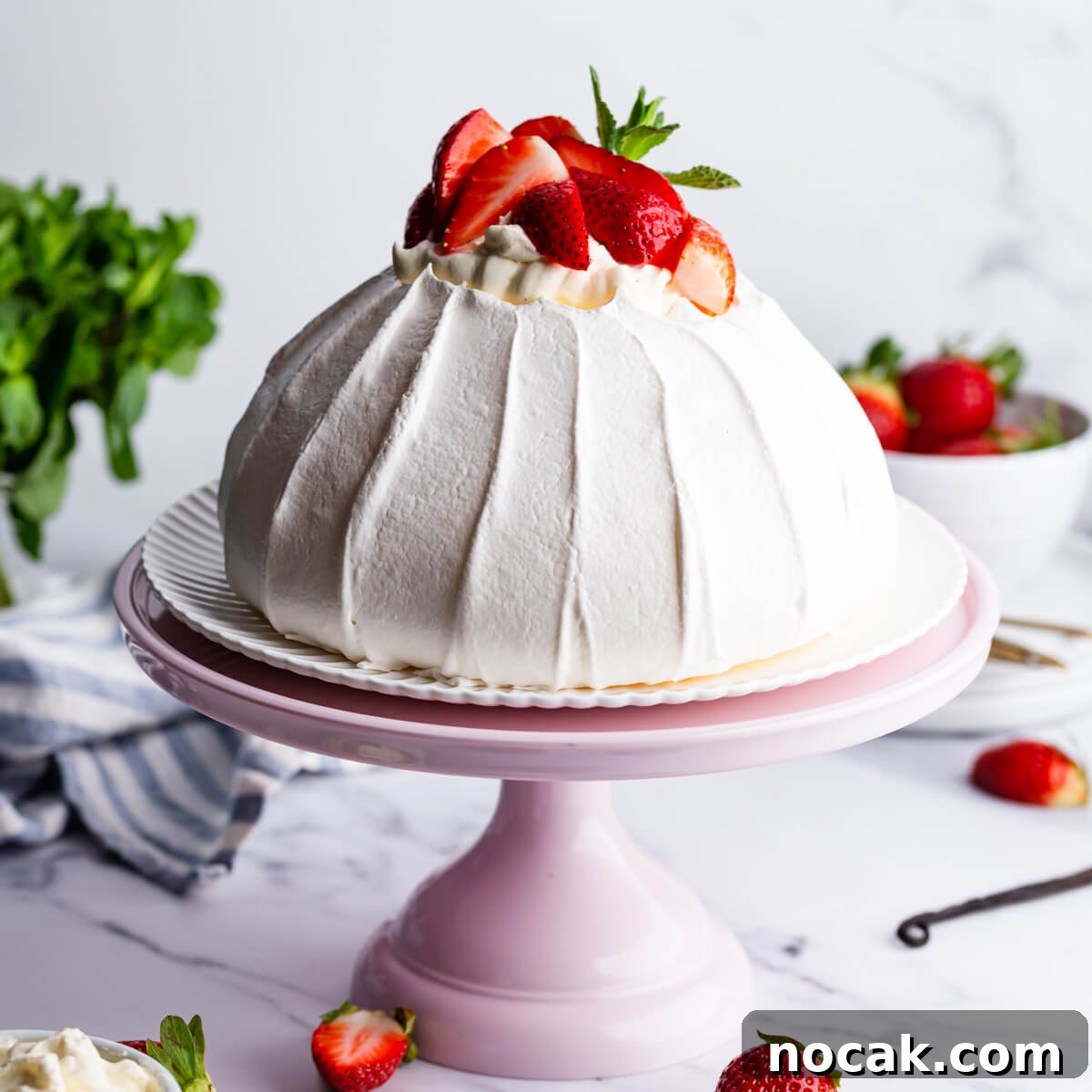
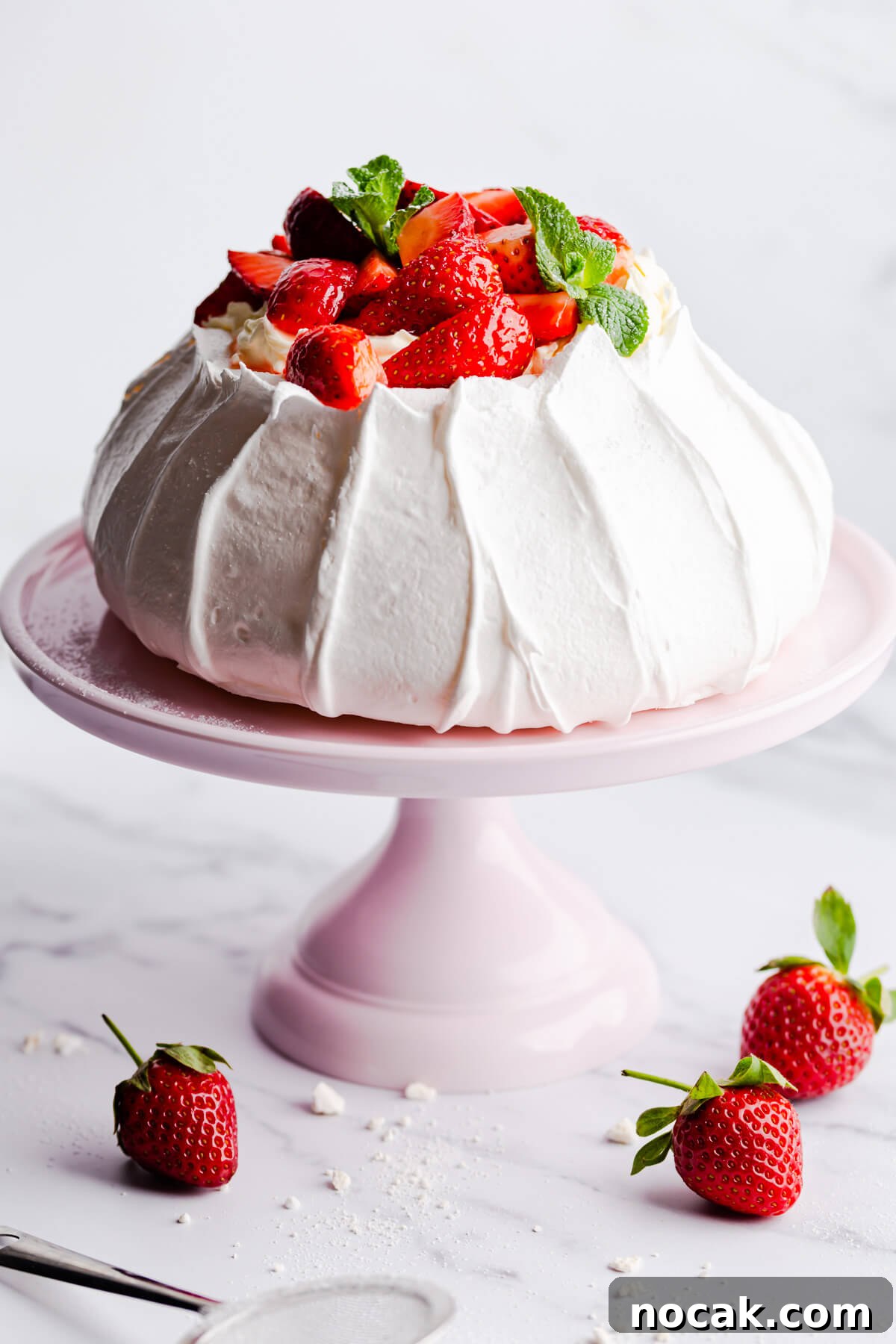
This classic strawberry pavlova is an elegant dessert that always impresses. A crisp, airy meringue crowned with whipped cream and fresh strawberries makes a light, refreshing finish to any meal.
With a crisp exterior and a soft, marshmallow-like interior, this pavlova is ideal for gatherings and special occasions. It’s versatile too — swap strawberries for any seasonal fruit for a delicious variation year-round.
Ingredients
Ingredients needed for the pavlova:
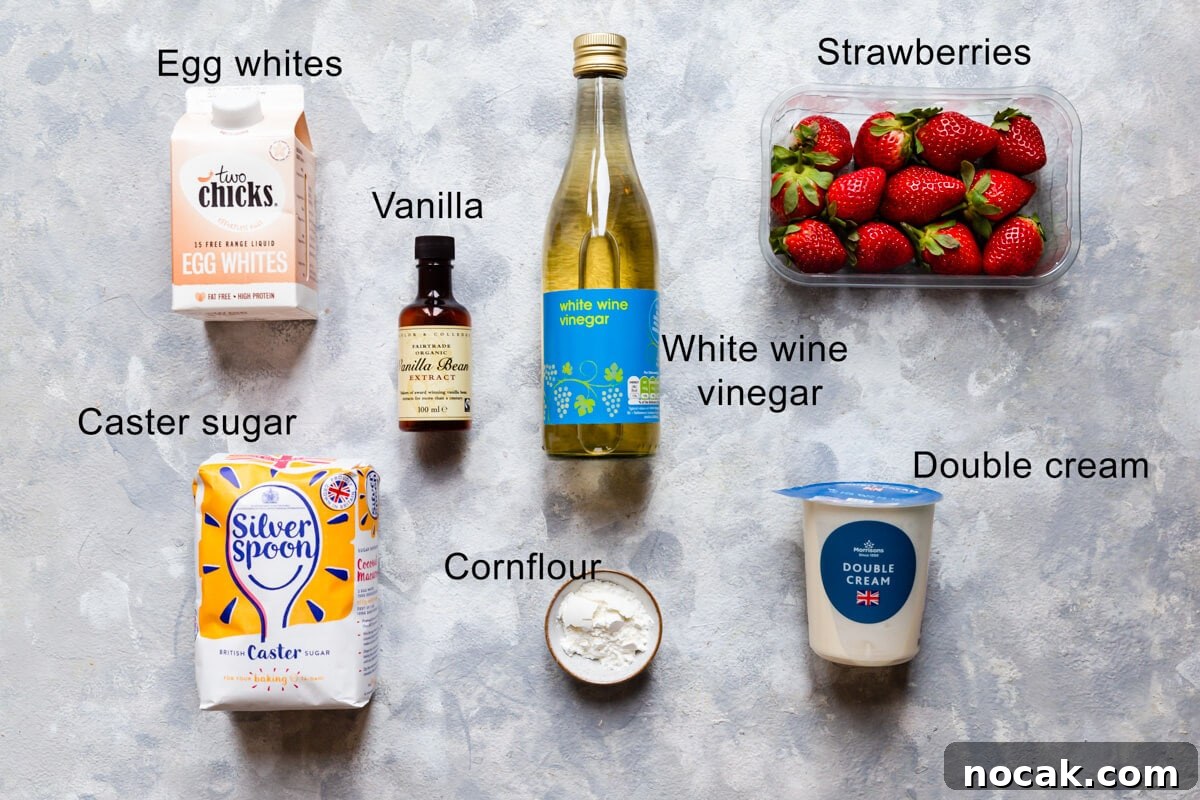
- Egg whites – 150 g (about 4–5 large eggs), room temperature.
- White caster sugar – superfine sugar dissolves fastest. 250 g recommended.
- Cornflour – 1 tsp to help keep the centre soft.
- White wine vinegar – 1 tsp to stabilise the meringue.
- Vanilla extract – 1 tsp for flavor.
- Fresh strawberries – about 300 g for the topping.
- Double cream or whipping cream – about 300 ml, whipped with icing sugar.
Instructions
Tip: Watch the video in the recipe card for a visual guide.
Ensure all bowls and equipment are clean and grease-free. Glass or metal bowls work best; wipe plastic bowls thoroughly if you must use them. Rubbing the bowl with half a lemon then drying it can help remove grease.
Warming the sugar briefly helps it dissolve quickly and prevents a gritty meringue. To do this, preheat the oven to 190°C (170°C fan), spread the caster sugar on a lined baking tray, and warm for about 5 minutes until the edges begin to melt. Remove and let cool.
Place the room-temperature egg whites in a mixer bowl and whisk on medium-high until they reach stiff peaks (about 3–4 minutes). Gradually add the warmed sugar, 1–2 tablespoons at a time, whisking until the mixture is glossy and smooth with no gritty texture.
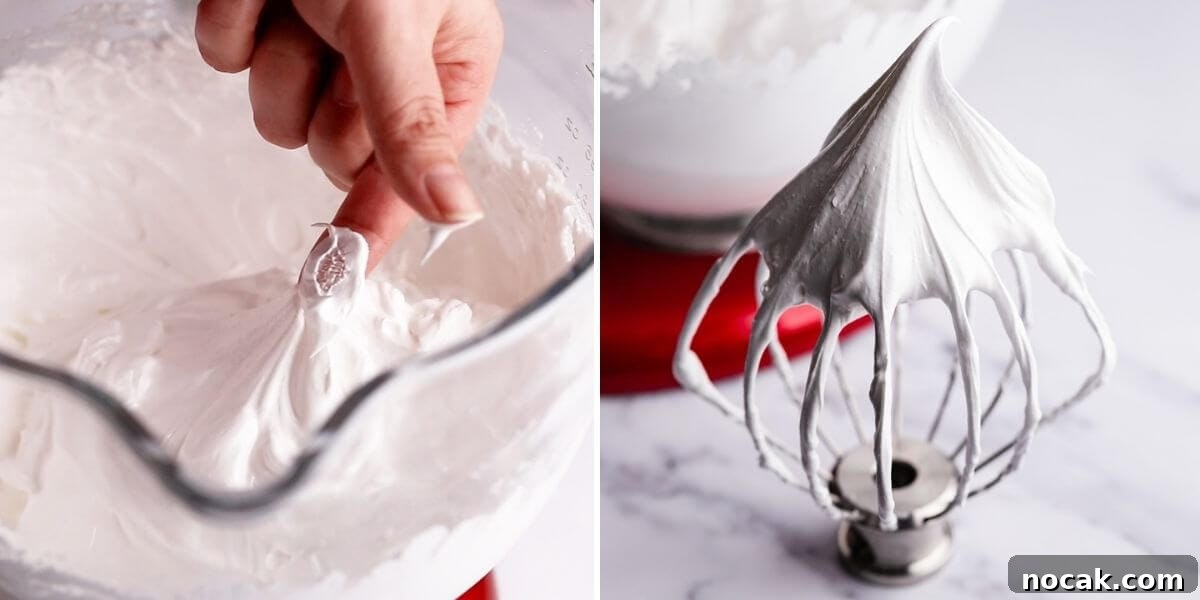
Test by rubbing a little mixture between your fingers; it should feel smooth. If it’s still gritty, continue whisking.
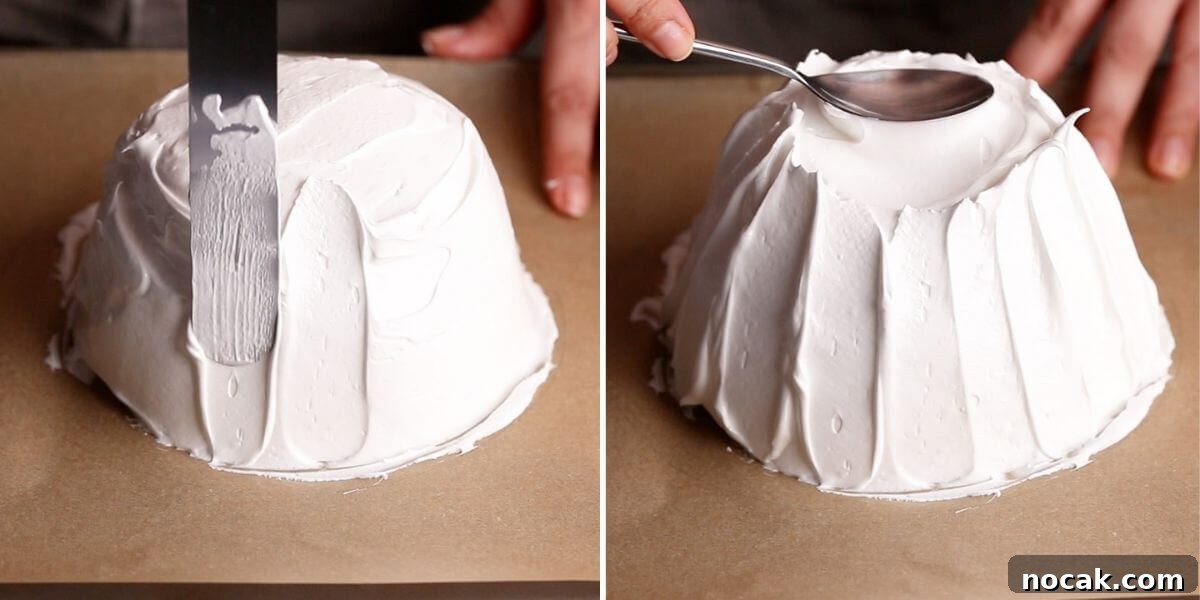
Fold in the cornflour, vanilla and white wine vinegar, then mound the meringue onto a lined baking sheet (use a 20 cm plate to draw a circle on the parchment as a guide). Smooth the top and create a shallow well in the centre for the cream and fruit.
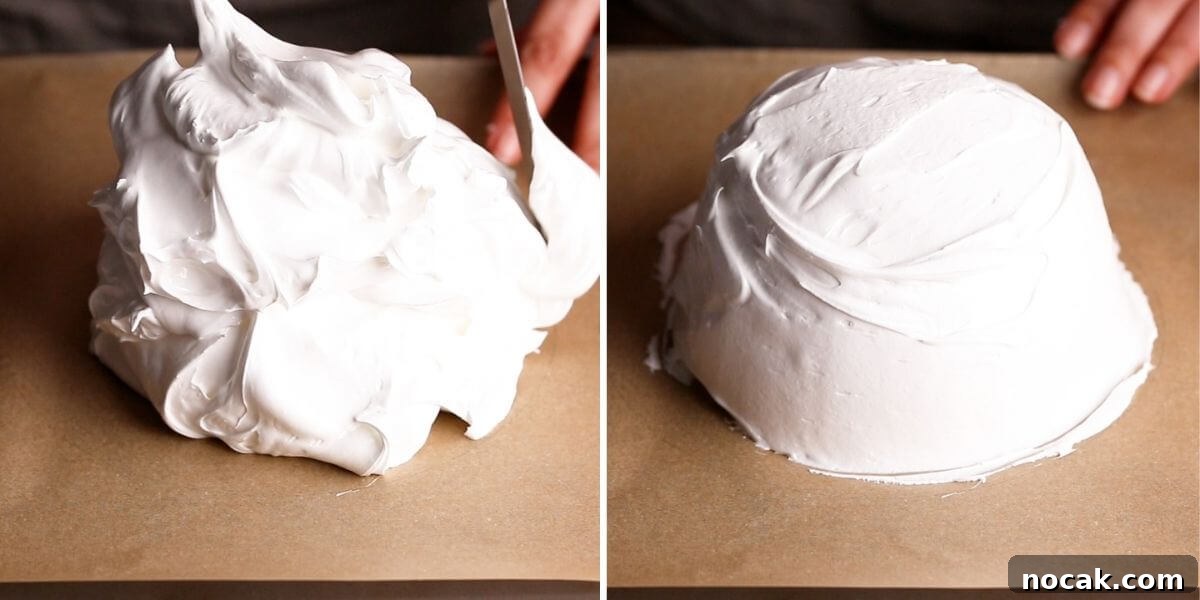
Bake at 120°C (fan) for 1 hour, then reduce the oven to 100°C and bake for another 40 minutes. Turn the oven off and leave the pavlova inside to cool slowly for at least a couple of hours or overnight — do not open the oven door while it cools.
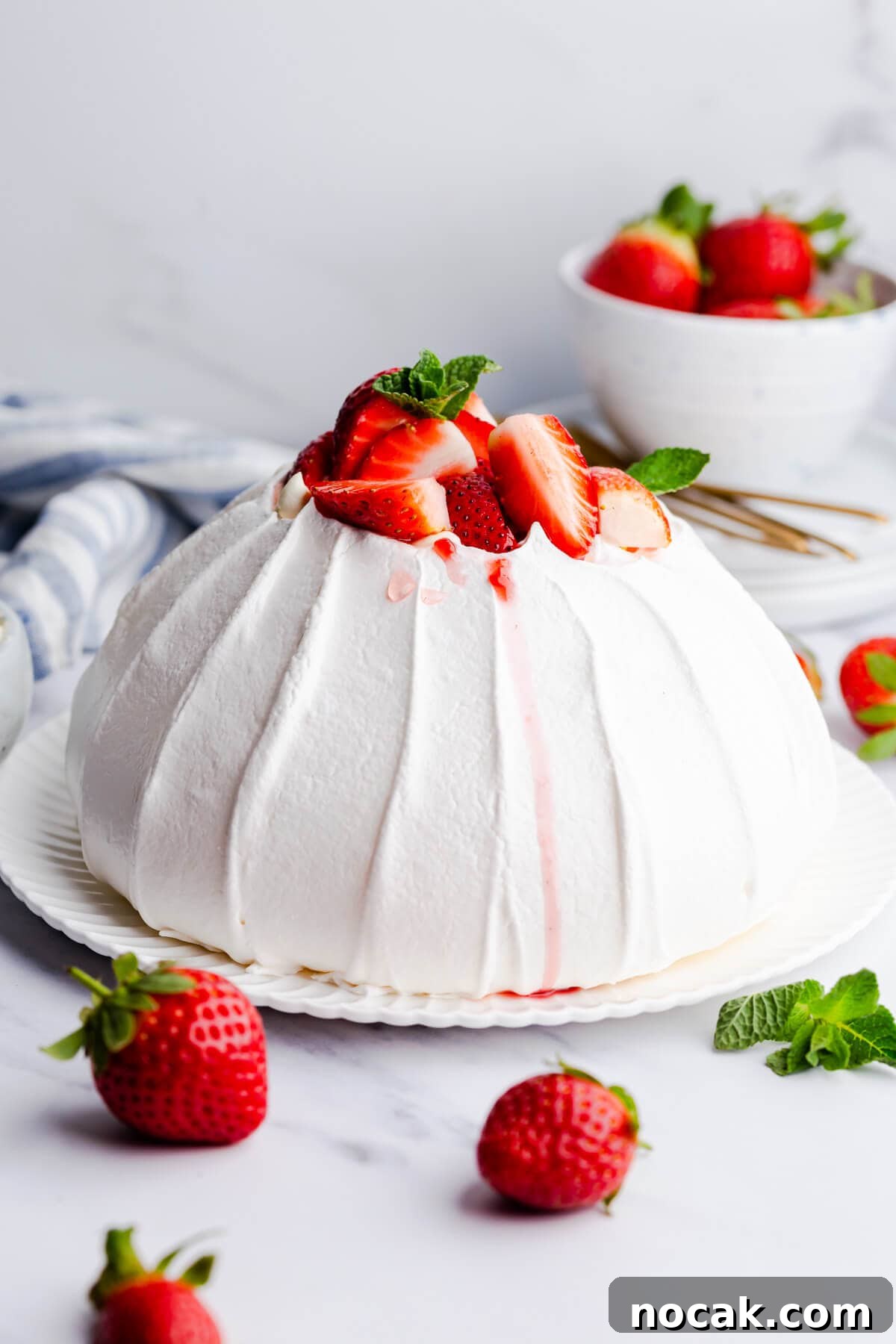
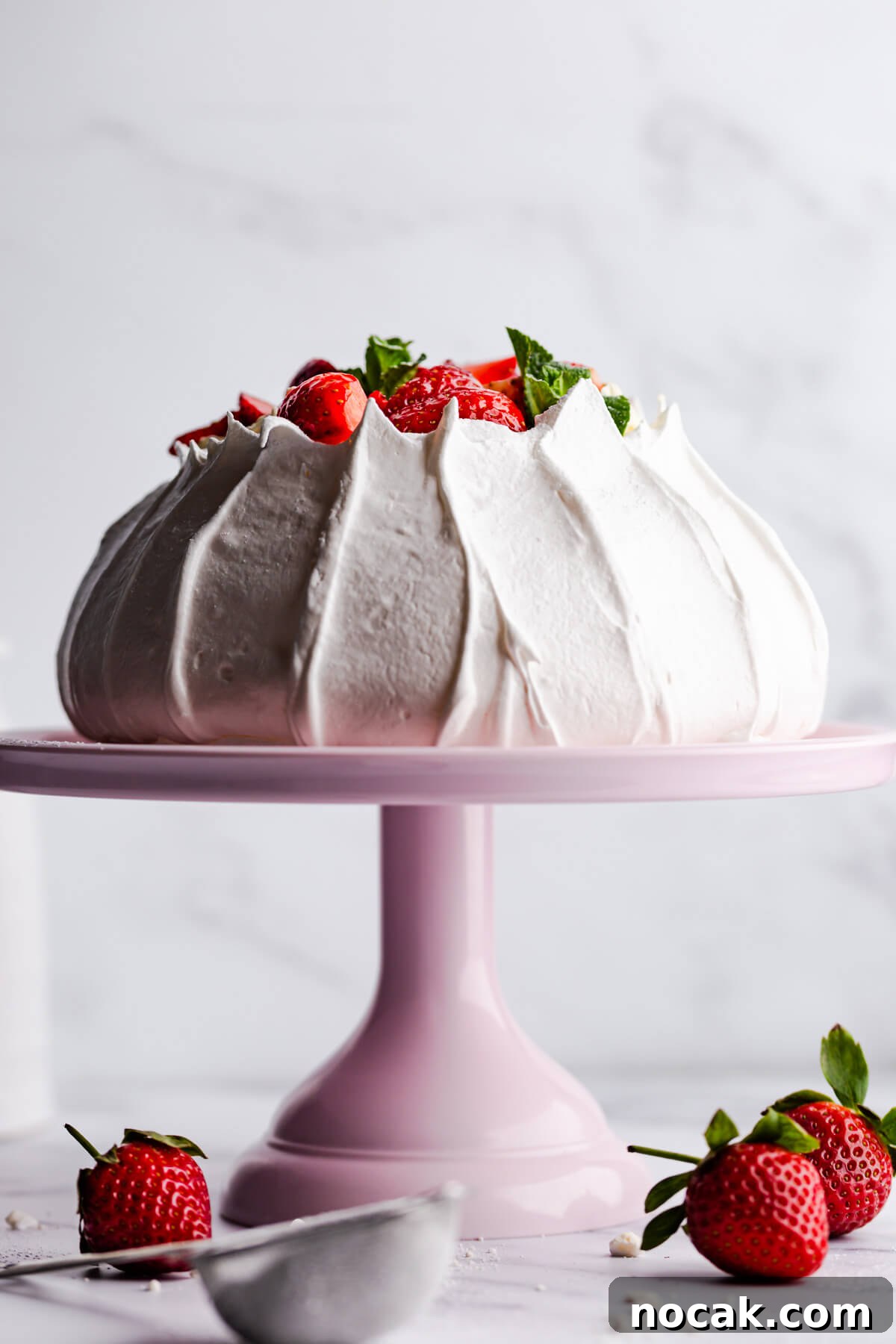
Slice the strawberries and toss with a tablespoon or two of caster sugar to macerate. Whip the double cream with 1–2 tbsp icing sugar to soft peaks. Top the cooled pavlova with whipped cream and strawberries and serve promptly.
Oven temperature
Correct oven temperature is crucial. Too hot and the pavlova can brown, crack or collapse; too cool and it won’t set properly. If you preheated the oven to warm the sugar, allow it to cool back to the baking temperature. An independent oven thermometer gives the best accuracy. Adjust temperatures slightly if your oven runs hot or cold.
Substitutions
- Sugar: Caster sugar is ideal, but granulated sugar or icing sugar can work. Light brown sugar will darken the meringue.
- Cornflour: Swap with cornstarch, potato starch or arrowroot powder.
- White wine vinegar: Use cider vinegar, distilled vinegar or a little lemon juice instead.
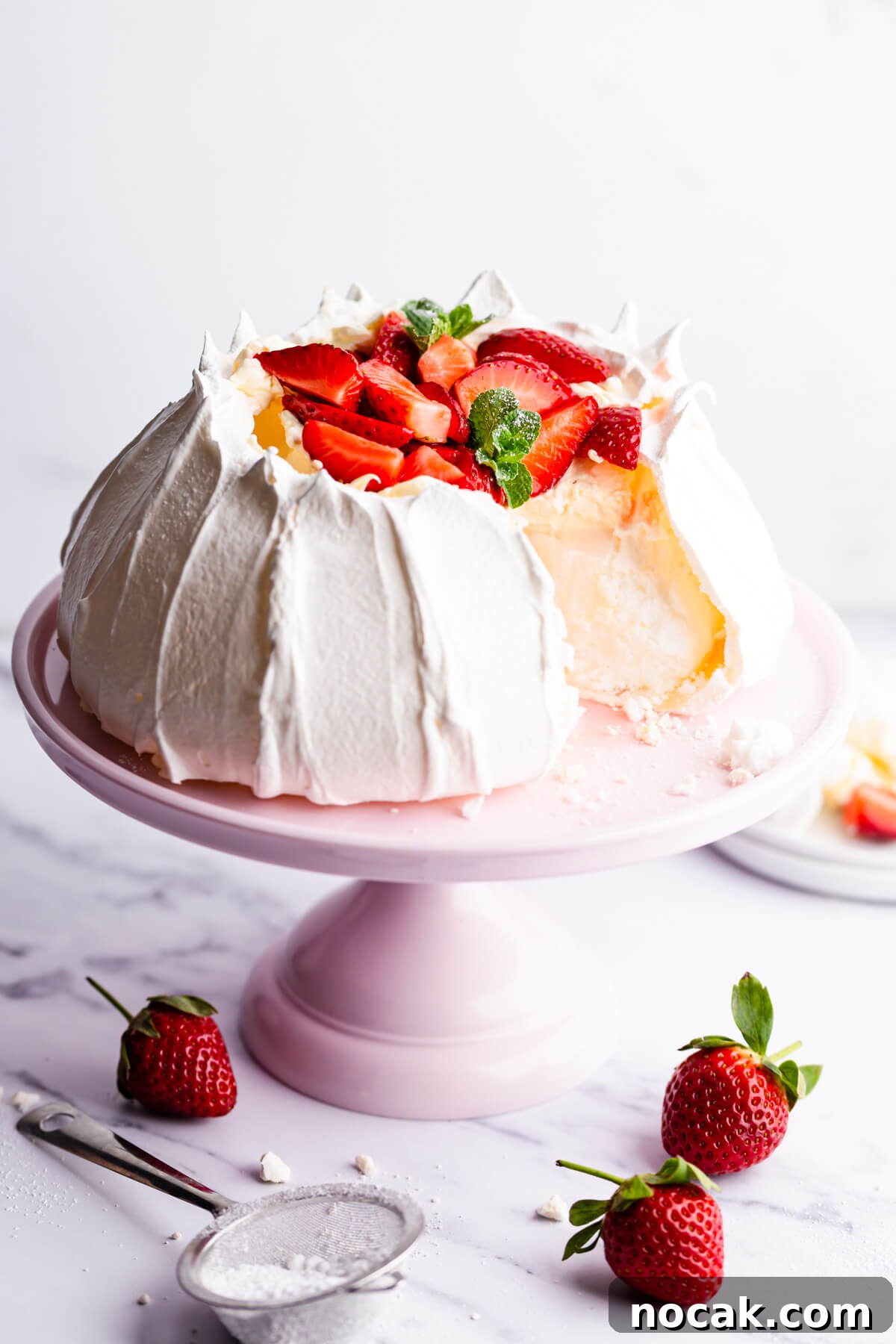
Variations
Some easy ways to adapt this recipe:
- Mini pavlovas: Divide and shape into smaller portions for individual desserts.
- Add lemon curd: Swirl a spoonful into the whipped cream for a tangy twist.
- Chocolate pavlova: Fold in cocoa powder or a little melted chocolate for a chocolate version.
- Eton mess: If your pavlova cracks, crumble it and combine with cream and fruit for a rustic Eton mess.
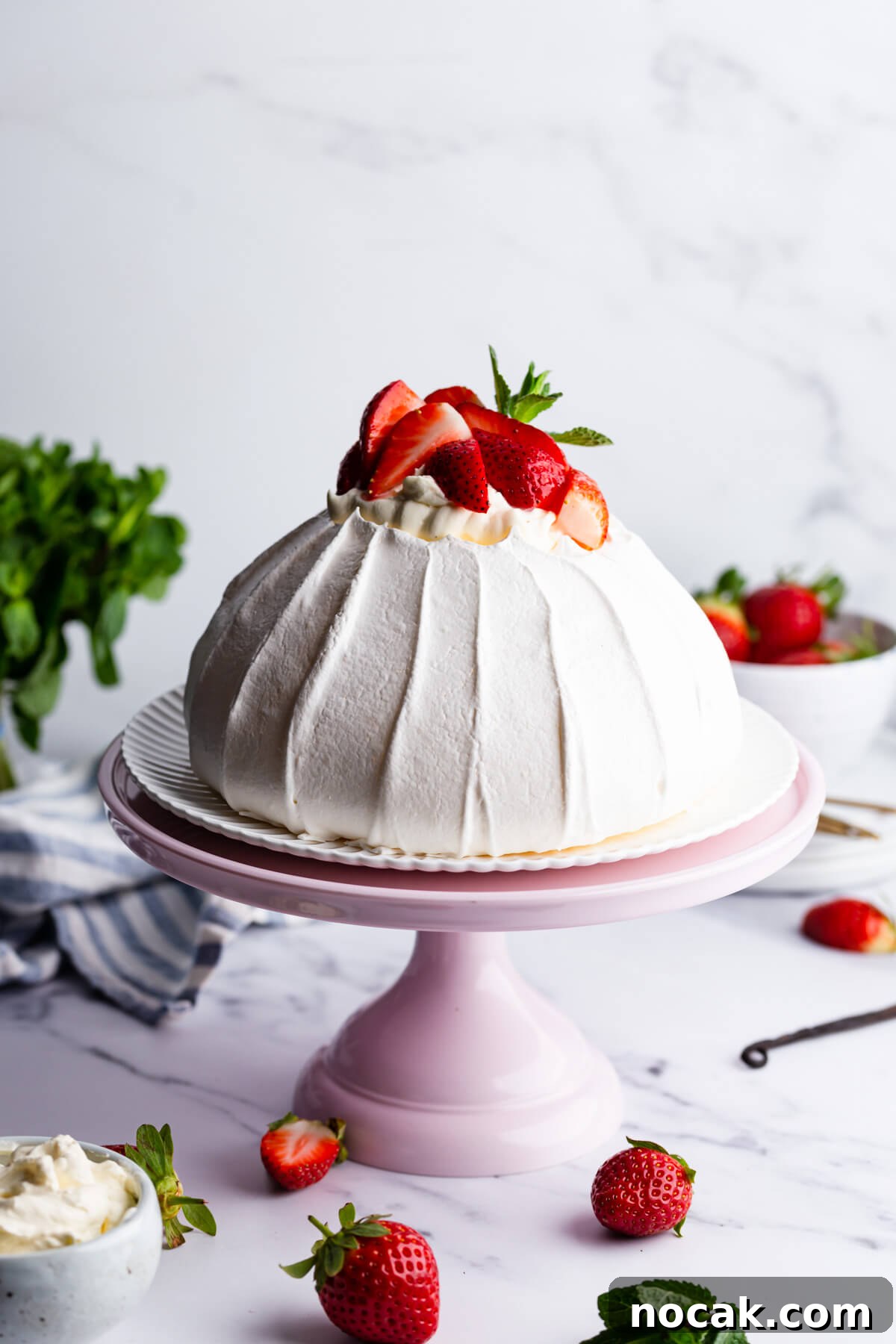
Equipment
- Hand-held mixer or stand mixer with balloon whisk.
- Large baking sheet and baking paper.
- Oven thermometer (optional but useful).
Storage and freezing
Pavlova is best eaten the day it’s assembled. Once topped with cream and fruit, serve immediately. Store the unfilled, cooled pavlova in an airtight container in a cool, dry place for a few hours before serving. Refrigeration will make it soggy.
You can freeze an unfilled pavlova for up to one month: freeze on a tray until solid, then wrap in two layers of cling film. Thaw at room temperature for 2–3 hours before serving.
FAQ’s
What’s the difference between meringue and pavlova?
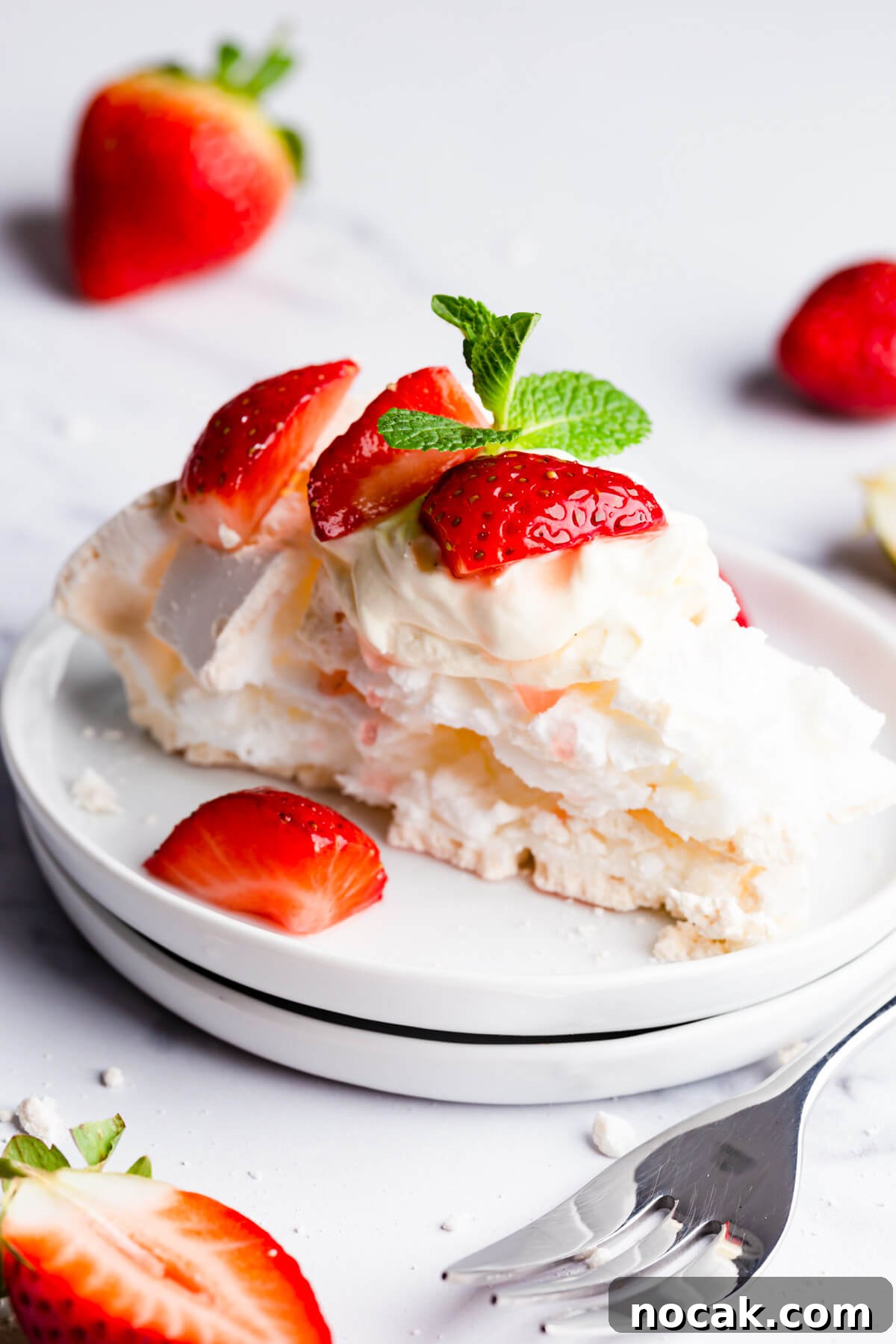
Pavlova is a style of meringue: traditional meringue is crisp and dry throughout, while pavlova has a crisp shell and a soft, marshmallow-like centre.
Can this be made ahead?
Yes. Bake the pavlova ahead and leave it in the turned-off oven to cool overnight, or keep the unfilled shell in an airtight container until a few hours before serving.
Why did my pavlova crack?
Common causes are over-rapid expansion from too-high heat, sudden temperature changes, or a mixture that wasn’t whipped to the correct consistency. Cool the pavlova gradually in the turned-off oven and avoid opening the door while it cools.
Why won’t my mixture stiffen?
Ensure equipment is clean and grease-free. Whip the egg whites to stiff peaks before adding sugar, and add sugar gradually — adding it too fast can collapse the foam.
Why is my pavlova weeping?
Undissolved sugar can cause weeping. Use fine caster sugar and make sure it’s fully dissolved by whisking until the mixture is smooth.
Is pavlova supposed to be chewy?
Yes. The interior should be soft and slightly chewy, while the exterior is light and crisp.
Top tip
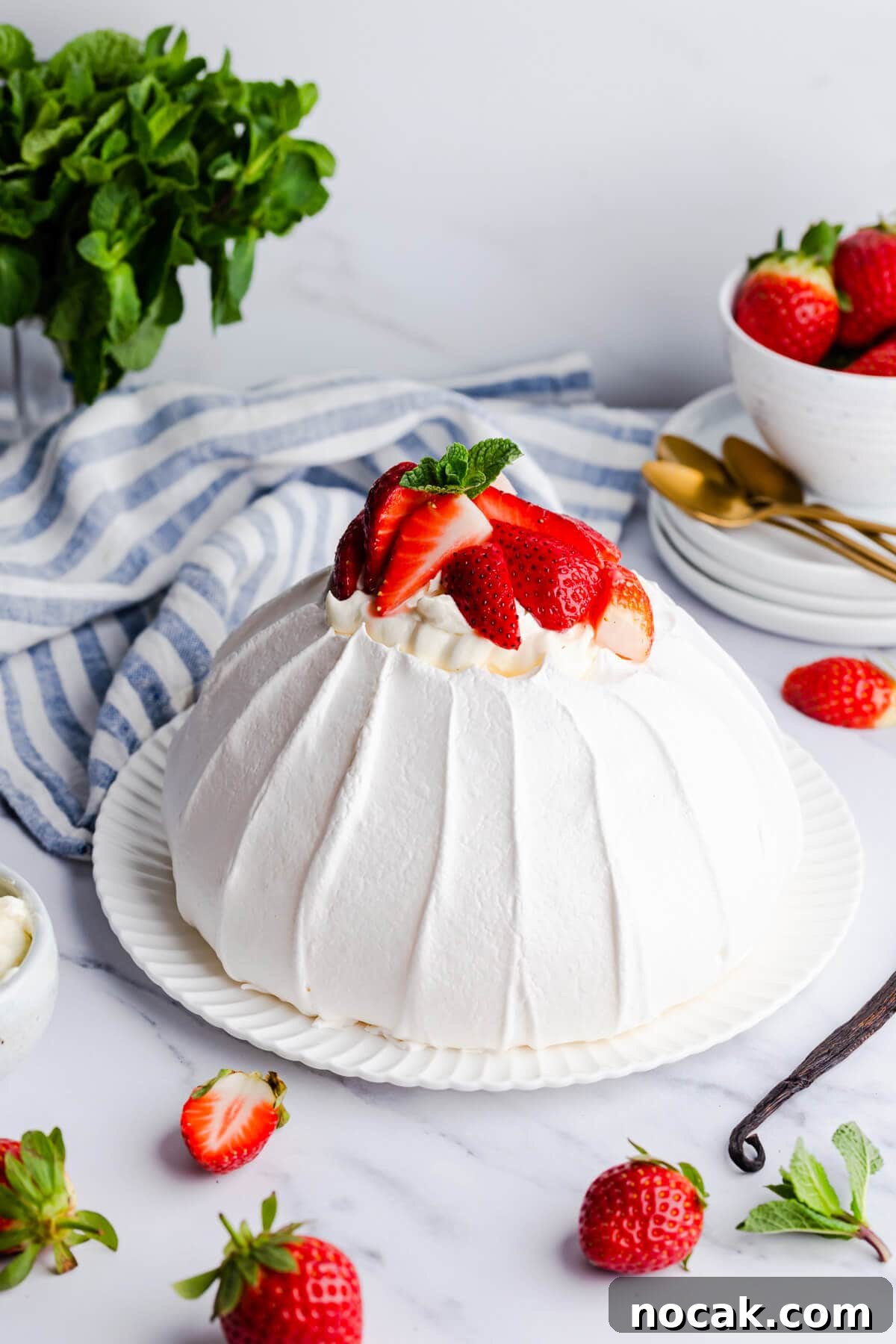
Pavlovas often crack or break, but even imperfect ones taste wonderful. If yours splits, embrace it as an opportunity to serve Eton mess or a beautiful, rustic dessert.
If you try this recipe, please rate it or leave a comment — feedback helps other cooks and is greatly appreciated.
📖 Recipe
Strawberry Pavlova
Ingredients
For the pavlova:
- 150 g egg whites (about 4–5 large eggs), room temperature
- 250 g caster sugar
- 1 tsp white vinegar
- 1 tsp cornflour or arrowroot powder
- 1 tsp vanilla extract
For the topping:
- 300 g fresh strawberries
- 300 ml double cream
- 2 tbsp icing sugar
Instructions
- Optional: Preheat oven to 190°C (170°C fan). Spread caster sugar on a lined tray and warm for 5 minutes, then remove and cool. Reduce oven to 120°C.
- Preheat oven to 120°C (fan). Use a 20 cm plate to trace a circle on baking parchment and flip the paper over so the pencil marks are underside.
- Whisk egg whites on medium-high until stiff peaks form. Gradually add sugar, 1–2 tbsp at a time, until the mixture is glossy and smooth.
- Fold in 1 tsp cornflour, 1 tsp white vinegar and 1 tsp vanilla. Mound the mixture inside the drawn circle, smoothing the top and making a small well in the centre.
- Bake at 120°C for 1 hour, then reduce to 100°C and bake for a further 40 minutes. Turn off the oven and leave the pavlova inside to cool for several hours or overnight without opening the door.
- Slice strawberries and toss with 1–2 tbsp caster sugar to release juices. Whip the cream with 1–2 tbsp icing sugar to soft peaks.
- Top the cooled pavlova with whipped cream and strawberries, drizzle with any released juices, and serve immediately.
Notes
- Use metal or glass bowls rather than plastic for best results.
- Add sugar gradually to avoid collapsing the meringue.
- Store unfilled pavlova in an airtight container in a cool, dry place. Once filled, serve the same day.
- Unfilled pavlova can be frozen for up to a month; thaw at room temperature for 2–3 hours before serving.
Nutrition
Serving size: 50 g — Calories: 376 kcal; Carbohydrates: 50 g; Protein: 4 g; Fat: 19 g; Sugar: 47 g.