I know I’ve been quiet for a while — I needed the pause. Over the coming weeks I’ll ease back into my usual rhythm: posts, recipes and small stories. When the moment arrives I’ll share how this unusually quiet, homely August became a month of exploration and reflection, helping me understand what I truly needed.
I missed simple mornings on the balcony with a cup of coffee and Noa curled at my feet, or long evenings propped against a mountain of pillows. I missed listening—to myself and to those around me—and I missed cooking for friends and family purely for the pleasure of it. These days of rest felt like a glass of iced water on a hot day or a cool walk in the mountains during a sweltering summer: restorative and clarifying.
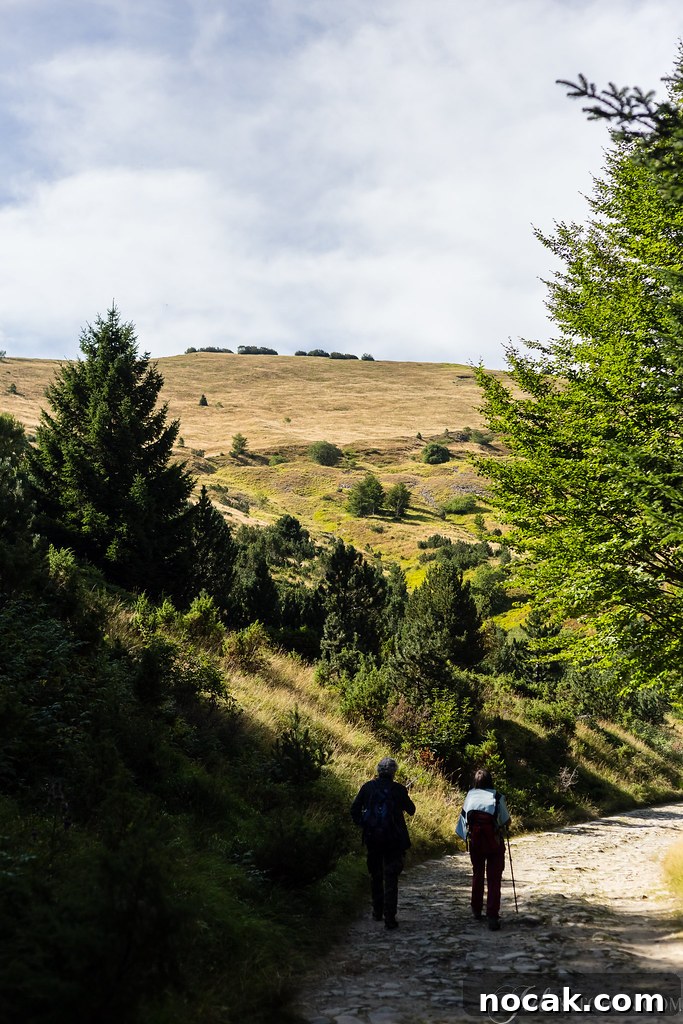
Last year Tommaso and I spent a few days in the Appennino Pistoiese to escape an oppressive heat wave. For many Tuscan city-dwellers, a short trip into the mountains is the cure for summer heat: chestnut woods, hiking trails, blueberry bushes and medieval villages such as Popiglio, Piteglio, Sambuca and San Marcello. It’s a different world, a cooler, quieter rhythm that invites simpler pleasures—like rustic baking.
As part of a small Tuscany tour celebrating nuts and dried fruit in traditional recipes, I’m sharing a modest favourite: the almond cake of San Marcello Pistoiese.

San Marcello Pistoiese almond cake
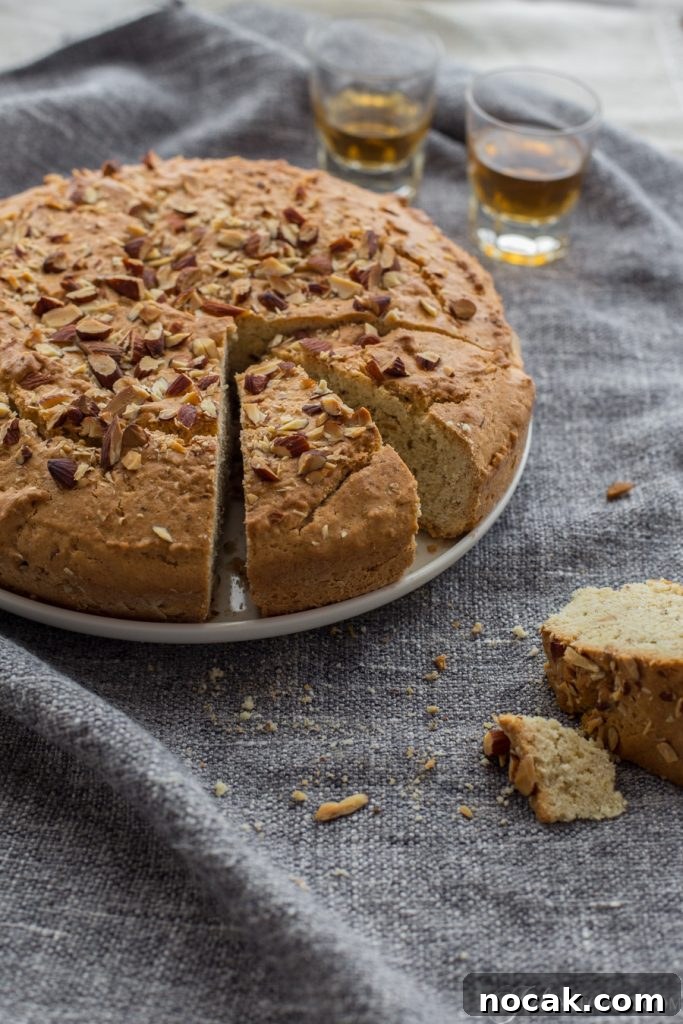
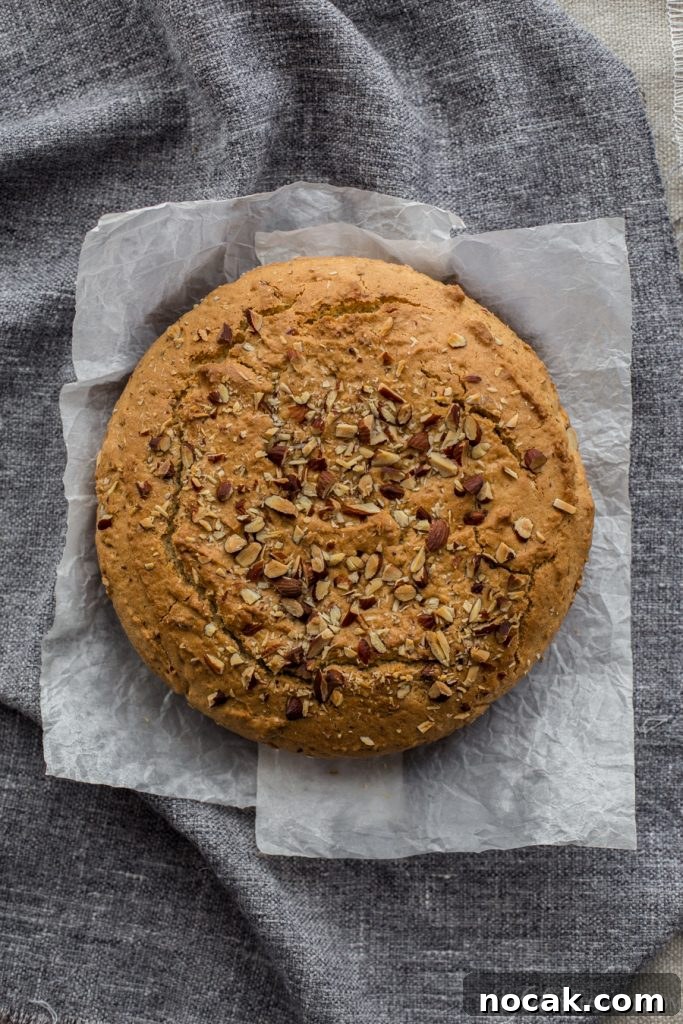
This cake feels like a relic of a grandmother’s kitchen: simple, honest, and meant to be kept under a cloth on the table or on a high shelf, away from greedy hands. It is crumbly and dry by design—a breakfast cake that invites soaking in coffee or tea, or spreading with jam. It is also lovely after dinner: slice it, mop up the crumbs, serve with a small glass of dessert wine and you’ll appreciate its shy, rugged charm—the same character of the Appennino Pistoiese.
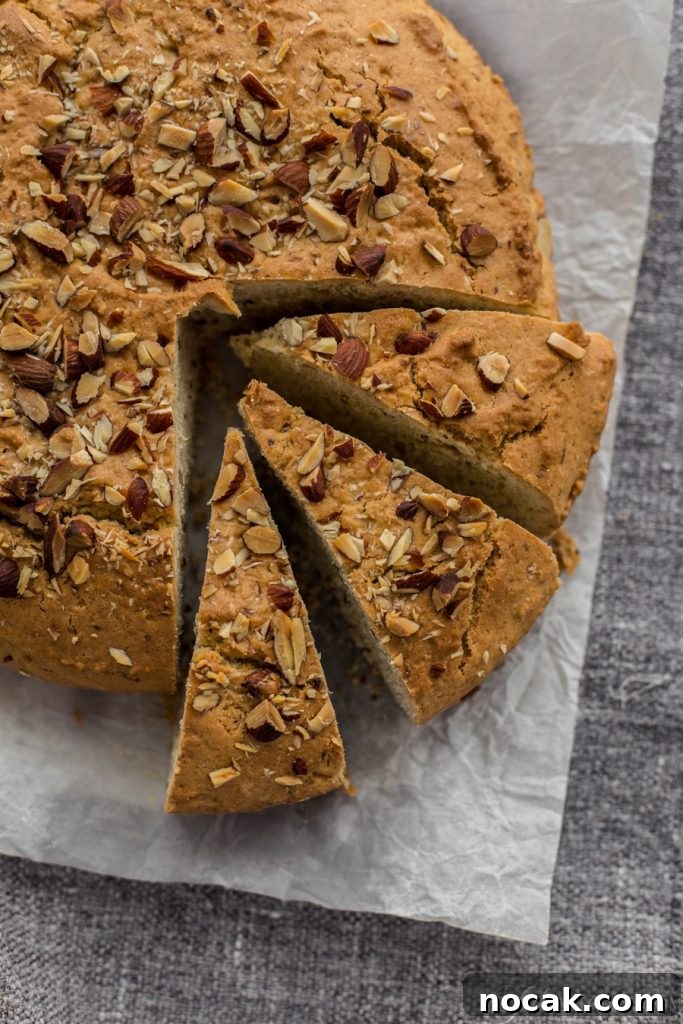
This is not a cake that seduces on the first bite: it takes time. Yet when it grows on you, it becomes impossible to stop. Pull off a slice, nibble the toasted almonds on top, savor that first perfect moment; then dip the cake into a sweet wine as you might with biscotti. The cake, warmed by liqueur and citrus, reveals a mellow blend of aromatics—anise, lemon zest and toasted almonds—best enjoyed in small, lingering bites amid conversation.
The recipe below is adapted from Giovanni Righi Parenti’s La Cucina Toscana, a classic guide to Tuscan home cooking. Measurements and steps are presented for convenience.
Almond cake
Author: Righi Parenti
Prep time: 15 mins | Cook time: 1 hr | Total: 1 hr 15 mins | Serves: 12
Ingredients
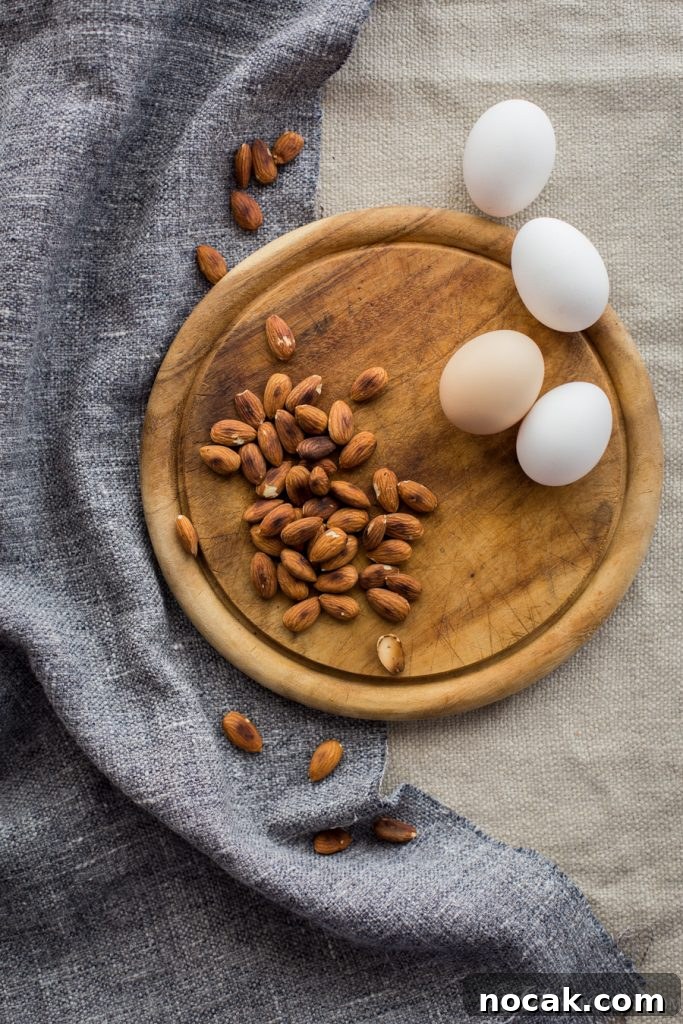
- 80 g (about 1/2 cup) toasted almonds, plus 2 tablespoons for decoration
- 4 eggs
- 250 g (about 1 1/4 cups) sugar
- 600 g (about 4 cups + 5 tbsp) all-purpose flour
- 16 g (about 3 1/2 tsp) baking powder
- Zest of 1 organic lemon
- 1 tablespoon anise seeds
- A pinch of salt
- About 60 ml (1/4 cup) herbal liqueur (traditionally Strega; can be substituted with rum or another herbal liqueur)
- 200 g butter (about 1 + 3/4 sticks), softened to room temperature
Instructions
- Toast the almonds in a nonstick skillet over medium heat until they darken slightly. Remove from heat, cool completely, then grind in a mortar or chop finely with a knife. Set aside.
- Preheat the oven to 170°C (340°F / Gas mark 4).
- Beat the eggs and sugar together until the mixture is light and airy. Add the flour, baking powder, anise seeds, lemon zest, a pinch of salt and the liqueur. Stir until the ingredients form a crumbly dough.
- Add the softened butter and mix until you obtain a thick, sticky dough.
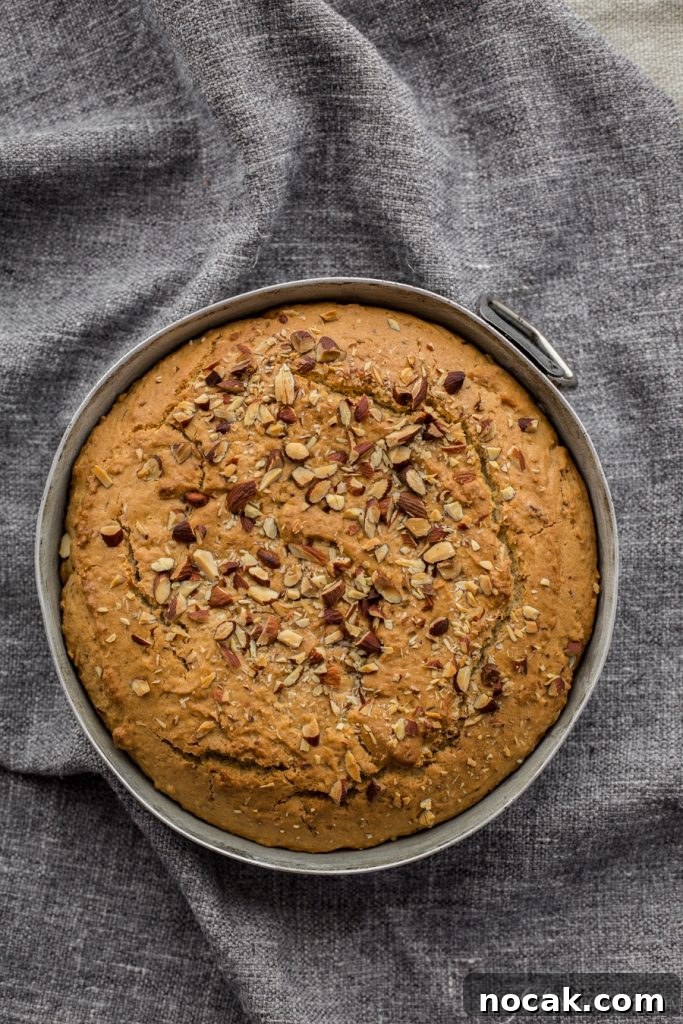
- Grease and flour a 25 cm round pan. Scrape the dough into the pan, level the surface with a spatula and sprinkle the top with the chopped toasted almonds.
- Bake for about one hour, or until the cake is golden and dry to the touch. Oven times vary; check by inserting a skewer into the center—if it comes out mostly clean, the cake is done.
- Allow the cake to cool completely before slicing. It is delicious for breakfast or as a simple after-meal treat.
- Store wrapped in kitchen paper or a clean towel in a cool, dry place; it keeps well for several days.
Notes
Strega is a long-established Italian herbal liqueur with a complex aromatic profile. If you prefer not to use it, substitute with rum or another herbal-flavored liqueur to preserve the intended aromatic depth.
The Tuscan tour with Ventura
- Spongata, a jam and nut cake from Lunigiana. Pine nuts, almonds and dried figs are combined with marmalades to create a rich, spiced filling wrapped in a pastry shell.
- Florentine quaresimali. Traditional Lent biscuits made without egg yolks; they use egg whites, cocoa and hazelnuts for a simple, lightly sweet treat.
- Pilgrim cake (torta coi bischeri) from Pisa. A quicker cake with a moist filling of rice pudding, chocolate, candied fruit, raisins and pine nuts—perfect with coffee or vinsanto.
- Buccellato from Lucca. A sweet bread made from enriched bread dough with sugar, raisins and aniseed—typical of Tuscan sweet loaves.
- Sweet and sour salt cod from Livorno. A savory-sweet dish with raisins and pine nuts that reflects Livorno’s culinary openness to diverse influences.
- Prato biscotti with pistachios and white chocolate. These biscuits often include almonds, hazelnuts, pistachios or chocolate combinations; pistachios and white chocolate make an elegant pair.