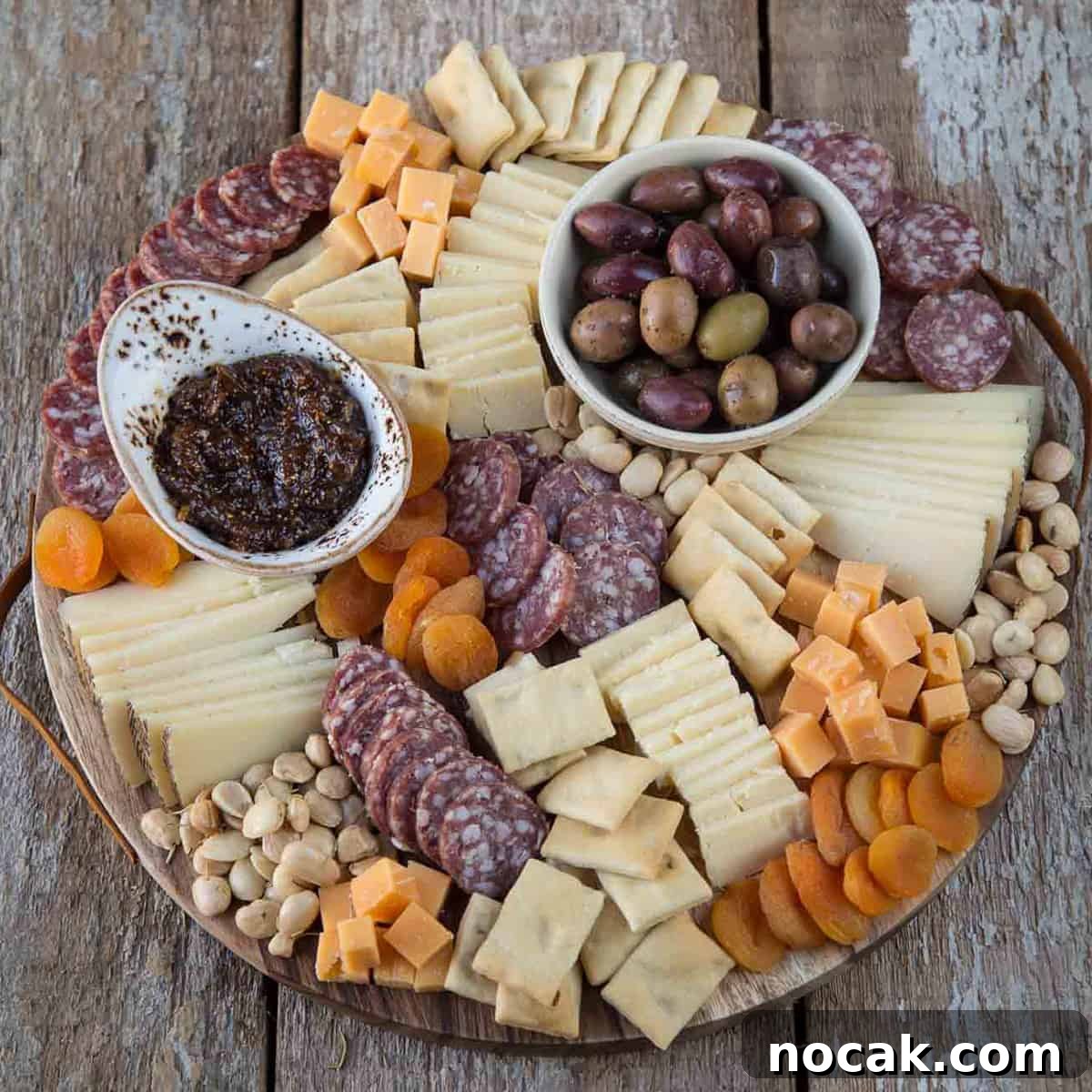
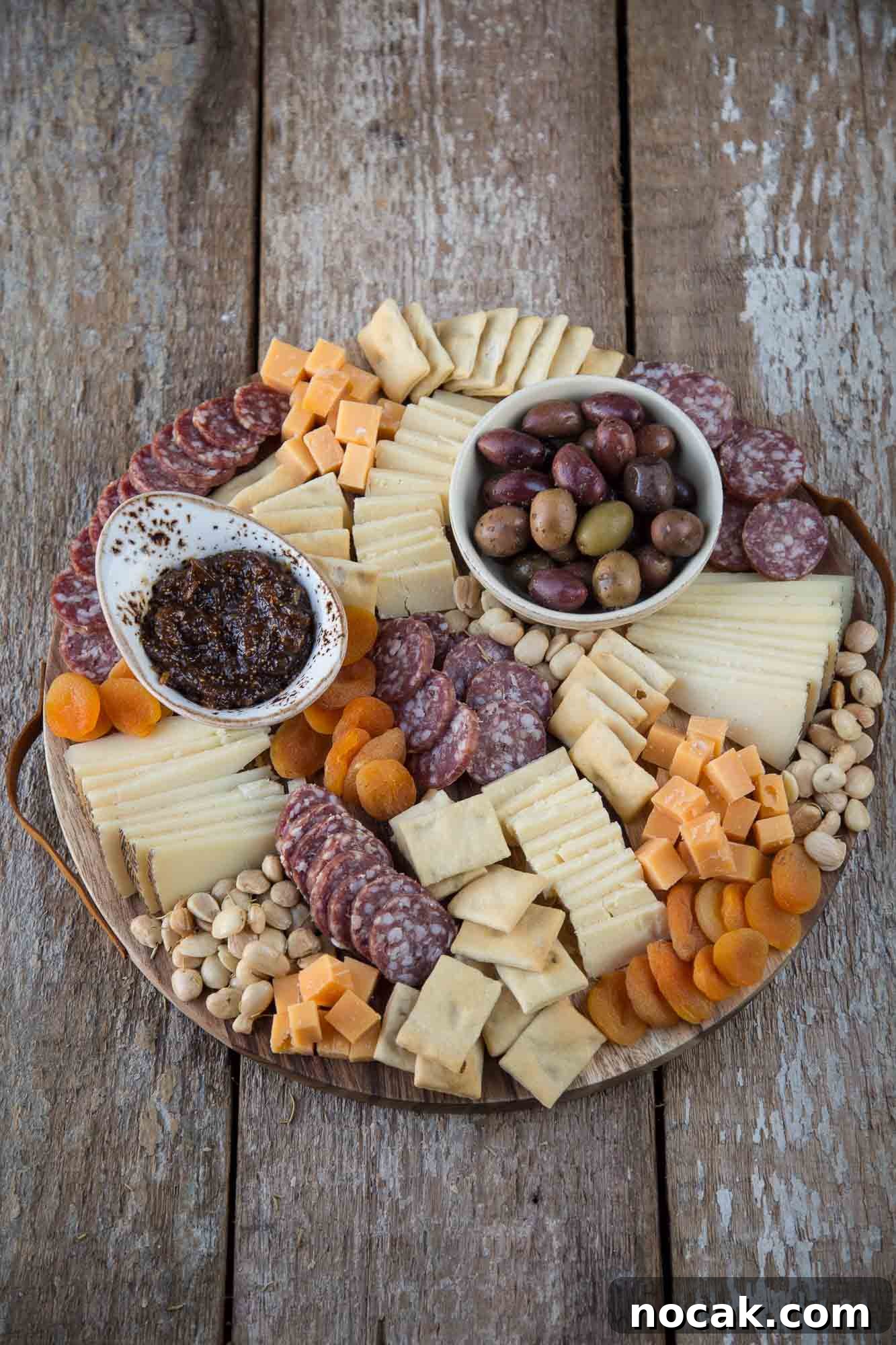
What’s a party without cheese? It can feel a little flat—missing the bright, welcoming note that a well-arranged cheese board brings. A thoughtfully composed board with crackers, salami, nuts, dried fruit and a spoonful of jam is an effortless way to make any gathering feel special. It’s simple to assemble with a bit of planning and an eye for balance. Below is a clear, practical guide to building a cheese board that looks beautiful and satisfies a variety of tastes.
What to Include
A great cheese board offers something for everyone: crunchy crackers or crostini, a salty or roasted nut like marcona almonds, dried fruit to refresh the palate, and a selection of cheeses. Adding a small amount of charcuterie such as salami or prosciutto gives substance and visual contrast. Olives, pickles, or cornichons are excellent savory accents and pair well with most cheeses. Small bowls for jam or honey add sweetness and texture.
Choosing Cheeses
Many guides recommend a mix of textures and flavors—one hard cheese, one soft cheese, and a blue cheese—so guests can sample different profiles. That said, choose cheeses you enjoy. If strong blue cheeses aren’t for you, omit them. If you love three hard cheeses, that works perfectly. The key is variety in flavor, texture and color so the board feels interesting and accessible.
How to Build a Cheese Board
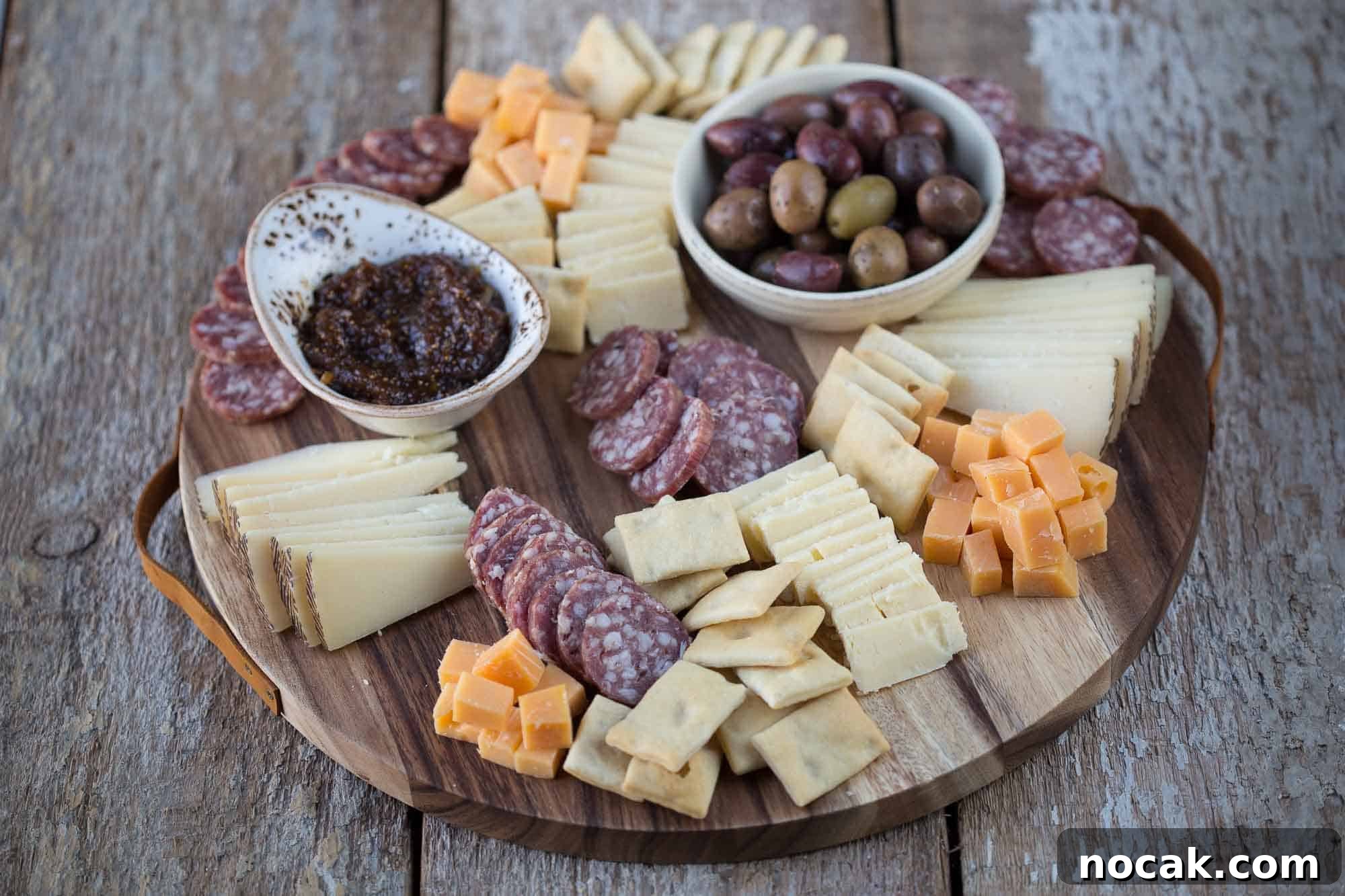
1. Prepare and slice: Arrange all your ingredients on the counter. Slice cheeses and charcuterie before you assemble. Vary the cuts—cubes, wedges, and rectangular slices create visual interest. Soft wheels like brie or goat cheese can be left whole for a rustic look. Avoid leaving large blocks of hard cheese uncut; guests may struggle to cut them later.
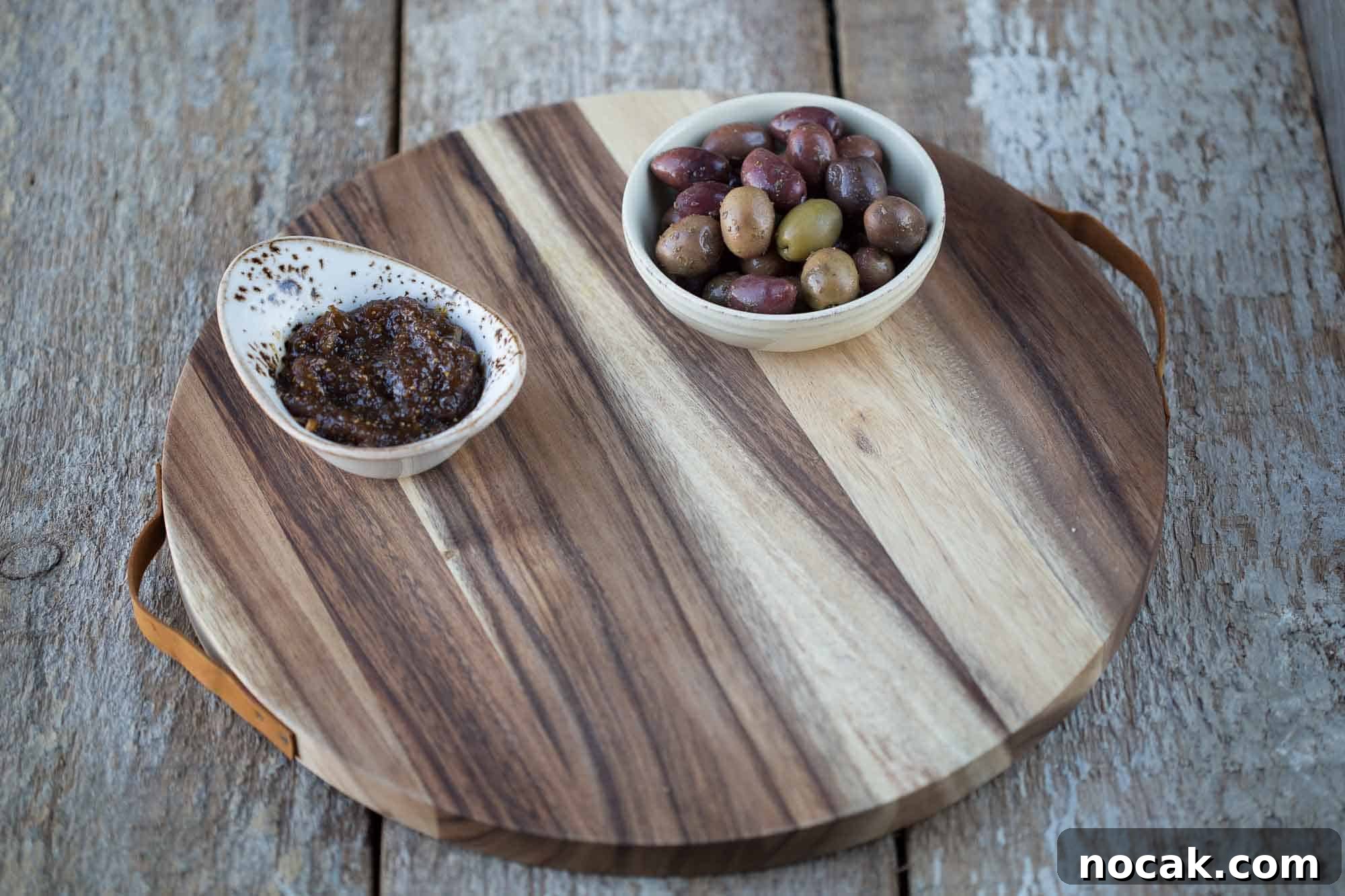
2. Small bowls: Put olives, jams, or honey into small bowls or ramekins and place them on the board toward the back so they anchor the layout and keep wet ingredients contained.
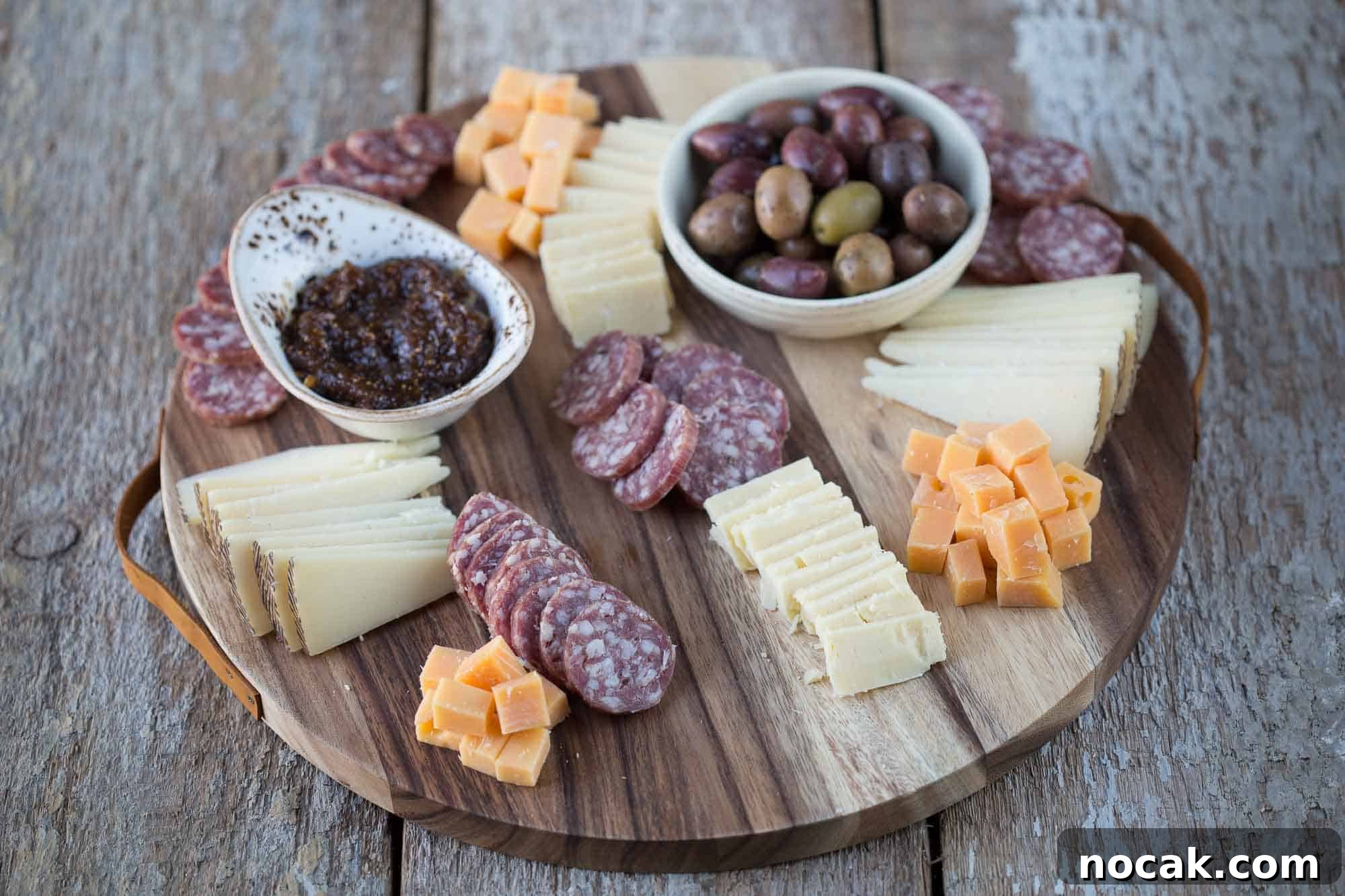
3. Group the cheeses: Place each cheese in two or three small clusters around the board. Clustering helps guests access cheeses from different sides and keeps the arrangement balanced. Repeat the same approach with slices or piles of salami.
4. Add crackers: Set small stacks or fans of crackers around the cheeses. If space is limited, place additional crackers in a separate basket or platter beside the board.
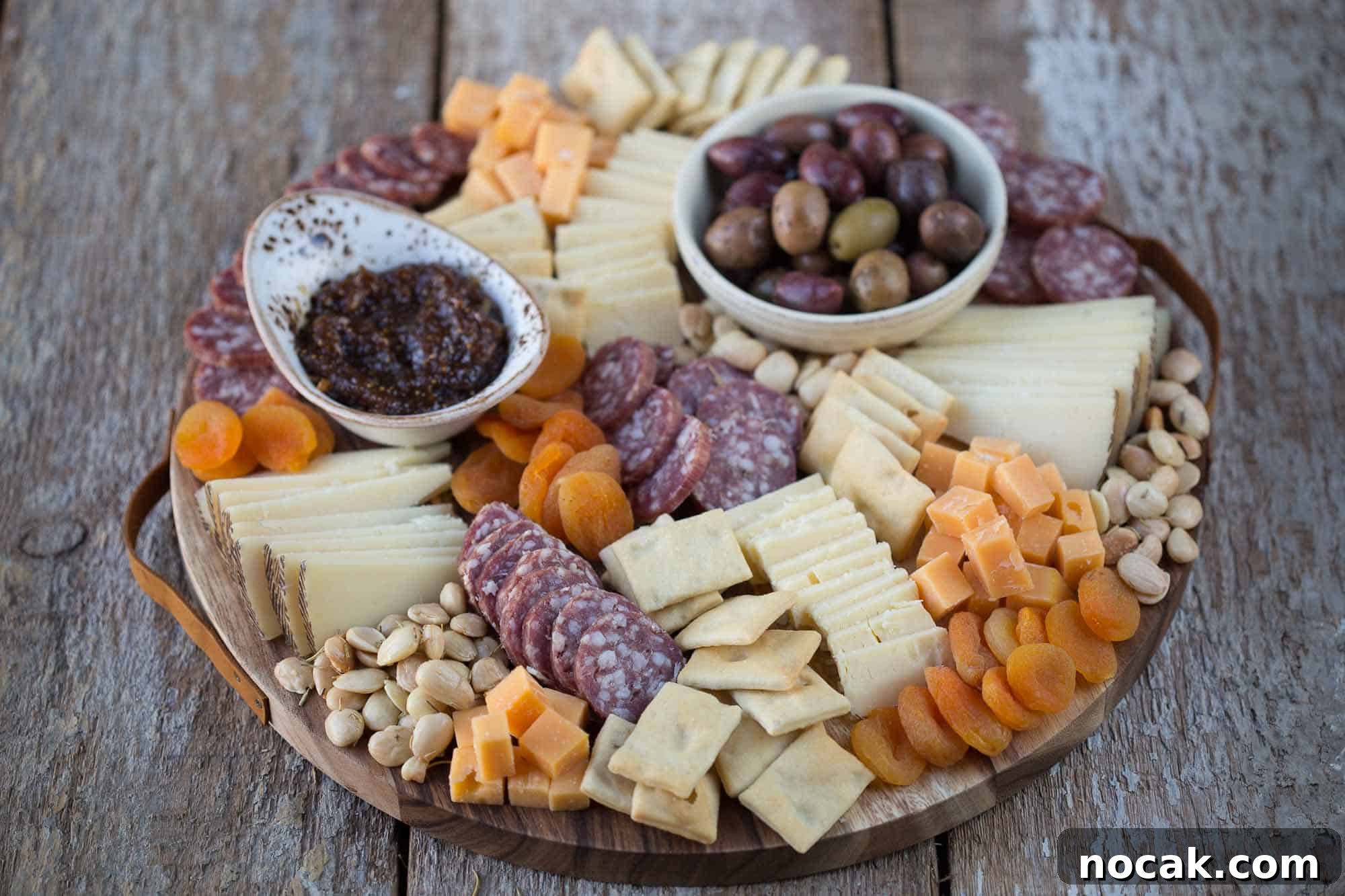
5. Fill gaps: Tuck in nuts, dried apricots, figs, fresh grapes, or berries to fill empty spaces. These elements add color, texture and sweetness. Use a mix of dried and fresh fruit if you prefer.
6. Final touches: Include small forks or toothpicks for olives, a small spoon for jam or honey, and separate cheese knives or spreaders if you have soft cheeses. Labeling cheeses with small tags or cards is helpful for guests and elevates the presentation.
Assembly Tips
Place the bowls first, then the cheeses, then the charcuterie. Scatter crackers and seasonal fruit to add color and visual contrast. Use smaller plates or platters if you want the board to appear fuller—dense arrangements read as abundant and inviting. Consider dietary needs: have a separate bowl of gluten-free crackers for guests who need them.
Variations and Inspiration
The possibilities are endless. I’ve made boards with soft cheeses and paper-thin prosciutto, fresh grapes and berries, sugared orange slices, apple wedges, raspberry jam, honey, and breadsticks. Swap nuts and fruits seasonally—roasted almonds or candied walnuts in winter, fresh figs and pears in late summer and fall. The goal is balance and contrast: salty with sweet, creamy with crunchy, mild with bold.
Two Simple Rules
1. Include a variety of colors, textures, and flavors so guests can mix and match. 2. Fill the board—visually full boards look generous and are more appealing. If your board looks sparse, switch to a smaller tray or add more items.
Recipe: Example Cheese Board for 10
Here’s an example layout using a 15-inch round wooden board. Adjust quantities to fit your platter size and guest count.
Ingredients
- 8 oz aged cheddar
- 8 oz gouda
- 8 oz manchego
- 8 oz log salami
- 1 cup marcona almonds
- 1 cup dried apricots
- 1 cup mixed olives
- ½ cup fig jam
- 1 package crostini or 1–2 varieties of favorite crackers
Instructions
- Slice cheeses into a variety of shapes—cubes, wedges, and rectangles. Leave soft rounds whole if desired.
- Thinly slice salami (about 1/8–1/4 inch). Place a cutting board or platter in front of you for assembly.
- Drain olives into a small dish and spoon jam into another. Position both bowls on the board.
- Arrange cheeses in 2–3 clusters each across the board to keep the layout balanced.
- Place salami and crackers in several small piles around the board. Add extra crackers in a side basket if needed.
- Fill gaps with almonds, dried apricots or other fruit. Add utensils: a small spoon for jam and a pick or fork for olives.
Notes
The sample quantities are for a 15-inch board and roughly 10 servings. Scale up or down depending on your platter size and guest count. Swap any cheeses or accompaniments to suit personal preference—this guide is meant to be flexible and approachable.
If you enjoyed this guide, try experimenting with seasonal fruits, different nuts, and specialty jams to create a signature board that reflects your taste and the occasion.