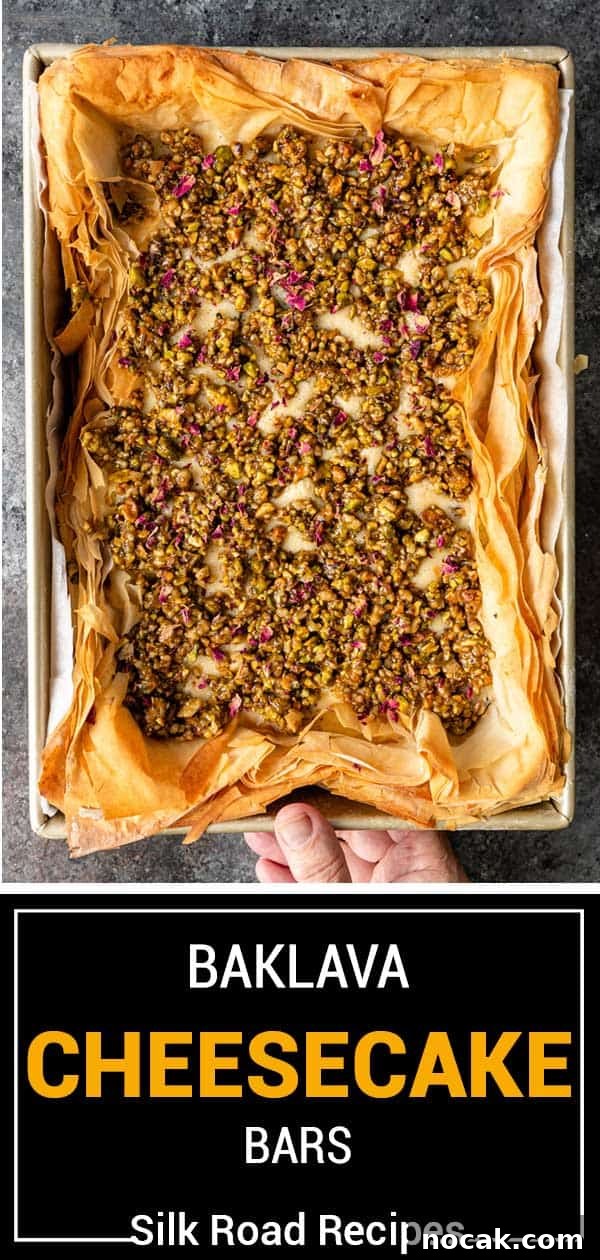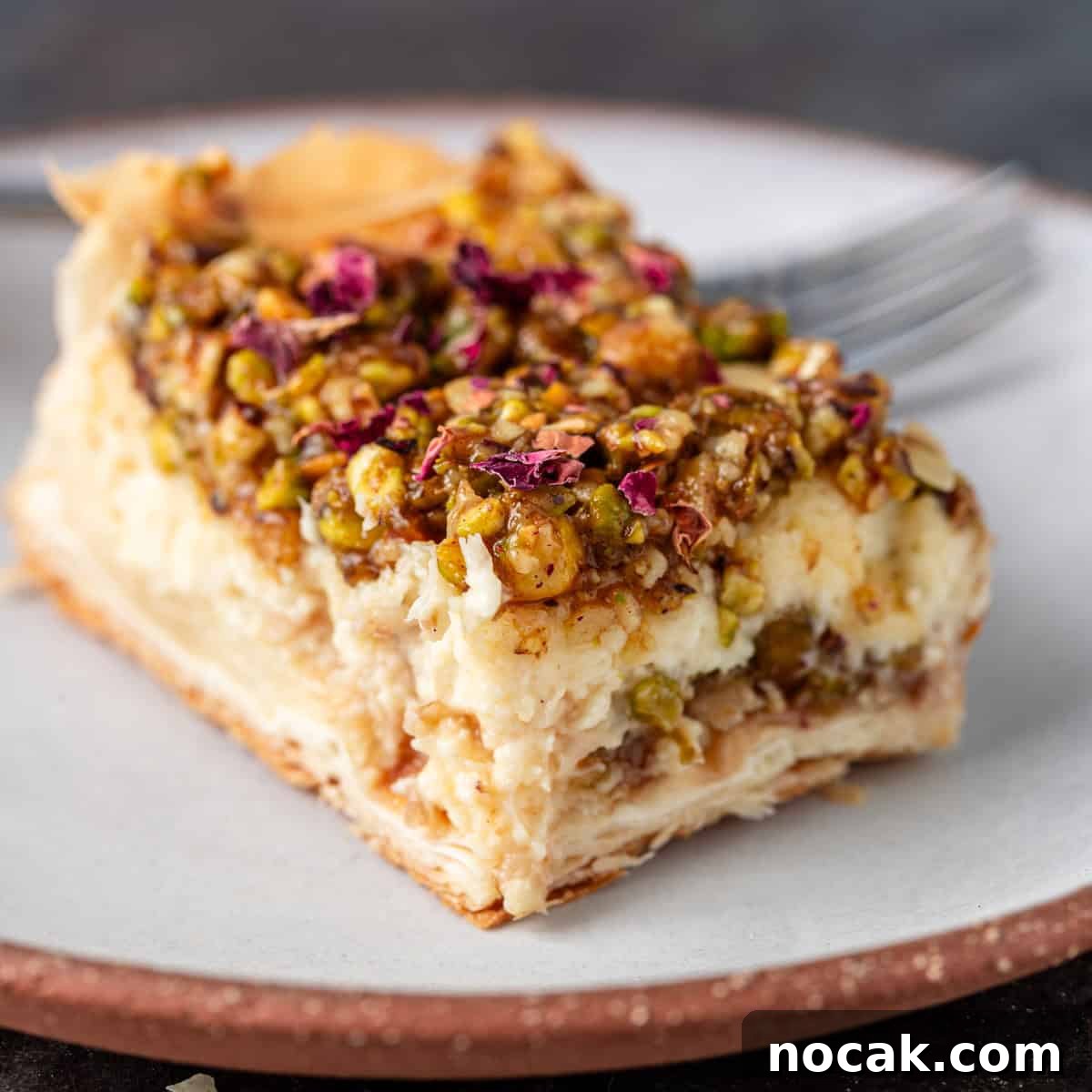
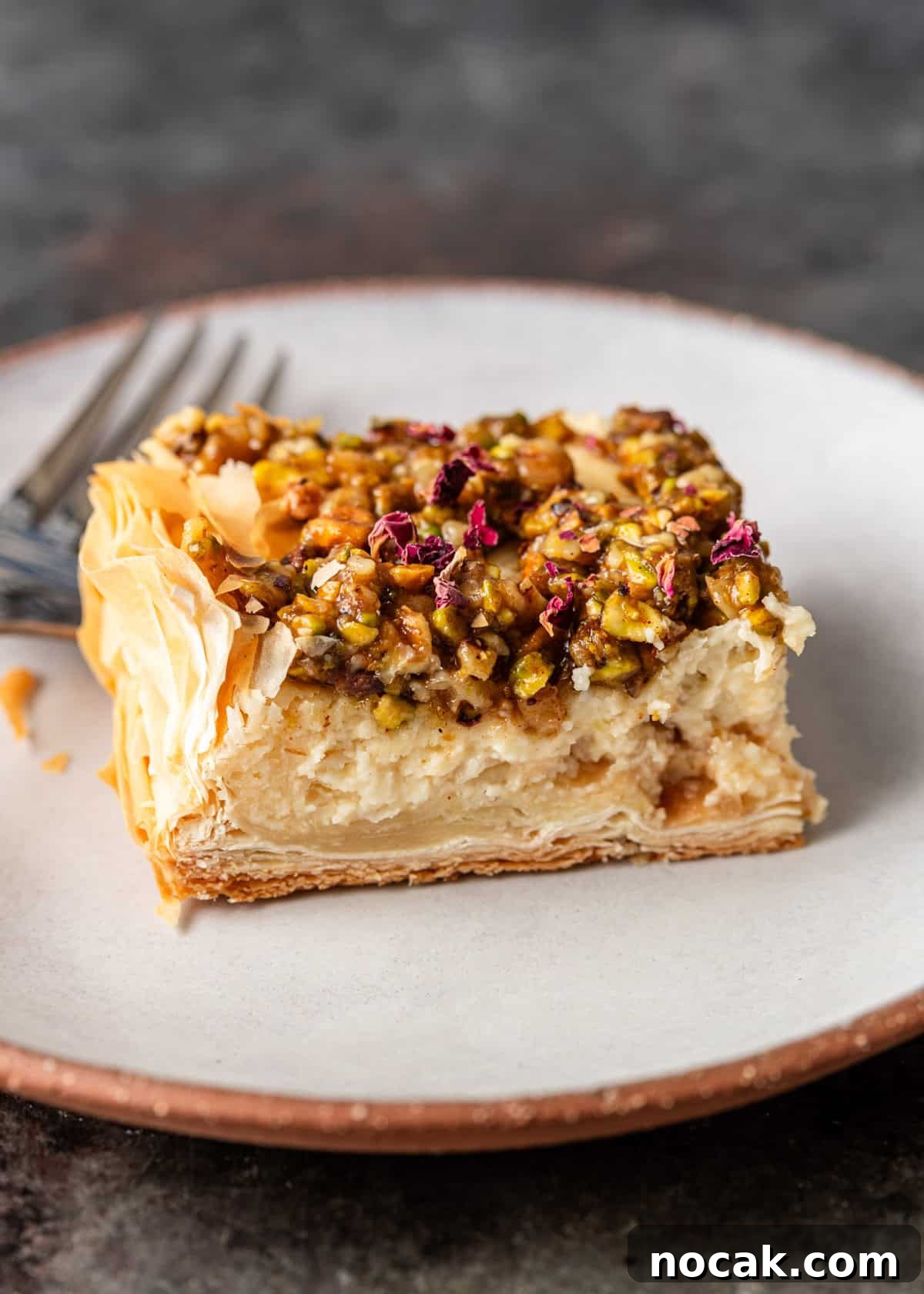
My baklava cheesecake is decadently rich and luxuriously creamy, and it’s especially easy to serve when cut into bars. With crisp phyllo layers, a nutty honey topping, and an optional scatter of dried rose petals, this dessert is both delicious and elegant.
Baklava and cheesecake are two standout desserts on their own, and combining them makes for a showstopping treat: baklava cheesecake bars are crunchy, creamy, and perfectly balanced. The phyllo gives a satisfying flake, while the cream cheese layer keeps it lush and silky. A honeyed nut topping adds texture, and a touch of orange or rose water brightens the flavor.
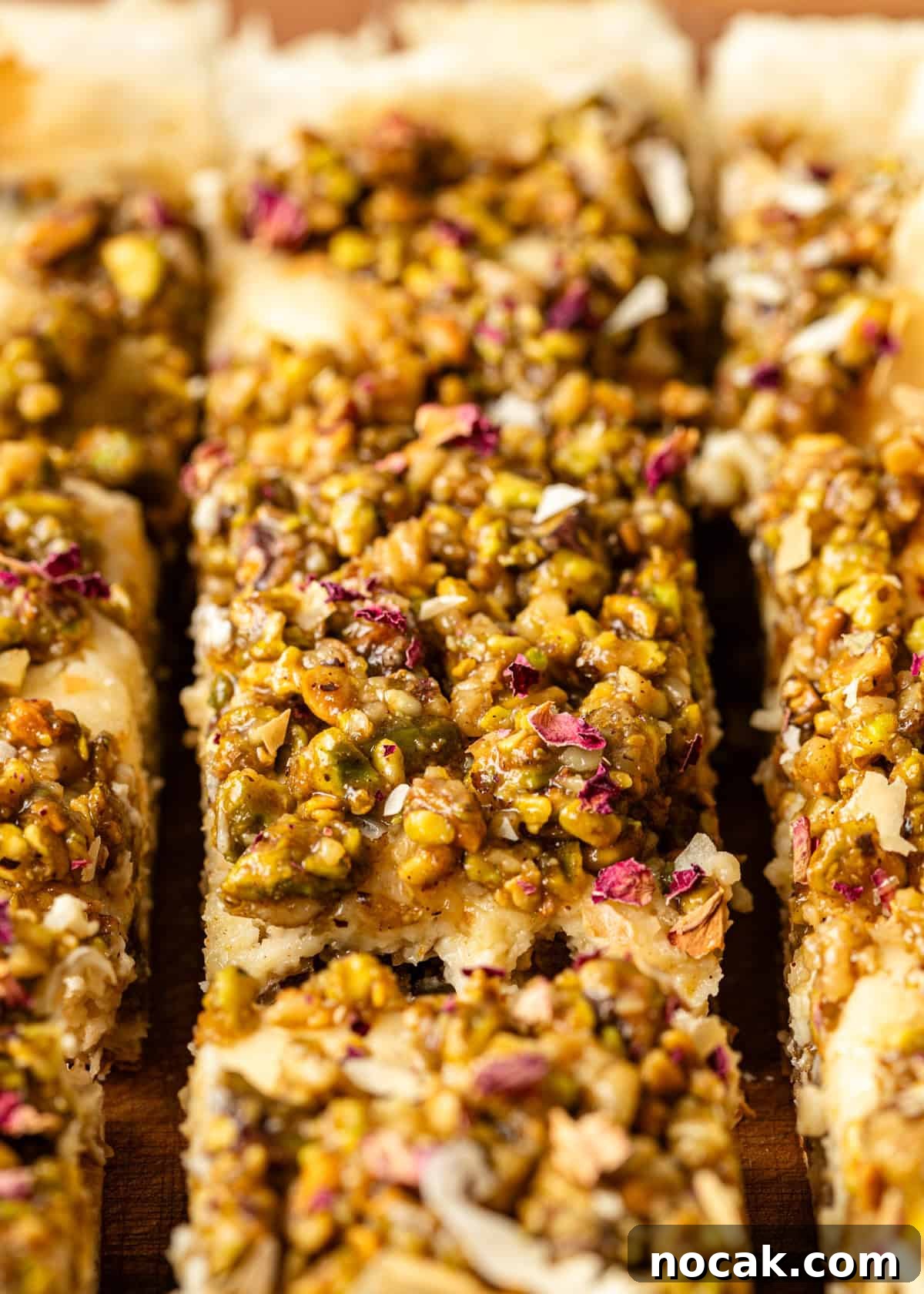
Table of Contents
- Crispy edges or not
- Ingredient Notes and Substitutions
- How to Make Baklava Cheesecake
- Recommended Tools
- Storing and Reheating
- Frequently Asked Questions
- Baklava Cheesecake Bars Recipe
I look for simple ways to elevate familiar recipes, and this baklava cheesecake does exactly that. The crunchy, honeyed nut topping contrasts beautifully with the creamy filling, and a sprinkle of crushed dried rose petals gives each slice a delicate floral finish and pretty color.
Tip From Kevin
Crispy edges or not
If you prefer tidy, non-crispy phyllo edges:
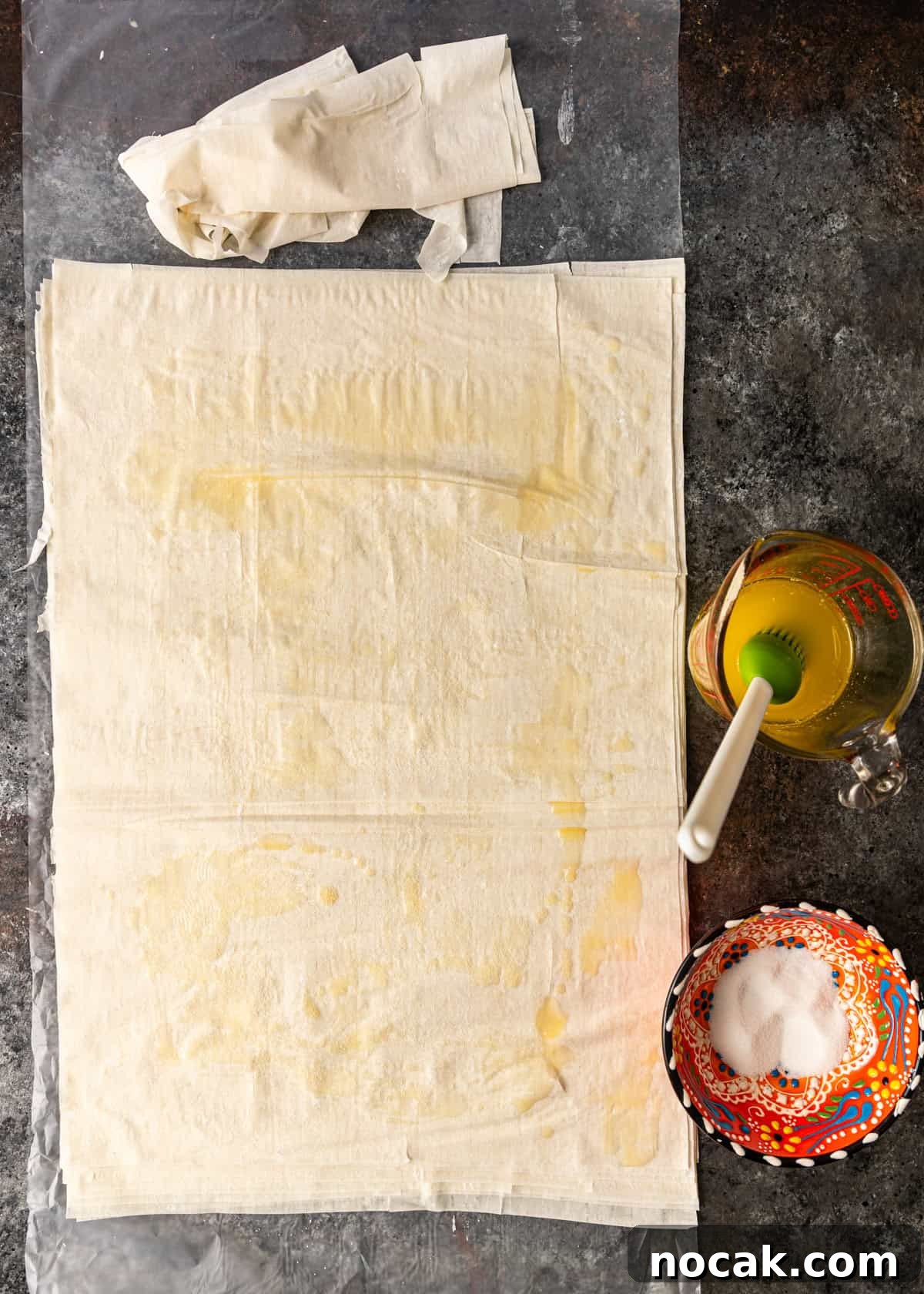
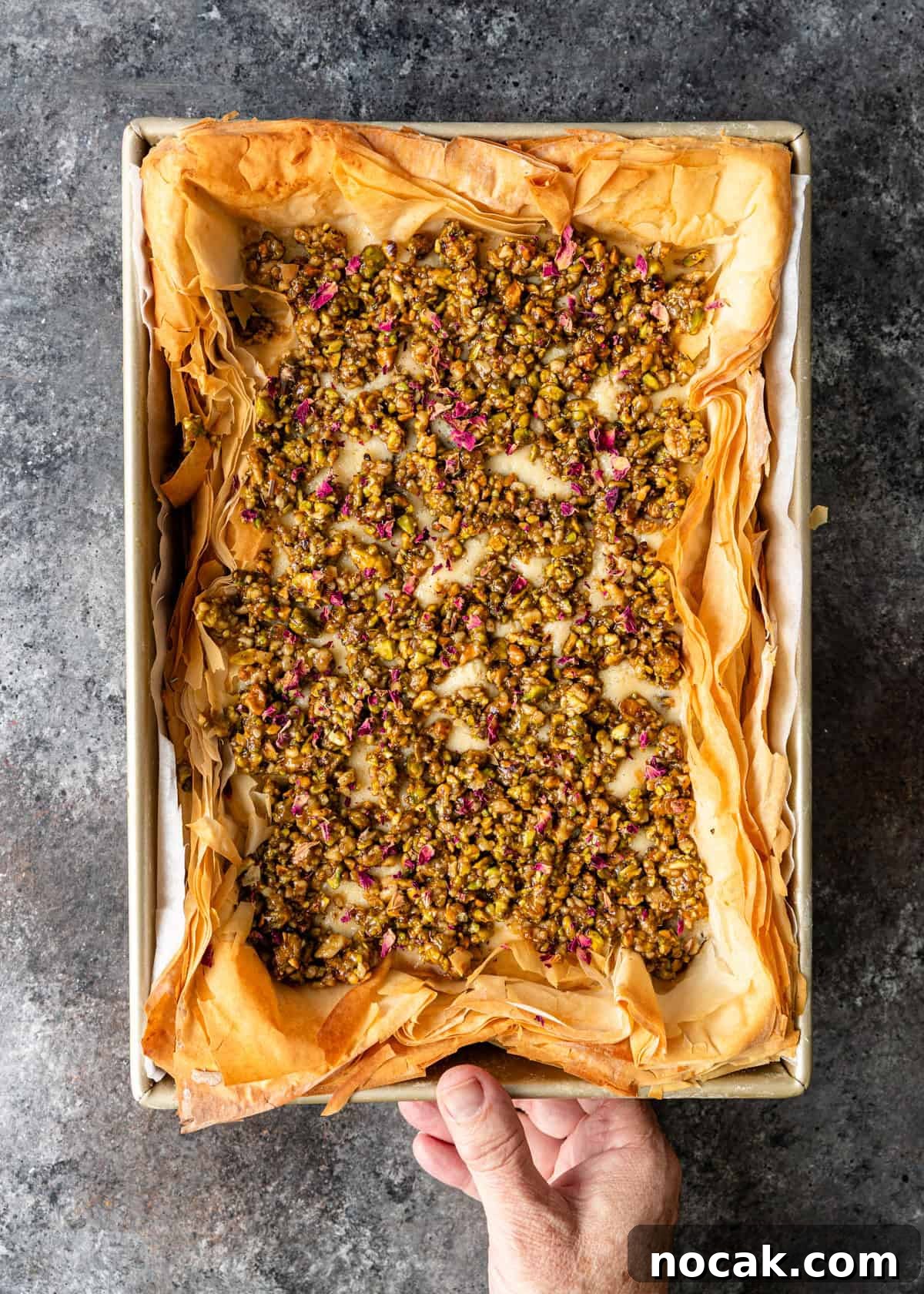
Center your baking pan on the stacked phyllo and trim the dough all around the pan before layering. Save the trimmings to crumble over the base later. Proceed with brushing butter and sprinkling sugar between layers as instructed. If you skip trimming, the edges will bake crispier than the center, which some people prefer.
Ingredient Notes and Substitutions
(See the recipe card below for full quantities)
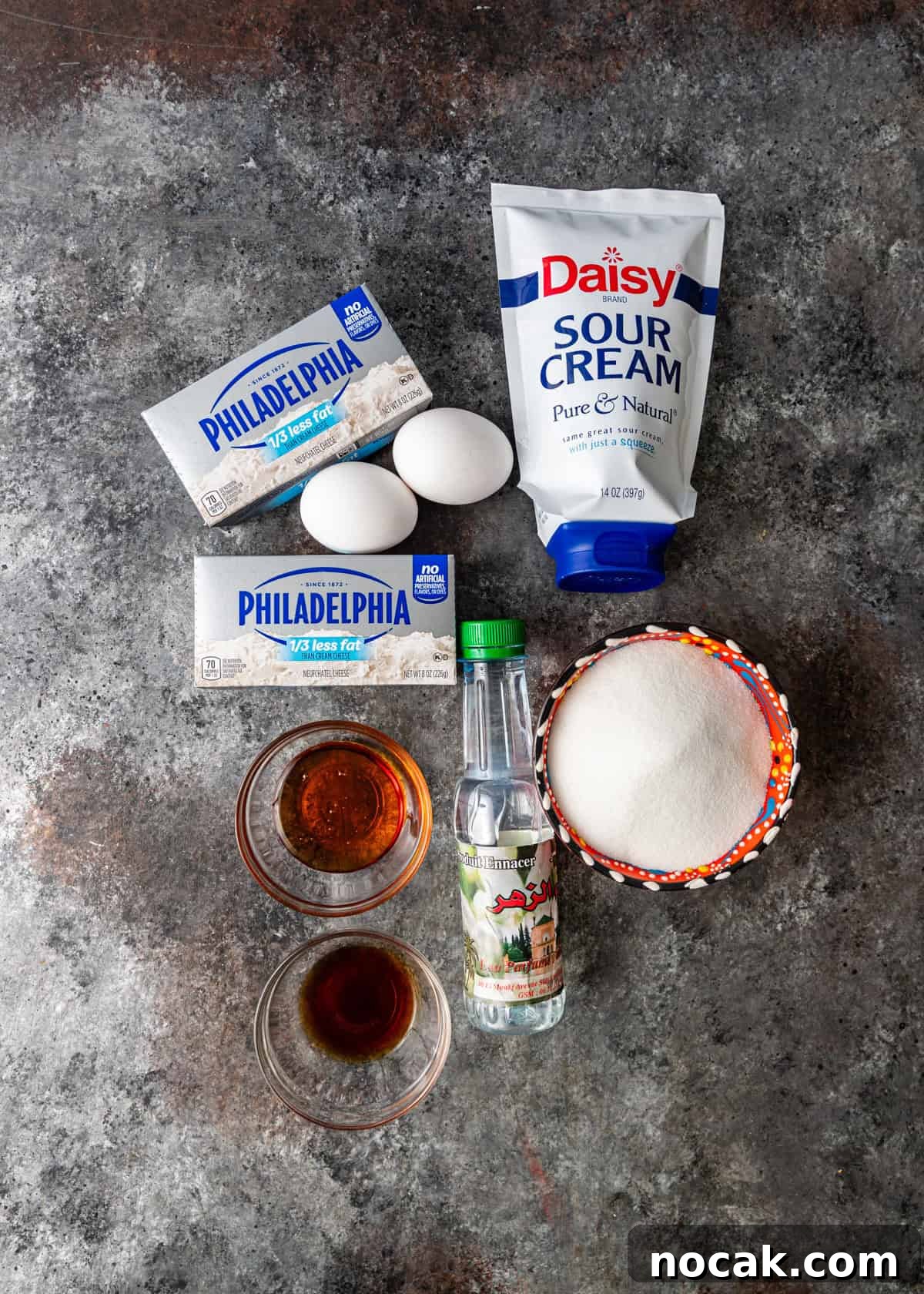
- Phyllo dough – Thin, flaky pastry sheets that create the classic crispy layers. Keep unused sheets covered with a damp towel while you work to prevent drying.
- Butter – Use unsalted melted butter. Brush it between phyllo sheets and drizzle any leftovers over the base before baking.
- Sugar – Sprinkled between phyllo layers for sweetness and also used in the cheesecake filling.
- Cream cheese – Use full-fat cream cheese for the creamiest filling; bring it to room temperature so it whips smoothly.
- Sour cream – Adds richness and a gentle tang. Room temperature is best for even mixing.
- Eggs – Bind and help the cheesecake set while keeping it tender.
- Vanilla extract – Enhances the overall flavor of the filling.
- Orange or rose water – Optional; either adds a subtle floral or citrus accent that complements the nuts and honey.
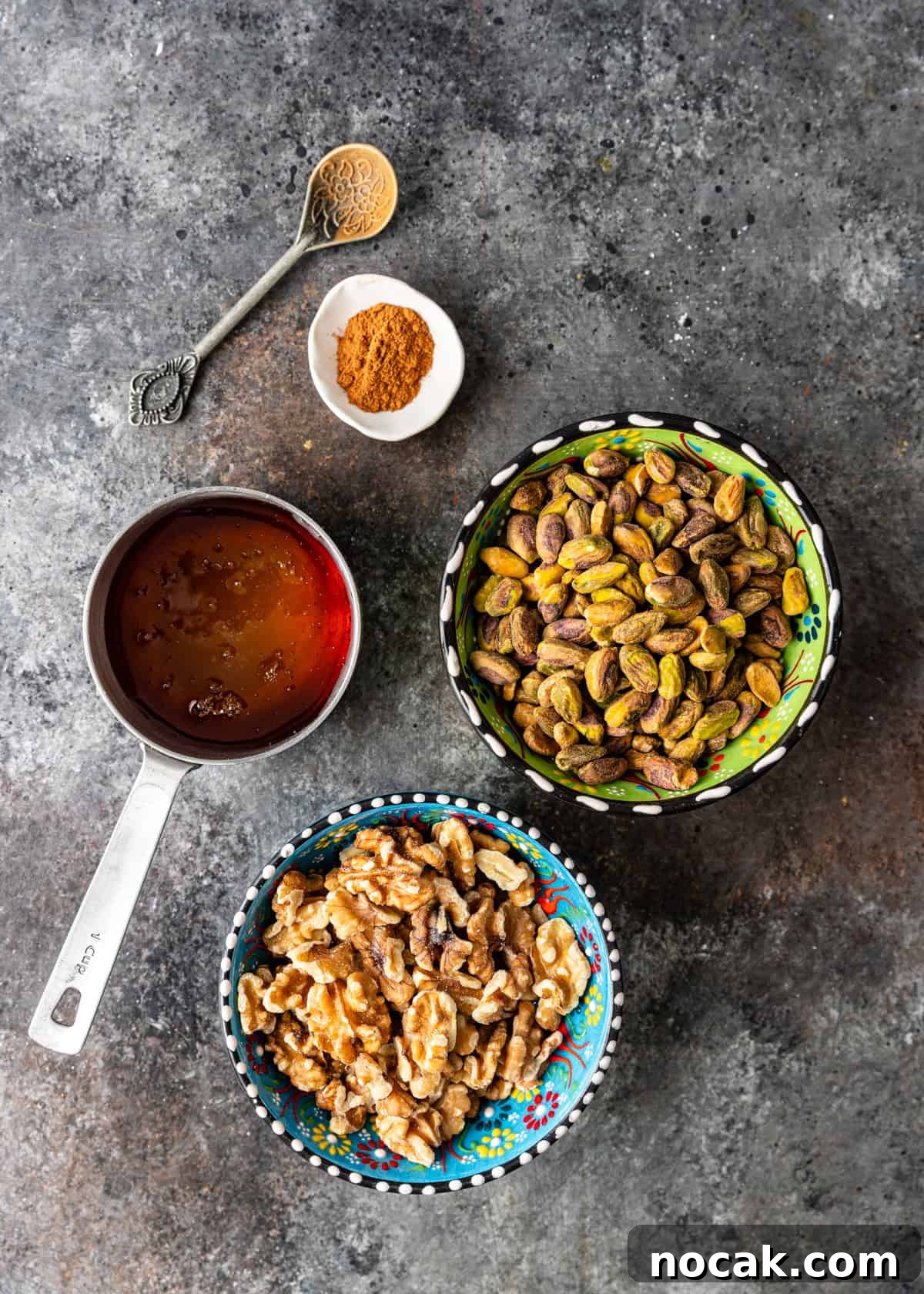
- Baklava topping – A mix of chopped pistachios and walnuts, spiced with cinnamon and combined with honey to form a sticky, flavorful crumb. Crushed dried rose petals are optional but add color and floral aroma.
How to Make Baklava Cheesecake
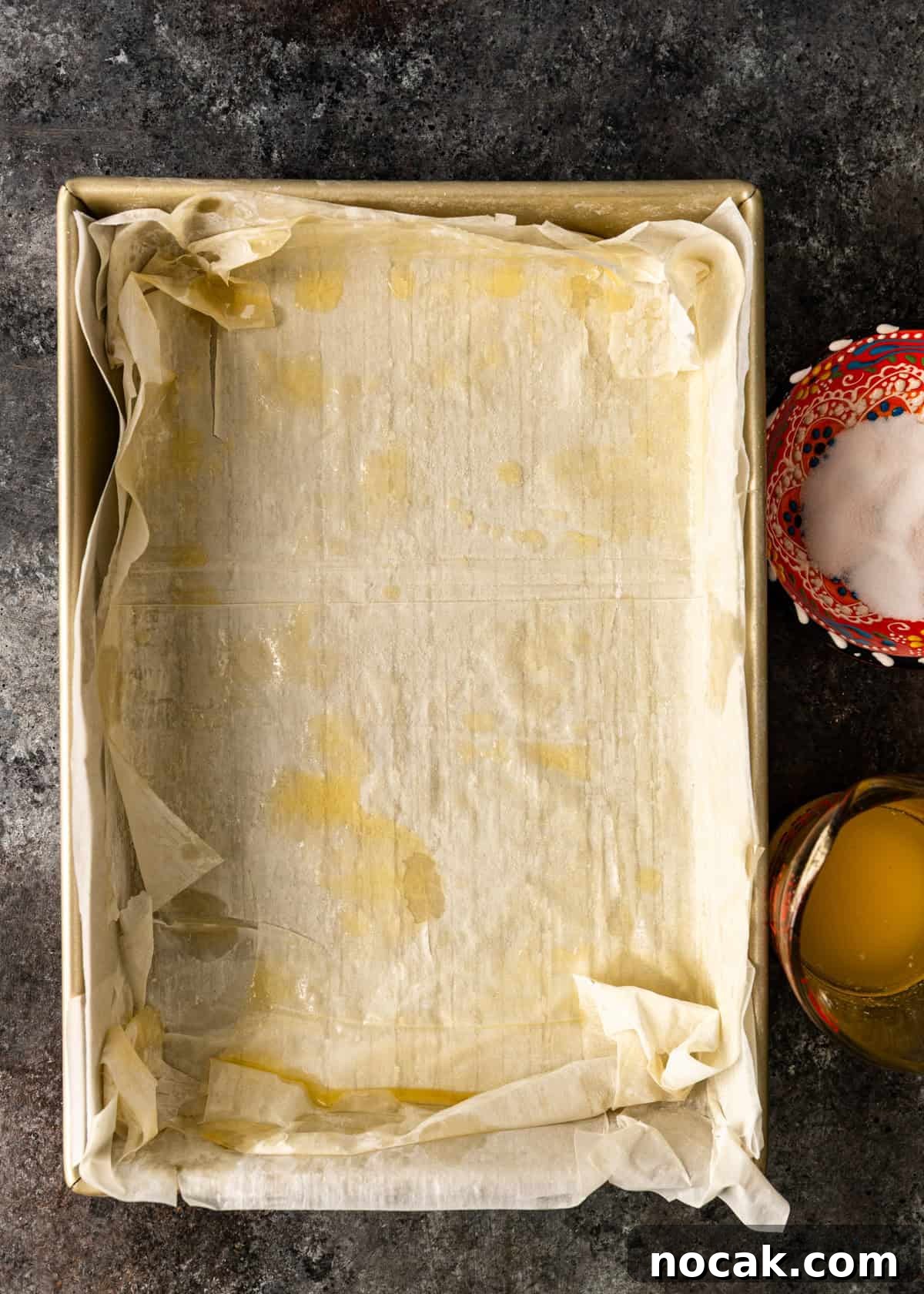
- Preheat the oven. Heat to 425°F. Line a 9×13-inch baking dish with parchment paper, leaving an overhang to lift the bars out after baking. Lightly grease the parchment.
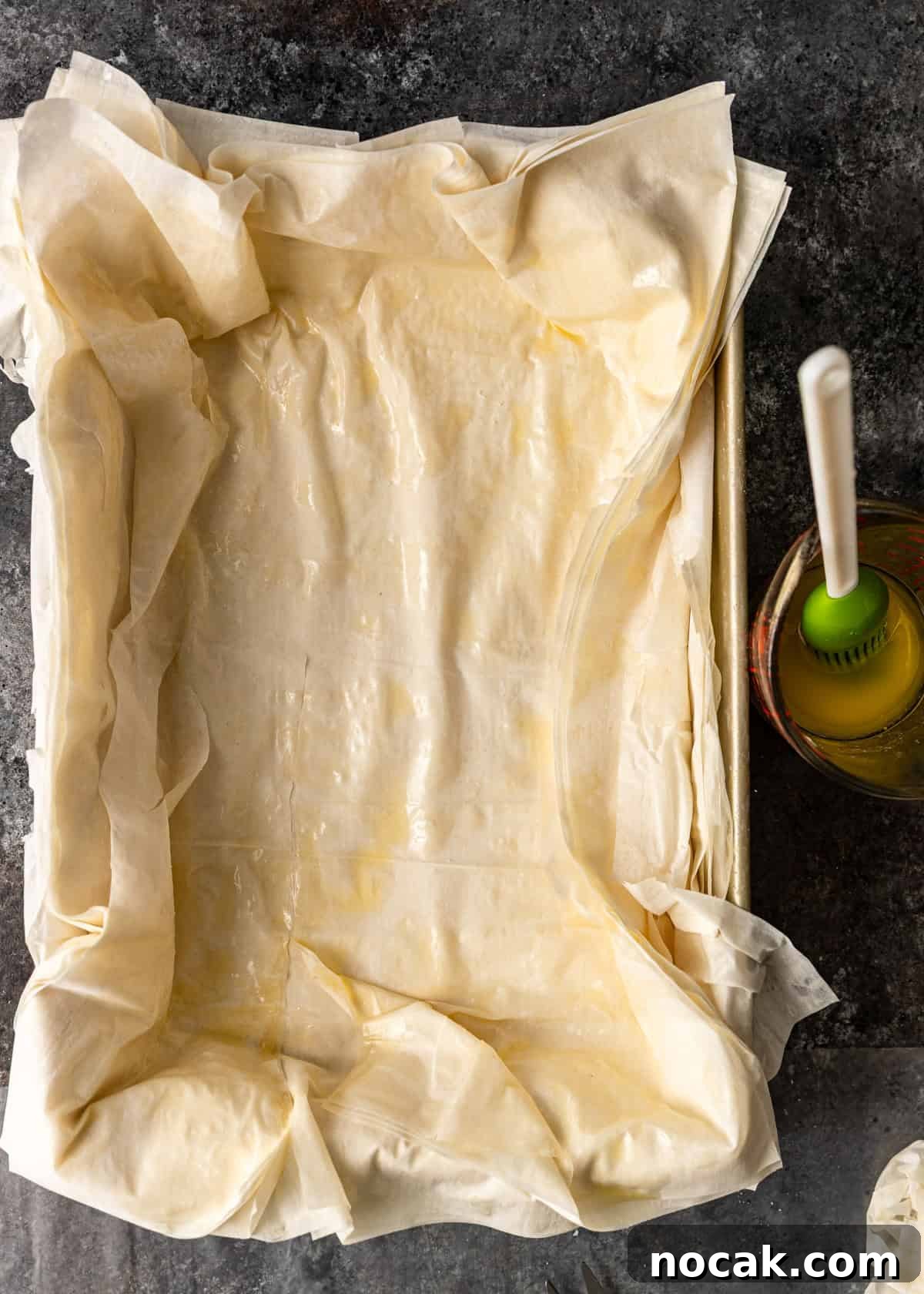
- Layer the phyllo sheets. Trim phyllo to the pan’s length if desired. On a work surface, brush two phyllo sheets with melted butter and sprinkle with sugar, then press them into the bottom and up the sides of the prepared pan. Repeat, brushing and sprinkling each pair of sheets. Keep unused phyllo covered with a damp towel.
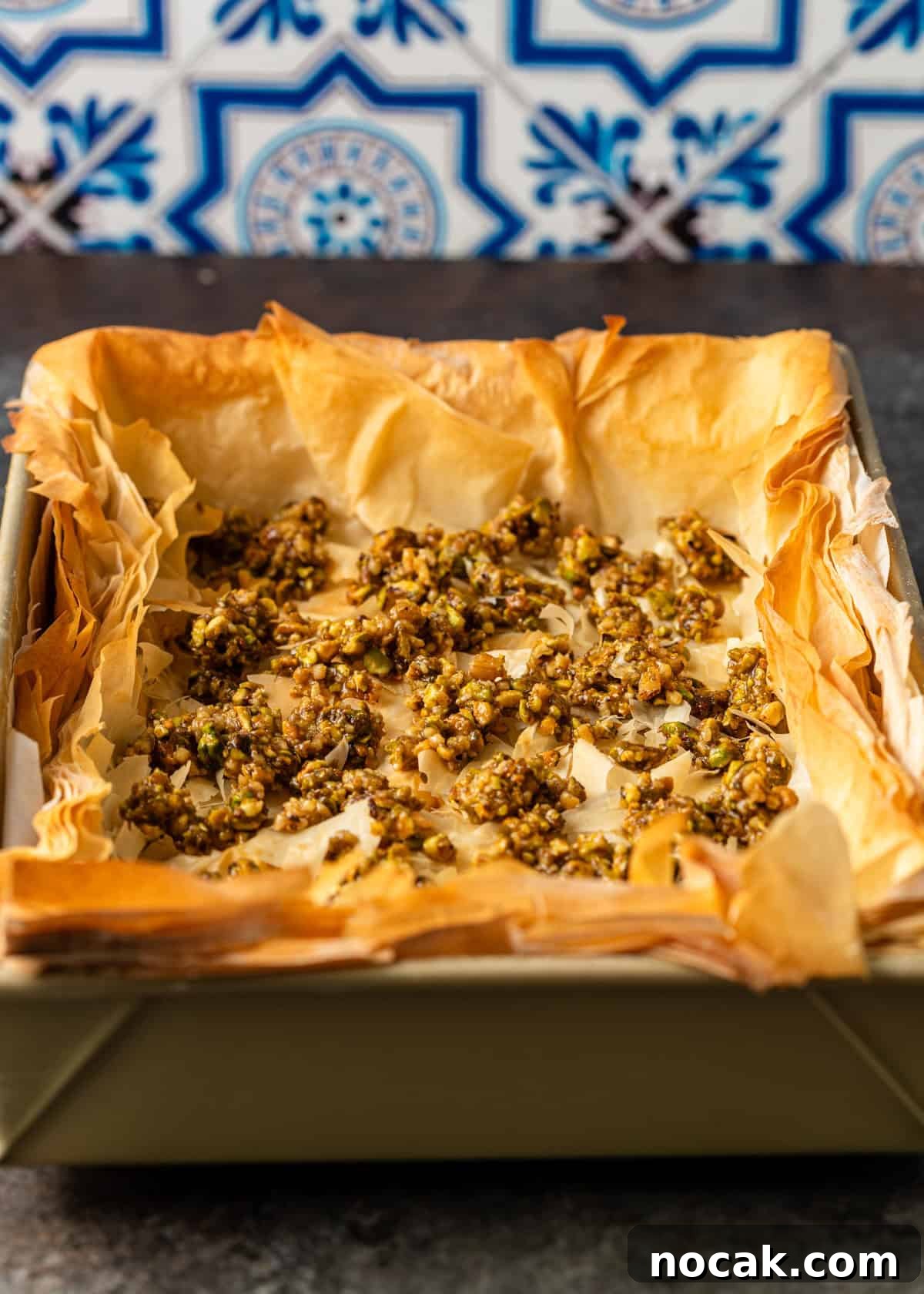
- Bake the base. Crumble any trimmed phyllo over the bottom, drizzle remaining butter, and bake 5–8 minutes until lightly golden. Cool on a rack and reduce oven temperature to 350°F.
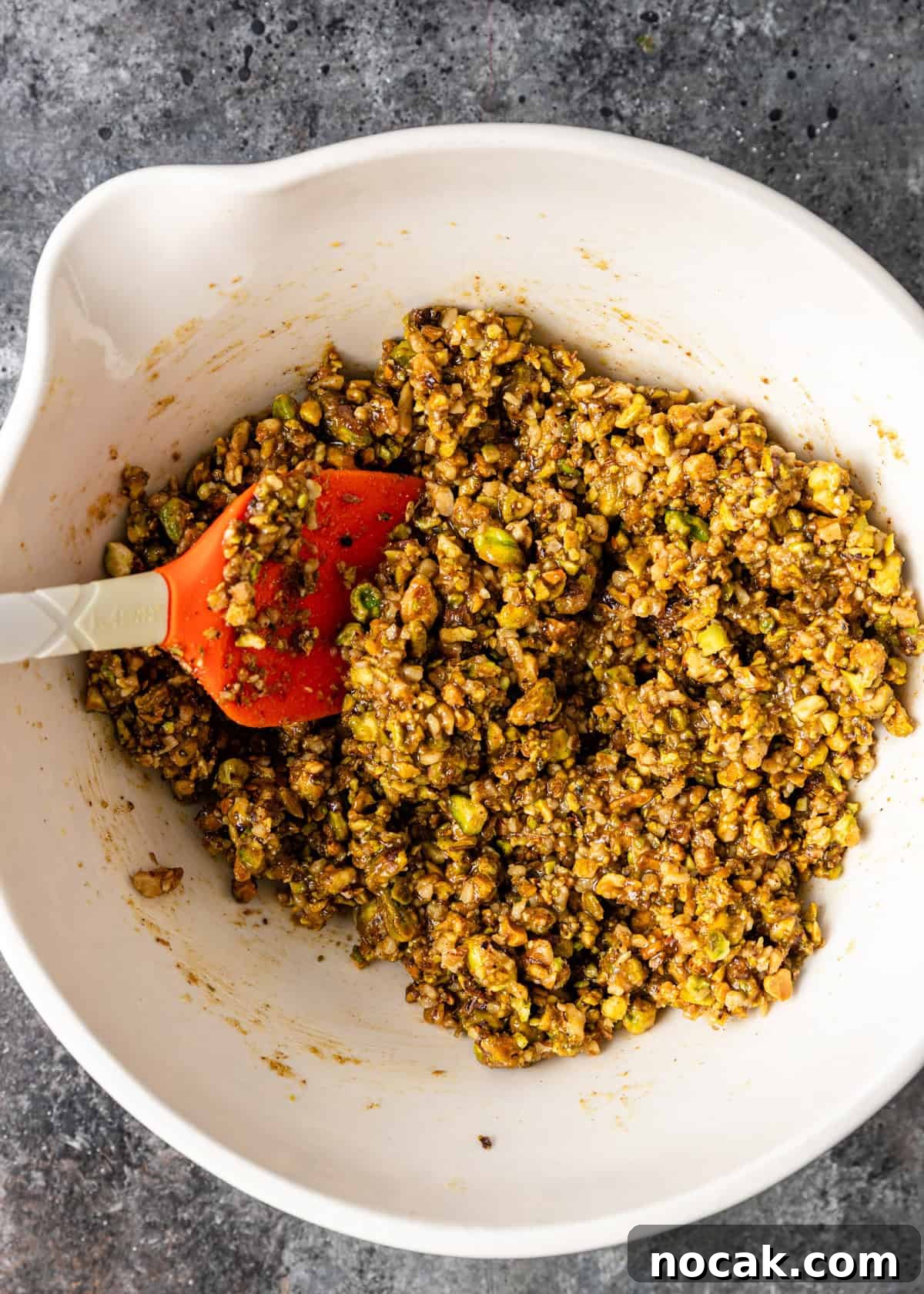
- Make the nut topping. Pulse pistachios, walnuts, and cinnamon in a food processor to a slightly chunky crumb. Mix the chopped nuts with honey until the mixture forms a paste. Reserve about one-third for the filling layer and save the rest for the final topping.
- Whip the cheesecake filling. With an electric mixer and whisk attachment, beat cream cheese, sour cream, eggs, sugar, vanilla, and optional orange or rose water on medium until smooth and creamy.
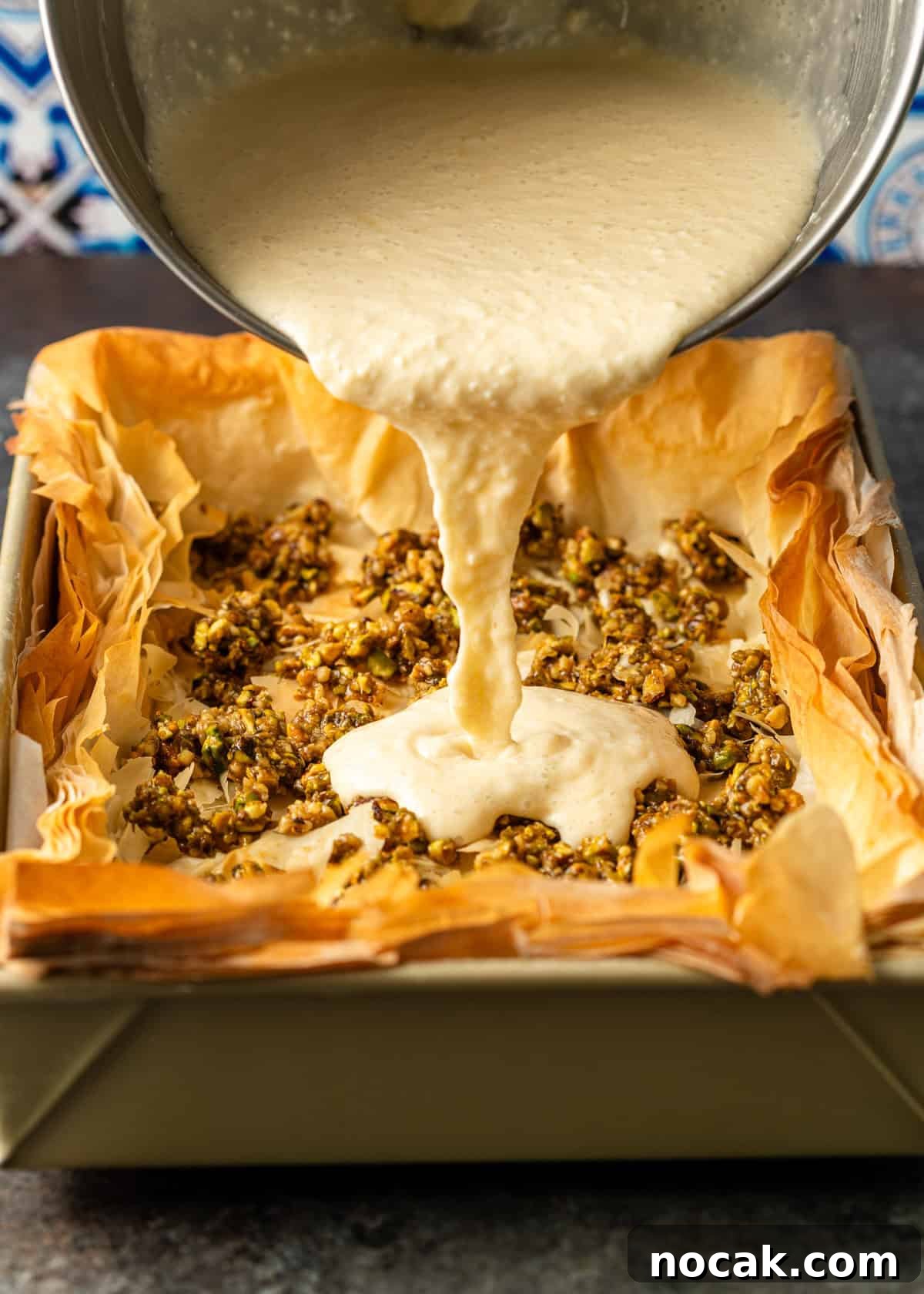
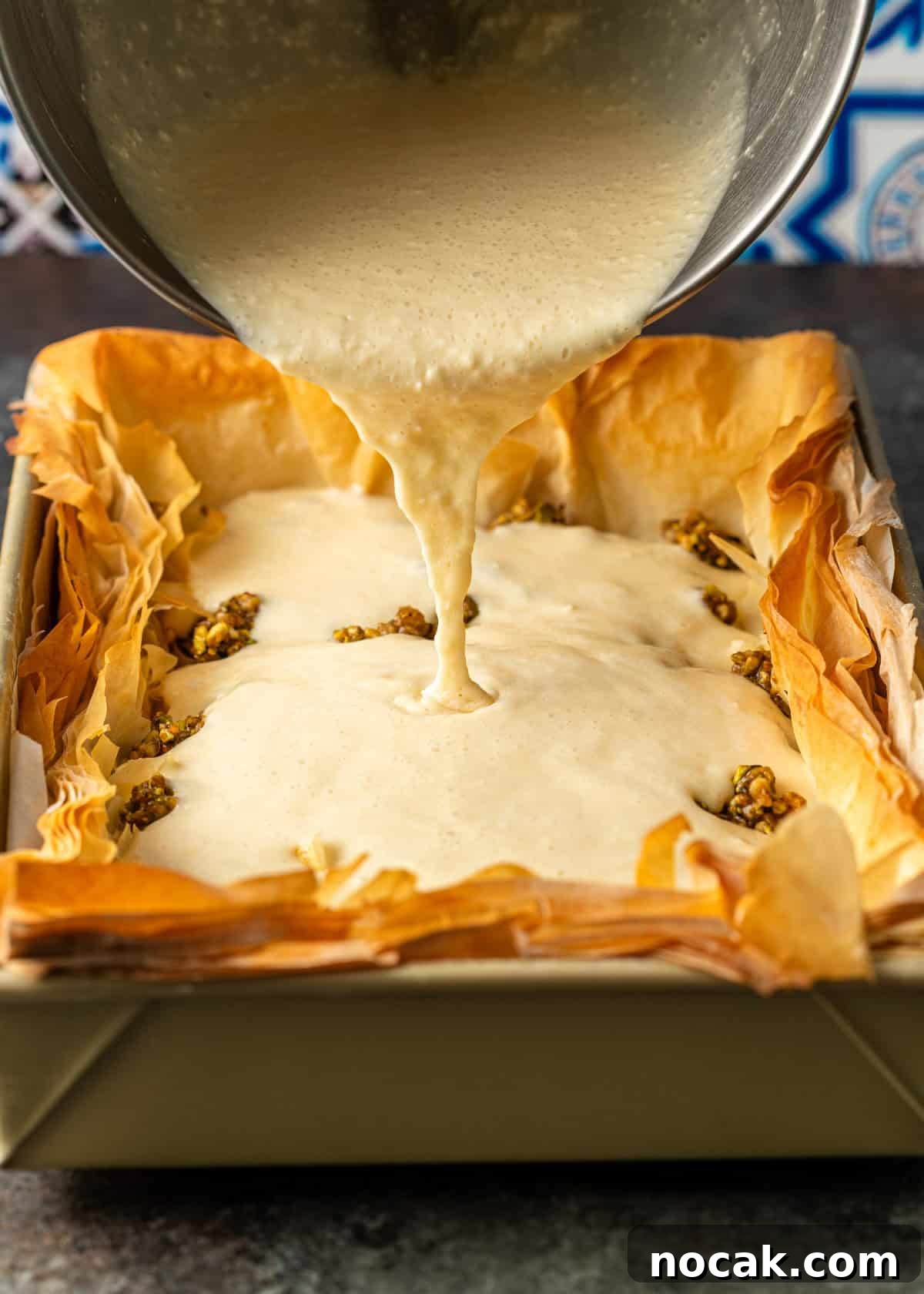
- Assemble and bake. Sprinkle one-third of the nut mixture across the cooled phyllo base. Pour the cream cheese filling evenly on top. Bake in the middle of the oven for about 40 minutes—the center should still wobble slightly. Turn off the oven, open the door slightly, and let the cheesecake cool inside for 60 minutes to avoid cracks and allow gentle setting.
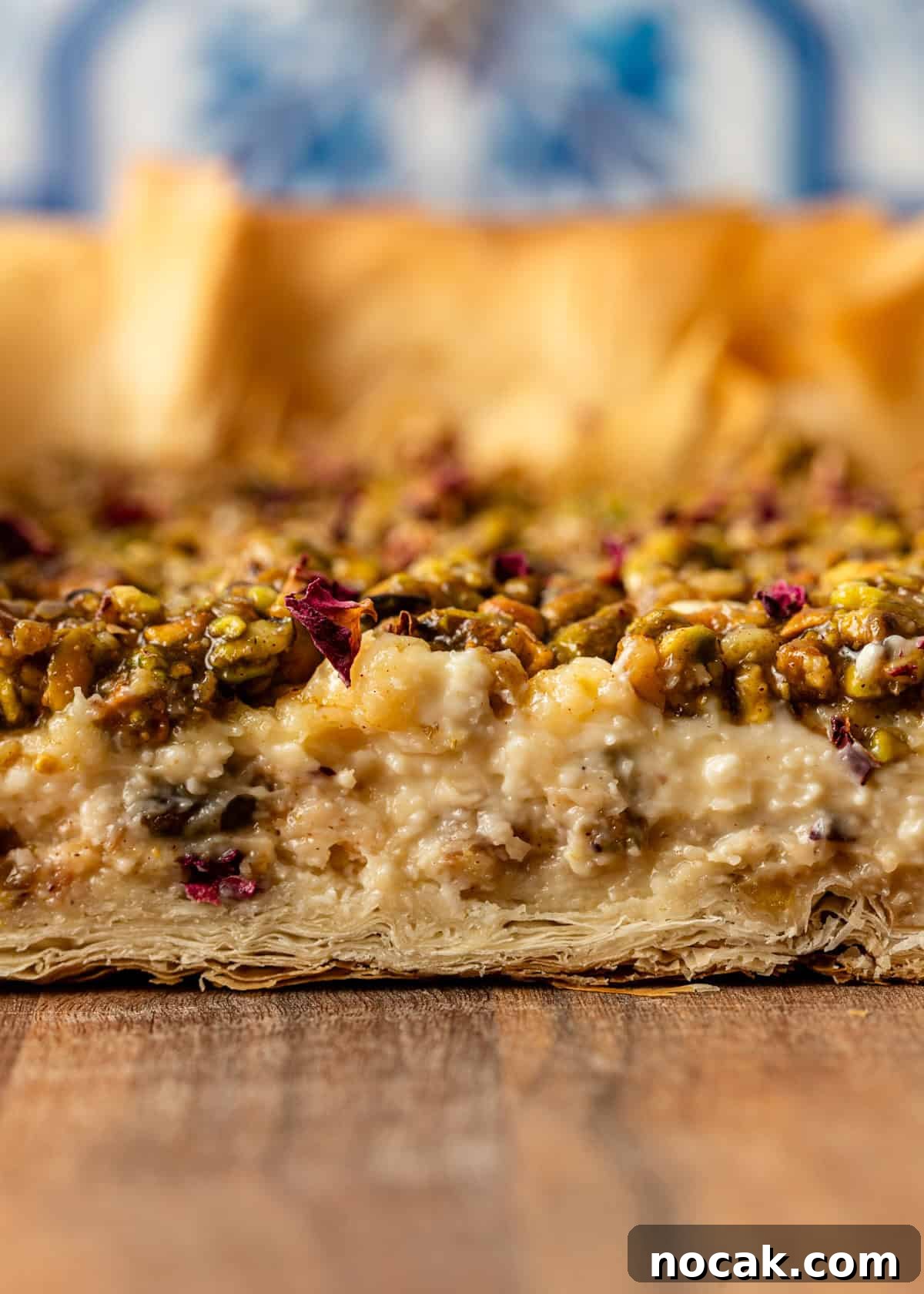
- Add the final topping and chill. After it has cooled, crumble the remaining nut mixture over the cheesecake and press gently so the nuts adhere. Refrigerate at least 1 hour before lifting the bars from the pan and slicing. Garnish with crushed dried rose petals if desired.
Recommended Tools
- Electric mixer with whisk attachment – Makes the filling smooth and aerated.
- Food processor – Helps chop nuts to the ideal texture for the baklava topping.
Storing and Reheating
Store leftover baklava cheesecake bars in an airtight container in the refrigerator for up to 4 days to preserve texture and flavor.
For longer storage, freeze individual bars for up to 2 months. Wrap each piece in plastic wrap, place in a freezer-safe bag or container, and thaw in the refrigerator overnight before serving.
Frequently Asked Questions
Cover defrosted phyllo with a slightly damp paper towel while working. Only expose the sheet you’re using to the air so the rest stay pliable.
Greek versions often use walnuts and spices like cinnamon and cloves. Turkish baklava frequently highlights pistachios and may be less spiced. This baklava cheesecake blends both influences by using pistachios, walnuts, and cinnamon for a layered, balanced flavor.
The phyllo base should be golden and the cheesecake center will be mostly set but still slightly jiggly. It will firm up as it cools, especially during the gradual oven-cooling step.
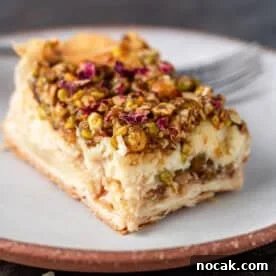
Baklava Cheesecake Bars
Ingredients
- 12 sheets phyllo dough, defrosted
- 1/4 cup unsalted butter, melted
- 2 tbsp sugar (for layering)
- 16 oz cream cheese, room temperature
- 1/3 cup sour cream, room temperature
- 2 eggs, room temperature
- 1 cup sugar (for filling)
- 2 tsp vanilla extract
- 2 tsp orange or rose water (optional)
- 2 tbsp honey (for initial nut mix)
Baklava Filling/Topping
- 1/2 tsp ground cinnamon
- 1 1/2 cups pistachios, chopped
- 1 1/2 cups walnuts, chopped
- 1/2 cup honey (to bind topping)
- 1 tbsp dried rose petals, crushed (optional)
Instructions
- Preheat the oven to 425°F. Line a 9×13-inch baking dish with parchment paper, leaving excess to lift the finished bars out. Lightly grease the parchment.
- Trim phyllo to the pan length if desired. On a work surface, brush two sheets with melted butter and sprinkle with some sugar, then press into the bottom and up the sides of the pan. Repeat until all phyllo is layered, keeping unused sheets covered with a damp towel.
- Crumble any trimmed phyllo over the bottom, drizzle remaining butter, and bake 5–8 minutes until lightly golden. Cool slightly and lower oven to 350°F.
- In a food processor pulse cinnamon, pistachios, and walnuts to a slightly chunky crumb. Transfer to a bowl and mix with honey until a paste forms. Reserve one-third for the layer under the filling and save the remainder for the final topping.
- In an electric mixer on medium, whip cream cheese, sour cream, eggs, sugar, vanilla, and optional orange or rose water until smooth and creamy.
- Scatter one-third of the nut mixture over the cooled phyllo base. Pour the cream cheese mixture evenly over the nuts. Bake on the middle rack for about 40 minutes; the center should still jiggle a little. Turn off the oven, open the door slightly, and let the cheesecake sit inside for 60 minutes to cool gradually.
- Once cooled, crumble the remaining nut topping across the surface and press lightly so it adheres. Refrigerate for 1 hour, then lift out using the parchment overhang and slice into bars. Finish with crushed rose petals if you like.
Notes
- If you want a clean edge: Center the pan on the stacked phyllo and trim all around before layering. Save trimmings to crumble over the base. Without trimming, the edges will bake crispier than the center.
Nutrition
Carbohydrates: 95 g |
Protein: 14 g |
Fat: 26 g
The nutrition information shown is an estimate and should be used as a general guide.