How to Meal Plan to Save Money on Groceries
Learn a practical, step-by-step method for meal planning, ideal for beginners and families on a budget. Whether you’re on a specific diet, trying to lose weight, or simply want to stop wondering “what’s for dinner,” this approach will help you eat healthier, reduce waste, and save money. Use a printed meal plan template each month to keep things simple and consistent.
Disclaimer: This post contains affiliate links. I may earn a small commission if you make a purchase, at no extra cost to you. I only recommend products I use and trust.
Do you ever shop when you’re really hungry and end up buying way more than you intended?
Shopping without a meal plan is similar — you grab what sounds good in the moment and often end up over budget with food that goes to waste.
I used to shop that way, tossing things into the cart without a plan. The result: overspending, wasted food, and more stress.
Adopting a meal planner has saved me time, money, and mental energy in many ways.
Main ways meal planning has saved my sanity
- I save time because I’m not scrambling to put a meal together at the most stressful time of day.
- I save food and reduce waste by planning to use all of what I buy — even less-popular items like cabbage.
And that leads to saving money, since less waste equals less wasteful spending.
Planning a whole month at a time rather than week-by-week saves even more time, food, and money. You plan once and know what you’ll be eating for four weeks.
It’s not perfect, but it’s helped my household tremendously. If you try monthly planning, you may find it just as freeing.
Before you start monthly meal planning: helpful tips
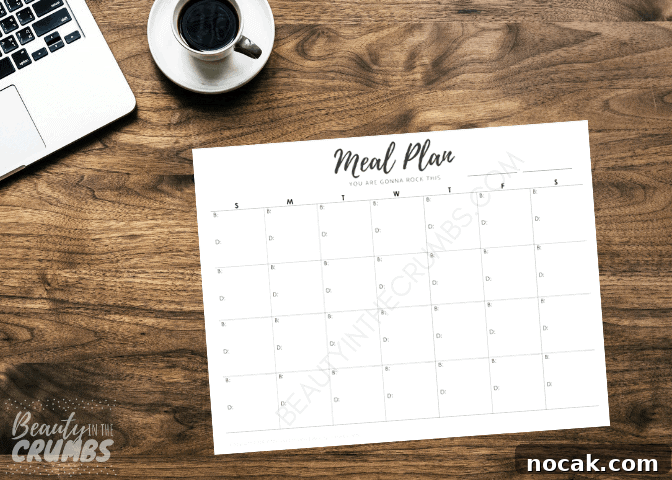
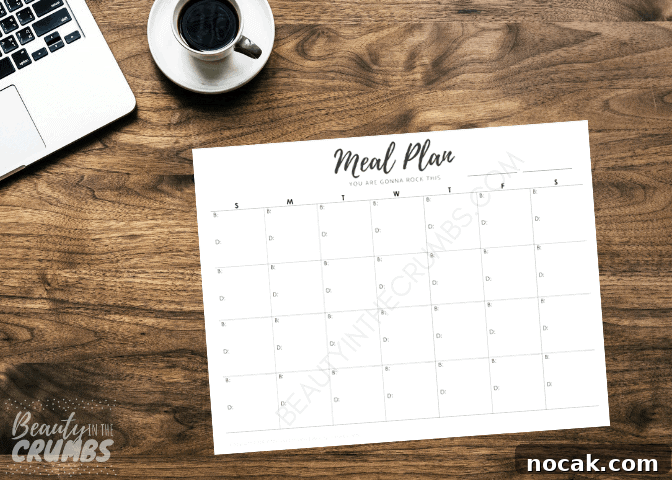
Print a template you like
You’ll be looking at your plan regularly for four weeks, so use a printed template you enjoy. Fill in the dates before you begin planning. A pleasant layout makes you more likely to stick with it.
Create a list of family favorite meals
Keep a running list of meals you love to rotate into your plan. Note the three ingredients that spoil fastest for each meal so you can prioritize using them. Having this list shortens planning time and ensures meals everyone likes are repeated without thinking from scratch.
Set the mood
Treat planning as a pleasant task: grab a drink, play music, and find a quiet moment. Making it enjoyable helps you make it a regular habit.
Gather your supplies
Have your shopping list (paper or app), pens, pencil, and the weather forecast handy. Use a pencil for the plan so you can adjust items easily. Keep your shopping list separate from the menu to avoid taking the planner into the store where it might get lost or messy.
Ready? Let’s get into the steps that make you a meal planning pro.
The basic steps to become a meal planning master
1. Mark factors that will affect your menu on the calendar (in pencil)
- Will you be out of town part of the month? Consider prepping freezer meals before you go.
- Which evenings are time-crunched? Reserve those for slow cooker or Instant Pot recipes.
- Do you have guests coming? Plan meals that are easy to double, like a hearty chili or pot pie.
- Check the weather: hot weeks could mean more grilled meals; cold or dreary stretches may call for soups or stews.
2. List regularly eaten meals to streamline planning
Establish a rhythm your household enjoys — for example, Taco Tuesday or Meatless Monday. Repeating favorites reduces decision fatigue and speeds planning.
Some ideas to structure your week:
- Meatless Monday
- Instant Pot night
- Taco Tuesday
- Stir-fry Thursday
- Easy dinners on long days: pizza, spaghetti, nachos, or breakfast-for-dinner
- Prep make-ahead breakfasts for busy mornings
Fill in any days you’ll be eating out first so the rest of the plan falls into place.
Having meals on rotation helps streamline your menu planning.
3. Use what’s already in your pantry and freezer
Take stock of items you’ve bought on sale and already stocked. Let those ingredients guide your meal choices so you use what you already have.
Avoid letting sales searches dictate your plan; instead, complete your plan first, then hunt deals for the items you need.
Tip: Your meal plan should guide your coupon and sale searches, not the other way around. When you know exactly what you need, you can watch for deals on those items and avoid impulse purchases that increase costs.
Related post: How to Keep Your Prepped Vegetables Fresh As Long as Possible
The next step looks long but it’s simple once you try it, and visuals help.
4. Fill the rest of your plan using this pattern
- Choose a favorite or main meal (a “cornerstone meal”) and place it on the plan.
- Identify leftover ingredients that will spoil quickly.
- Plan subsequent meals that use those leftovers within a few days, referring to your meal ideas list for inspiration.
Example: If chicken pot pie is your cornerstone meal and you’ll have leftover raw chicken and celery, schedule a chicken stir-fry or another chicken-based meal within 2–3 days so nothing spoils.
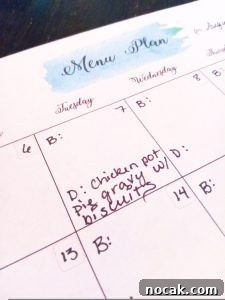
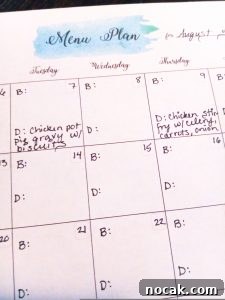
5. Add ingredients to your shopping list as you plan
Use a shopping list app or paper list that works for you. Many people sync lists with household members so anyone can add items. Keep the shopping list separate from your menu to protect the planner from spills or loss.
Repeat this process for other meal times
I typically plan breakfasts and dinners and keep staple lunches and snacks on a simple rotating list. Plan what makes the most difference for your household and keep the rest flexible.
With a monthly plan in place, the stress of deciding what to cook is dramatically reduced. You’ll know what’s for dinner tomorrow and the days after.
Extra tips
- Swap meals around if you don’t feel like what’s scheduled, but try to swap with a meal that uses the same ingredients to avoid waste.
- Review the plan each evening so you can prepare in advance (thaw meat, start any marinating, or pull out ingredients).
- If you use an app, add the store name to items (for example, “Winco chicken” or “Trader Joe’s pasta”) and alphabetize the list by store to make shopping faster.
I hope these tips make meal planning easier and more effective for you. If you have methods that work well, consider sharing them where you follow this content — hearing other strategies can be helpful.
Want a free menu planner printable?