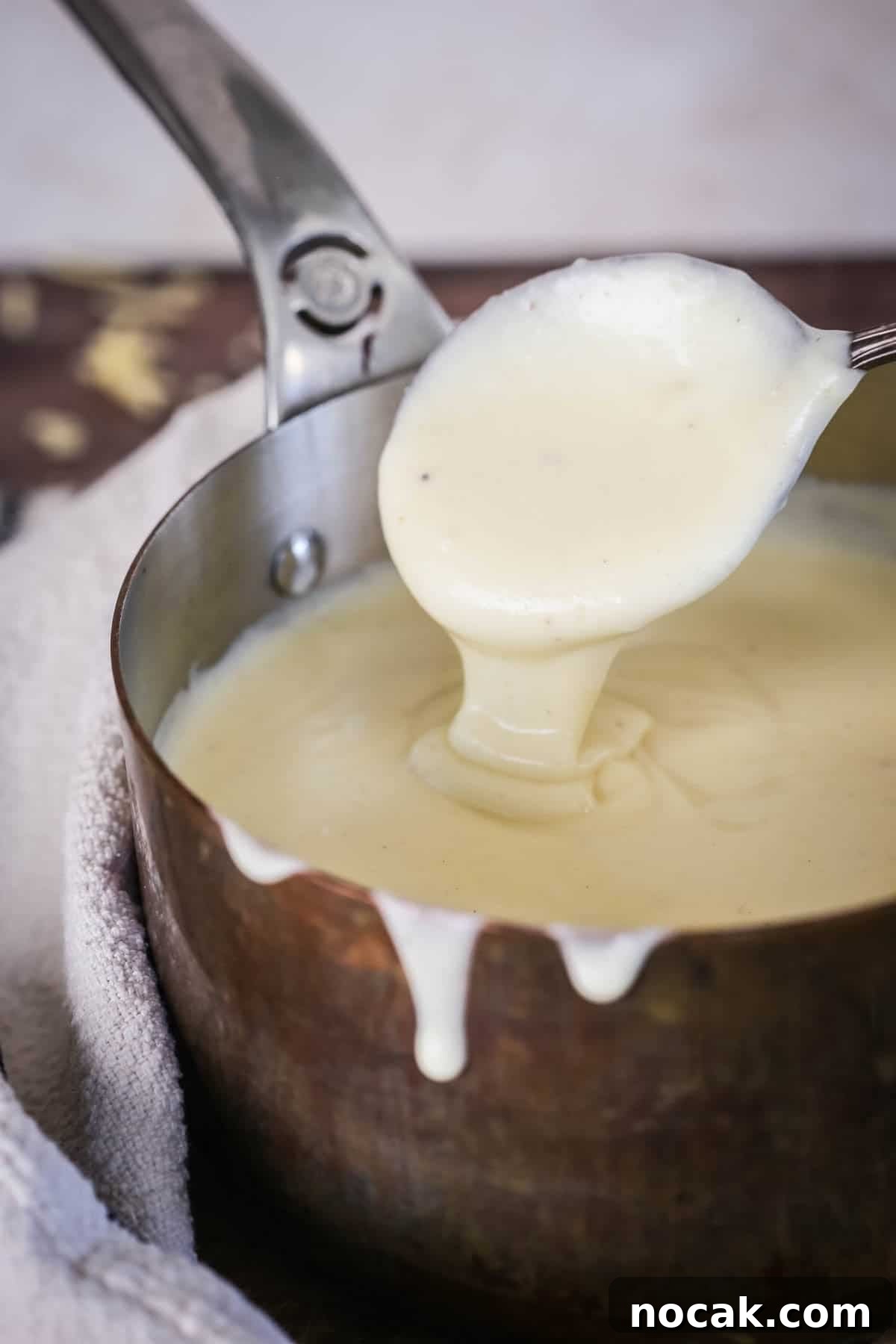
This gluten-free cheese sauce delivers full-bodied flavour and a velvety texture thanks to sweet rice flour. It works beautifully as a pasta sauce, in cauliflower cheese, lasagne or simply stirred through vegetables to tempt picky eaters.
Table of Contents
Toggle
This versatile gluten-free cheese sauce has become a staple in our kitchen. It’s rich enough for lasagne, smooth enough for a creamy mac and cheese, and mild enough to encourage fussy children to eat greens when stirred through peas or spinach. Compared with quick cornflour slurries, the roux-based method used here yields a deeper, more buttery flavour and a silkier mouthfeel.
The sauce here is made in the traditional way: a roux of butter and gluten-free flour, slowly combined with milk and finished with cheese and seasonings. It takes a few extra minutes but the result is worth it—rich, layered and luxuriously smooth.
Why You’ll Love This Gluten-Free Cheese Sauce
- Gorgeous depth of flavour from bay leaf and a hint of nutmeg.
- Gruyère and mature cheddar add a rich, nutty cheesiness.
- A small amount of Dijon mustard enhances the overall cheese flavour.
- Exceptionally smooth, velvety texture that closely resembles a wheat-based sauce.
Watch the Video
If you prefer a visual guide, watch the video to see the method step by step.
So what’s the secret to the Best Gluten-Free Cheese Sauce?
The key is choosing the right gluten-free flour. Ordinary all-purpose gluten-free blends or regular rice flour can give a thin or slightly gritty sauce. Sweet rice flour (also called glutinous rice flour) provides a gelatinous quality that thickens sauces smoothly, producing a silkier texture than plain rice flour or standard blends.
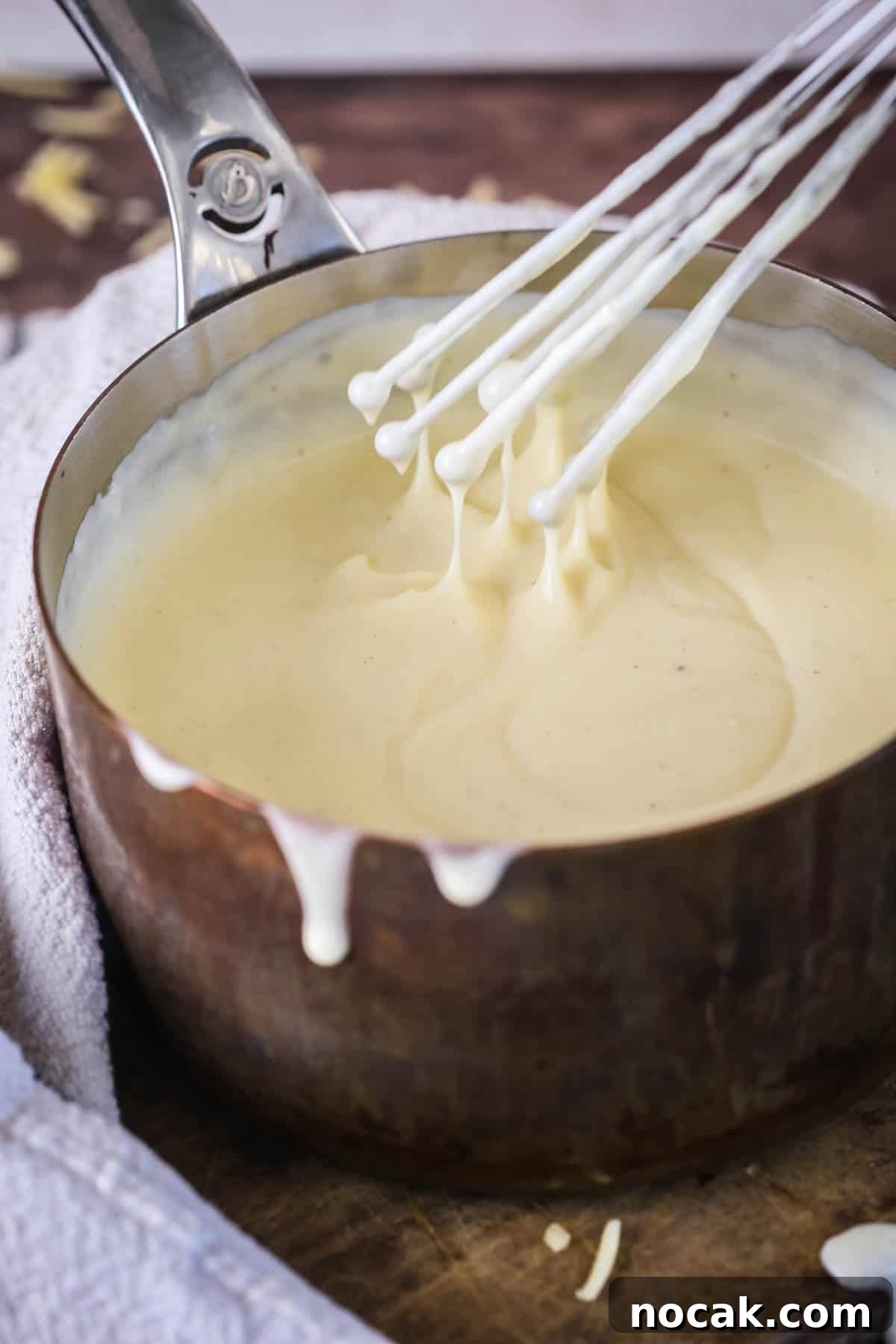
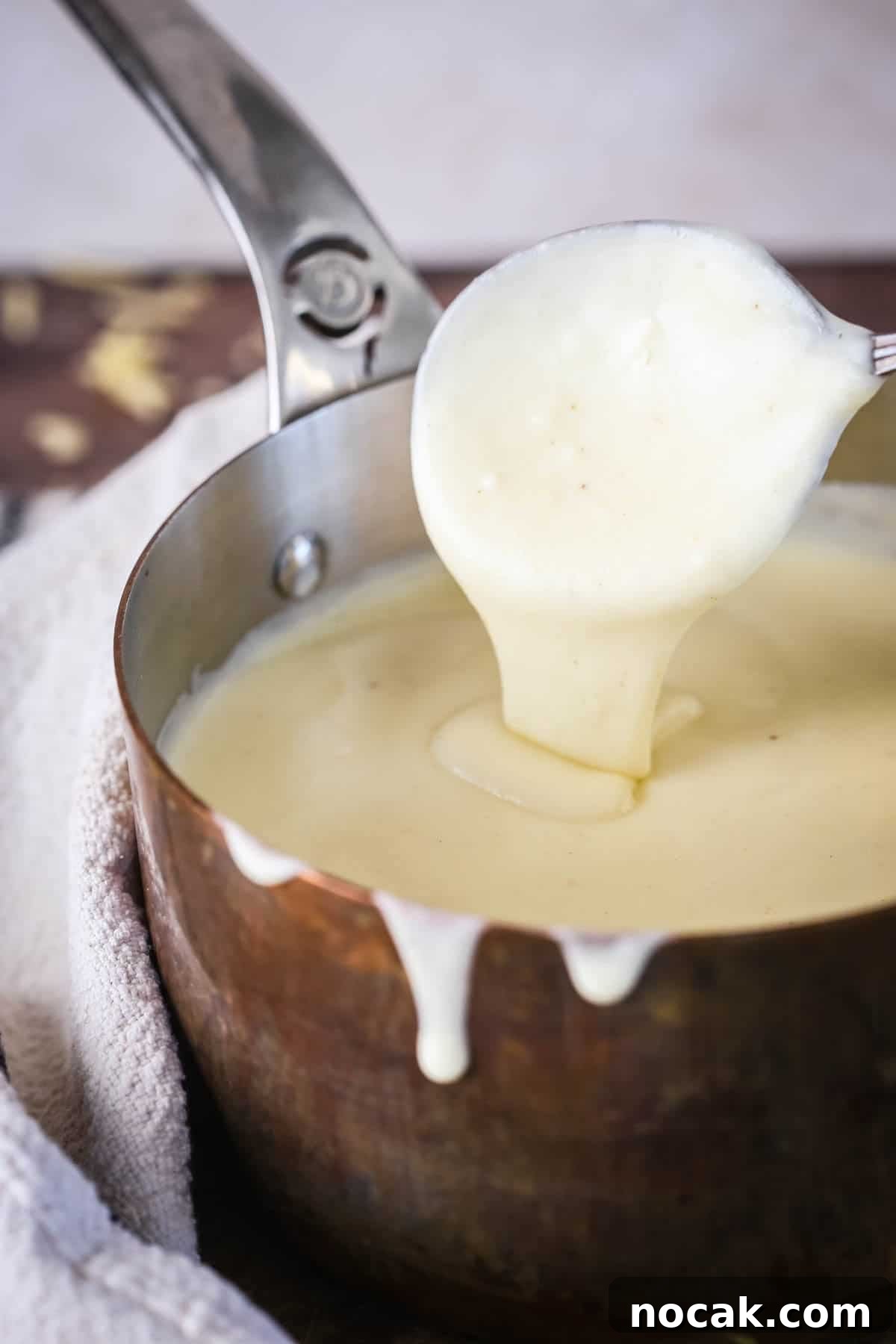
In this recipe we replace wheat flour with an equal amount of sweet rice flour. The result is a glossy, velvety sauce that’s hard to distinguish from the original wheat-based version.
If you don’t have sweet rice flour, cassava flour is a good alternative that also creates a lovely, smooth finish.
What cheese to use for the best cheese sauce
Choose cheeses with strong flavour and good melting properties for the best texture and depth.
- Gruyère – my top pick. It melts beautifully and brings a rounded, nutty flavour.
- Mature Cheddar – reliable, punchy and familiar; it pairs perfectly with gruyère for layered flavour.
- Fontina – excellent melting quality and depth if you want an alternative to gruyère.
- Mix-and-match – experiment with combinations and small amounts of parmesan or blue cheese for variations.
Ingredients Needed
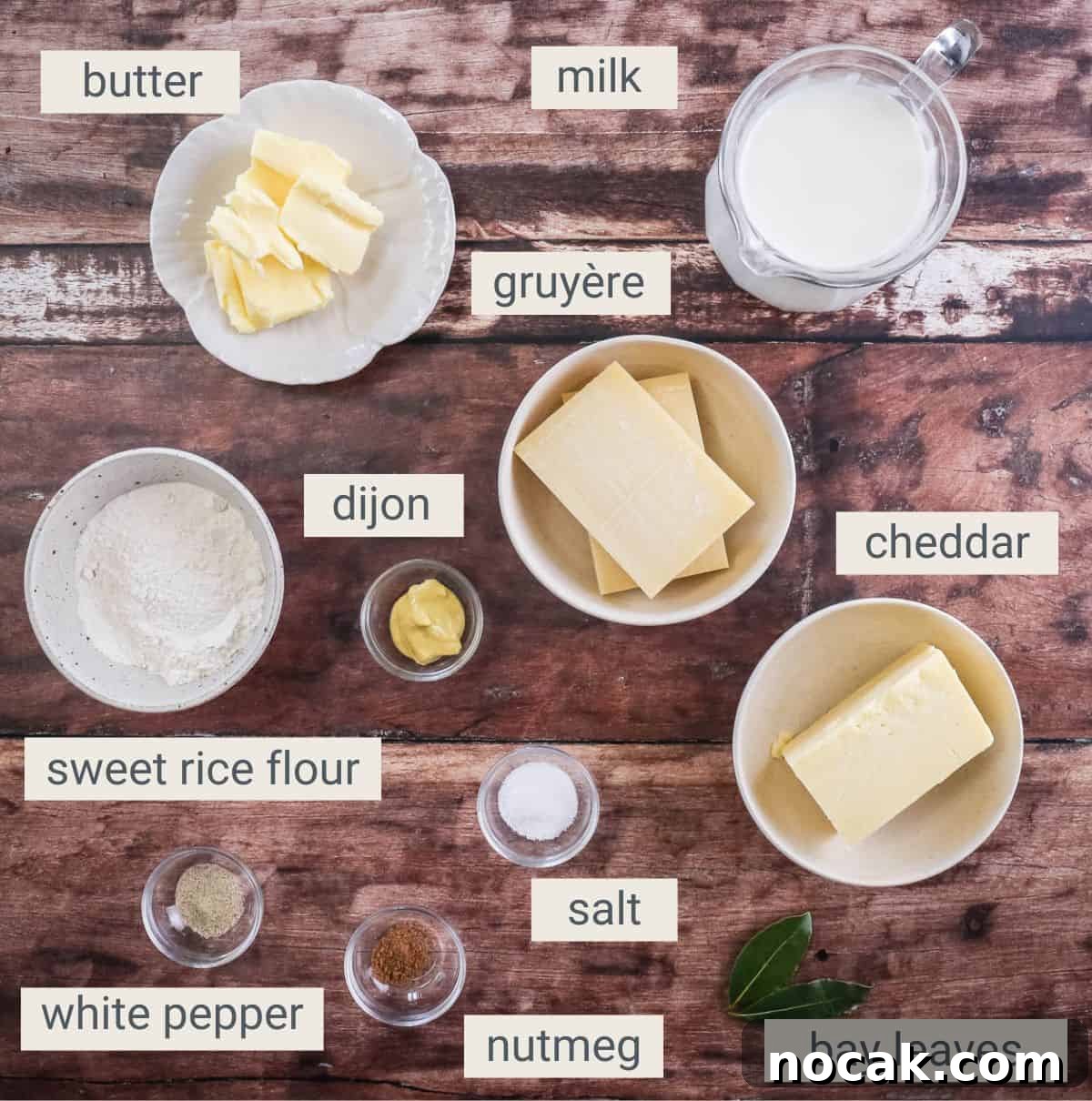
Butter: Unsalted is recommended so you can control the seasoning. If you only have salted butter, omit added salt and season to taste.
Sweet rice flour: A neutral-flavoured, naturally gluten-free thickener that gives a silky result. Cassava flour can be used as an alternative. Avoid ordinary gluten-free all-purpose blends for this recipe.
Whole milk: Use whole milk for body and richness. For dairy-free versions try oat milk (richer) or almond milk.
Cheeses: Gruyère and mature cheddar, freshly grated, give the best melt and flavour.
Dijon mustard: A small amount boosts the cheese notes. English mustard powder is an option if you want a stronger kick.
Bay leaves and seasoning: Bay leaves add a gentle herbal note; finish with white or black pepper, salt and a pinch of nutmeg.
How To Make Gluten-Free Cheese Sauce
Full method is also available in the recipe card below.
Place the milk (with bay leaves, salt, pepper and nutmeg if you prefer) in a saucepan and bring just to a gentle simmer. Keep it warm and then remove from the heat.
In a separate saucepan melt the butter over low heat, then whisk in the sweet rice flour to form a smooth roux. Cook for 1–2 minutes to remove any raw flour taste.
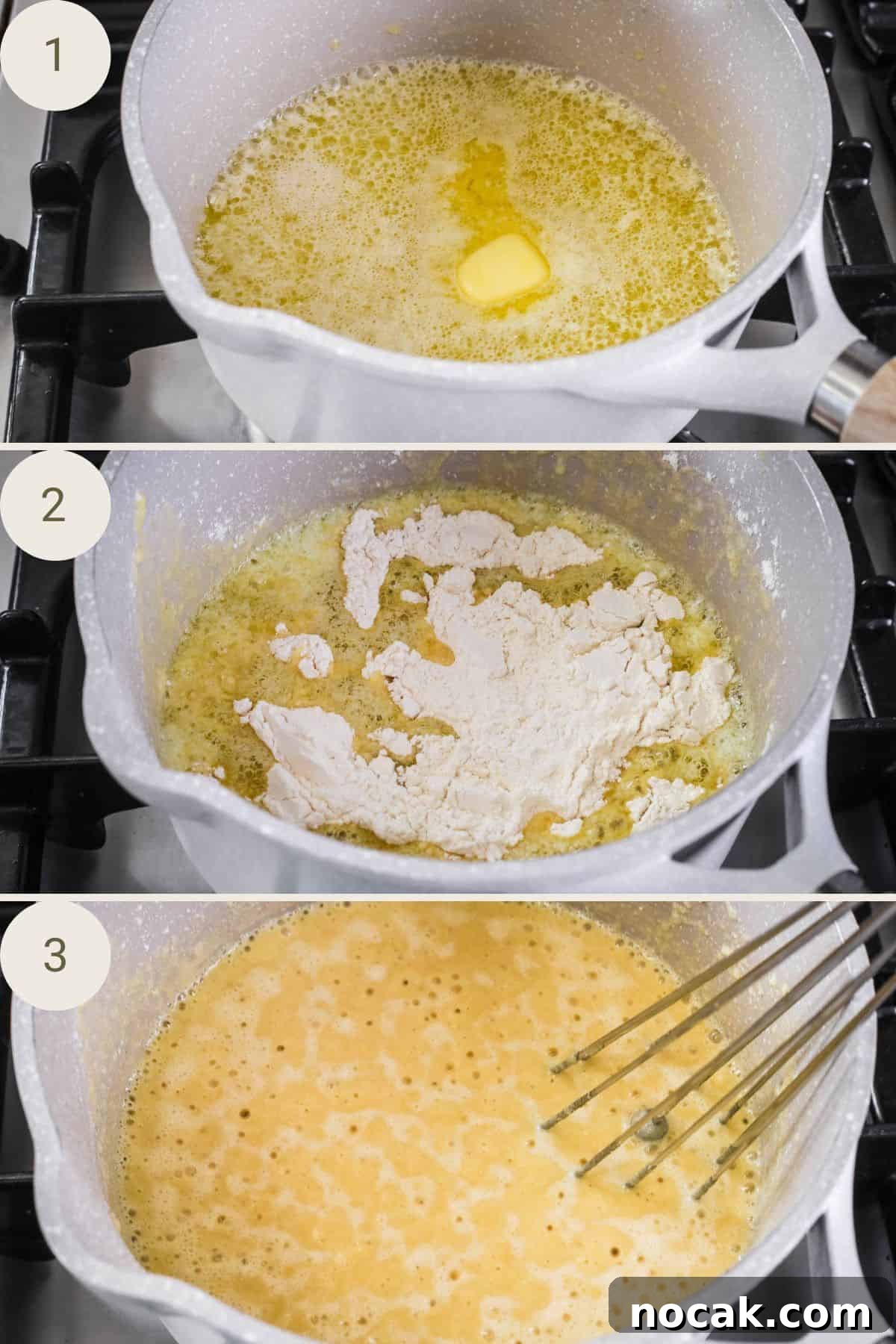
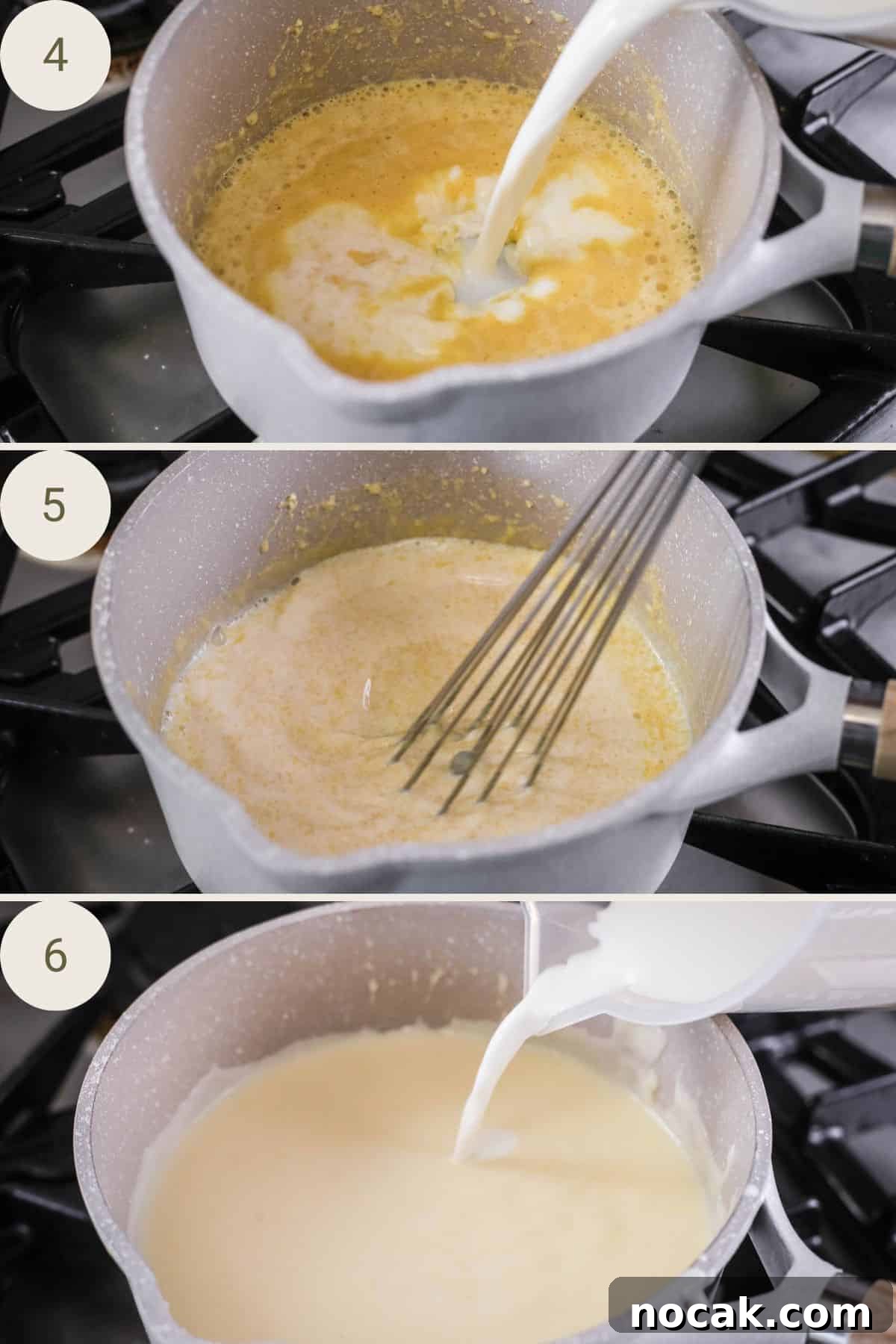
Gradually pour the warm milk into the roux in a slow stream, whisking constantly until the mixture is completely combined and thickened.
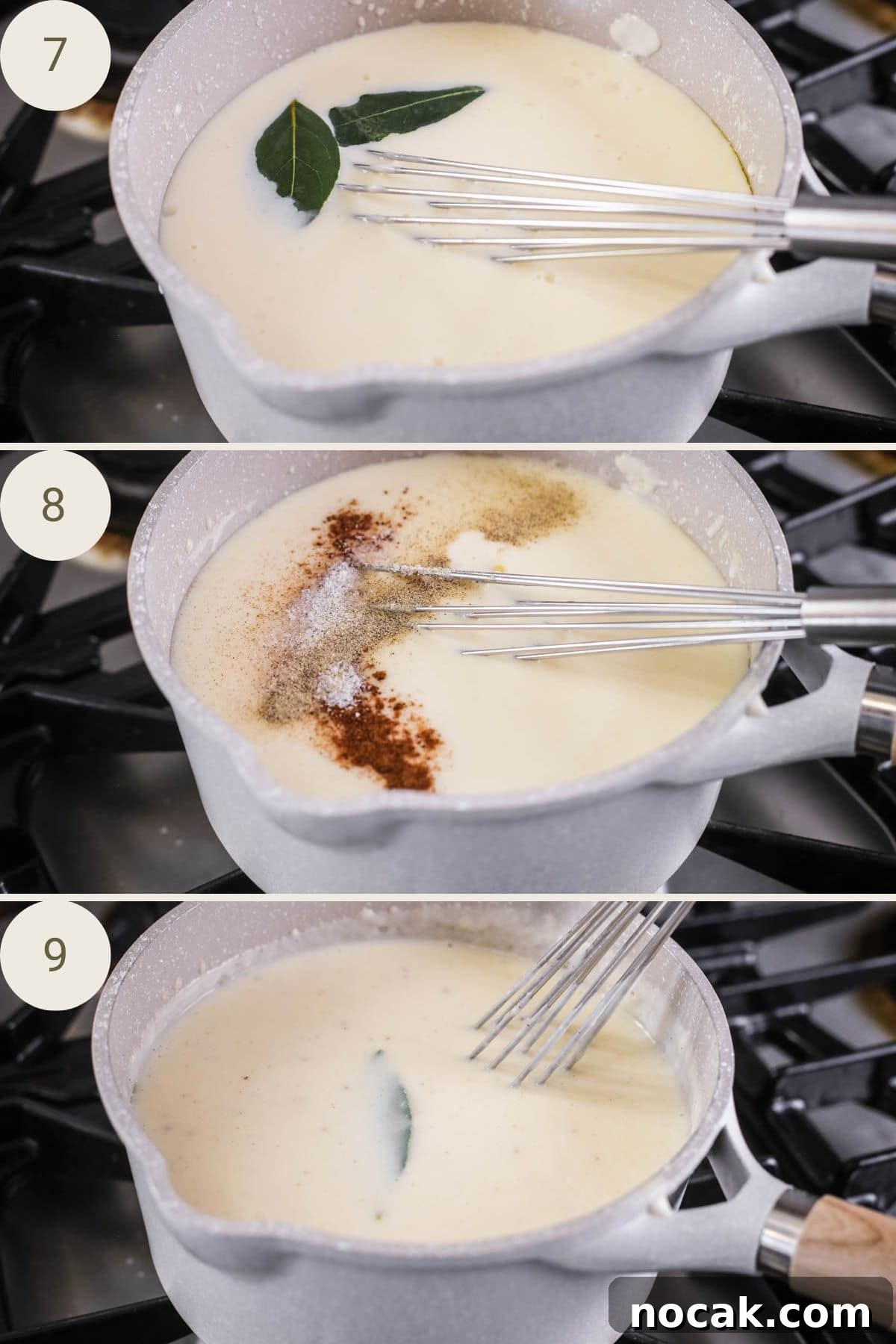
Add the bay leaves (if not already added), Dijon mustard and seasoning. Stir and keep the sauce on a gentle heat until it begins to bubble lightly.
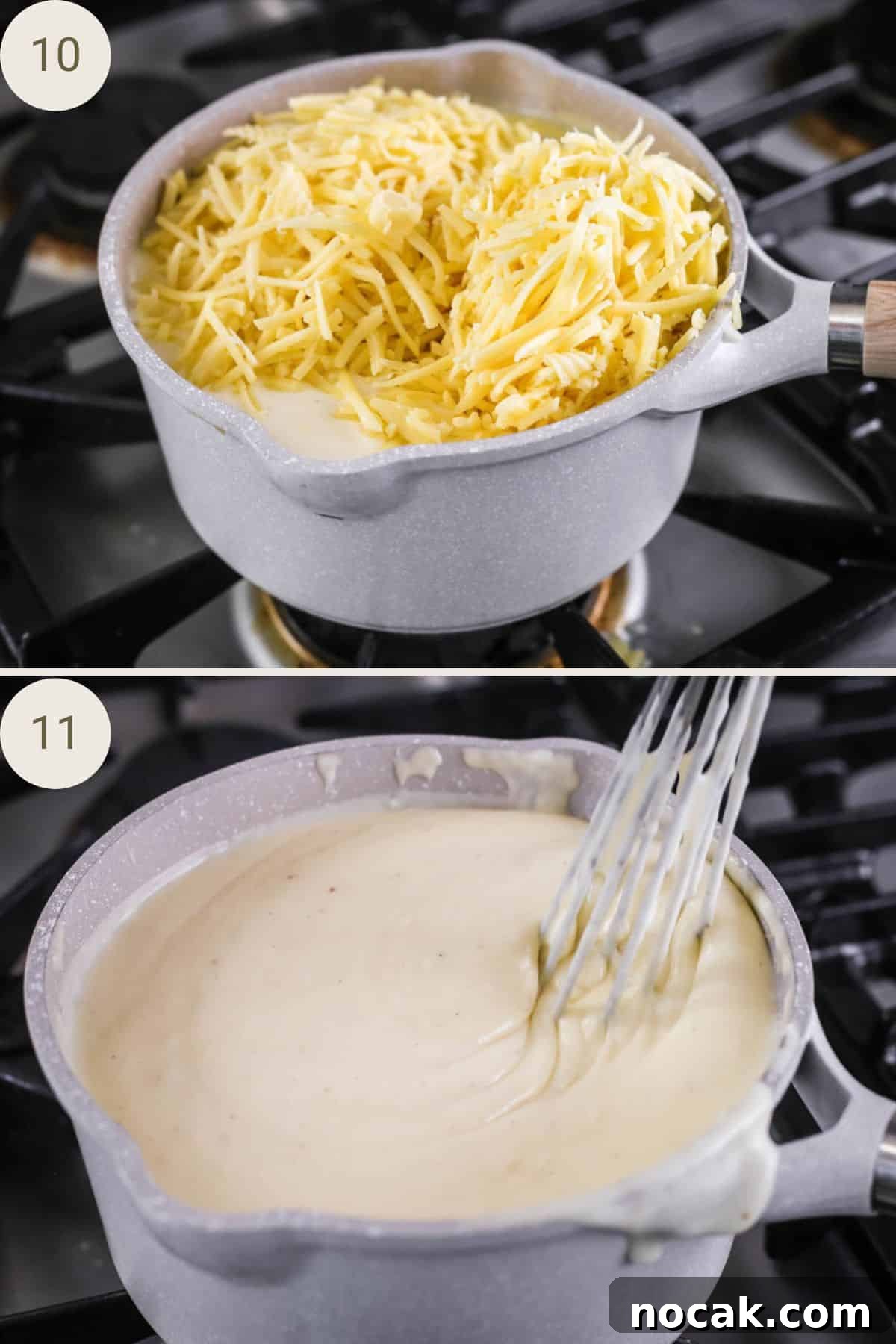
Remove bay leaves, then add the grated cheeses and stir until the sauce is smooth, glossy and fully combined. Take off the heat and use immediately.
Expert Tips
This recipe has been adjusted to be quicker, but you can still infuse the milk with bay leaves and spices for a deeper flavour if you have time. To do so, bring the milk to just under a boil with the seasonings, remove from the heat and let it sit for at least an hour before using.
To make pouring easier, transfer the warm milk into a jug before adding it to the roux.
If you need to store the sauce, press a piece of parchment or cling film onto the surface to prevent a skin forming.
What do I do if my sauce is lumpy?
Don’t worry—lumps are fixable. Check the sauce before adding the cheese. If lumps appear:
- Whisk vigorously over gentle heat until smooth.
- Push the sauce through a fine sieve to remove stubborn bits.
- If needed, add about 50ml cold whole milk and whisk while bringing the sauce to a gentle simmer—the extra liquid will help the flour rehydrate and smooth the sauce.
More gluten-free sauces you’ll love
- Gluten-Free White Sauce (with cornflour)
- Gluten-Free Parsley Sauce
- Gluten-Free Gravy
- Gluten-Free Onion Gravy
- Bread Sauce (gluten-free)
- Gluten-Free Homemade Custard
Make ahead or meal prep
This sauce can be prepared up to three days ahead and stored in an airtight container in the fridge—ideal for reducing weekday cooking time.
What can I use Gluten-Free Cheese Sauce for?
- Any pasta dish—macaroni cheese or lasagne
- Cauliflower or broccoli cheese
- Poured over chicken schnitzel or roasted vegetables
Variations on Gluten-Free Cheese Sauce
- Swap a pinch of salt for crumbled bacon salt for added savoury depth.
- Try Honey Dijon mustard for a subtle sweetness that lifts the sauce.
- For a vegan version use dairy-free milk, vegan butter and vegan cheese (cashew milk works well).
More Gluten-Free Cheese Recipes You’ll Love
Gluten-Free Cauliflower Cheese
Cheesy Brussel Sprout and Leek Gratin
Brazilian Cheese Rolls
Cheesy Oat Bacon Breakfast Muffins
White Chocolate Ginger Cheesecake
The Best Gluten-Free Cheese Sauce
Pin Recipe
Ingredients
- 100 g unsalted butter
- 50 g sweet rice flour
- 1000 ml whole milk
- 2 bay leaves
- 2 teaspoons Dijon mustard
- ⅛ teaspoon ground white pepper
- ¾ teaspoon kosher salt
- ⅛ teaspoon ground nutmeg
- 200 g gruyère
- 200 g mature cheddar cheese
Instructions
- Melt the butter in a large saucepan. Turn the heat to low and whisk in the sweet rice flour. Cook for 1–2 minutes to form a smooth roux.
- Increase heat to low–medium and gradually add the whole milk, whisking constantly until the sauce is thick and smooth.
- Stir in bay leaves, white pepper, salt, nutmeg and Dijon mustard. Continue stirring until the sauce begins to bubble gently.
- Remove bay leaves, then add all the grated cheese and stir until fully melted, smooth and glossy.
- Remove from the heat and use as desired.
Video
Notes
- This version increases the quantity and includes both gruyère and cheddar for extra depth. The simplified method skips a long milk infusion, though you can still infuse milk with seasonings if you prefer deeper flavour.
- Yield: Enough sauce for a family-sized macaroni cheese (about 8 servings).
- Flour swap: Sweet rice flour can be substituted with cassava flour. Avoid generic all-purpose gluten-free blends for this roux method.
- Lumpy sauce fix: Whisk on low heat, sieve through a fine mesh if necessary, or add 50ml cold whole milk and whisk while gently heating to rehydrate the flour.
- Cheese swaps: Try fontina, a touch of blue cheese or some parmesan for variations.
- Make ahead: The sauce keeps up to 3 days in the fridge in an airtight container.
- Serving suggestions: Use in mac n’ cheese, lasagne or vegetable bakes.
Ingredient measurements: Ingredients are weighed for accuracy. Metric was used for testing; use a digital scale where possible.
Nutrition information: Nutritional values are estimates and will vary by ingredients used.
Nutrition
Carbohydrates: 12g
Protein: 18g
Fat: 31g