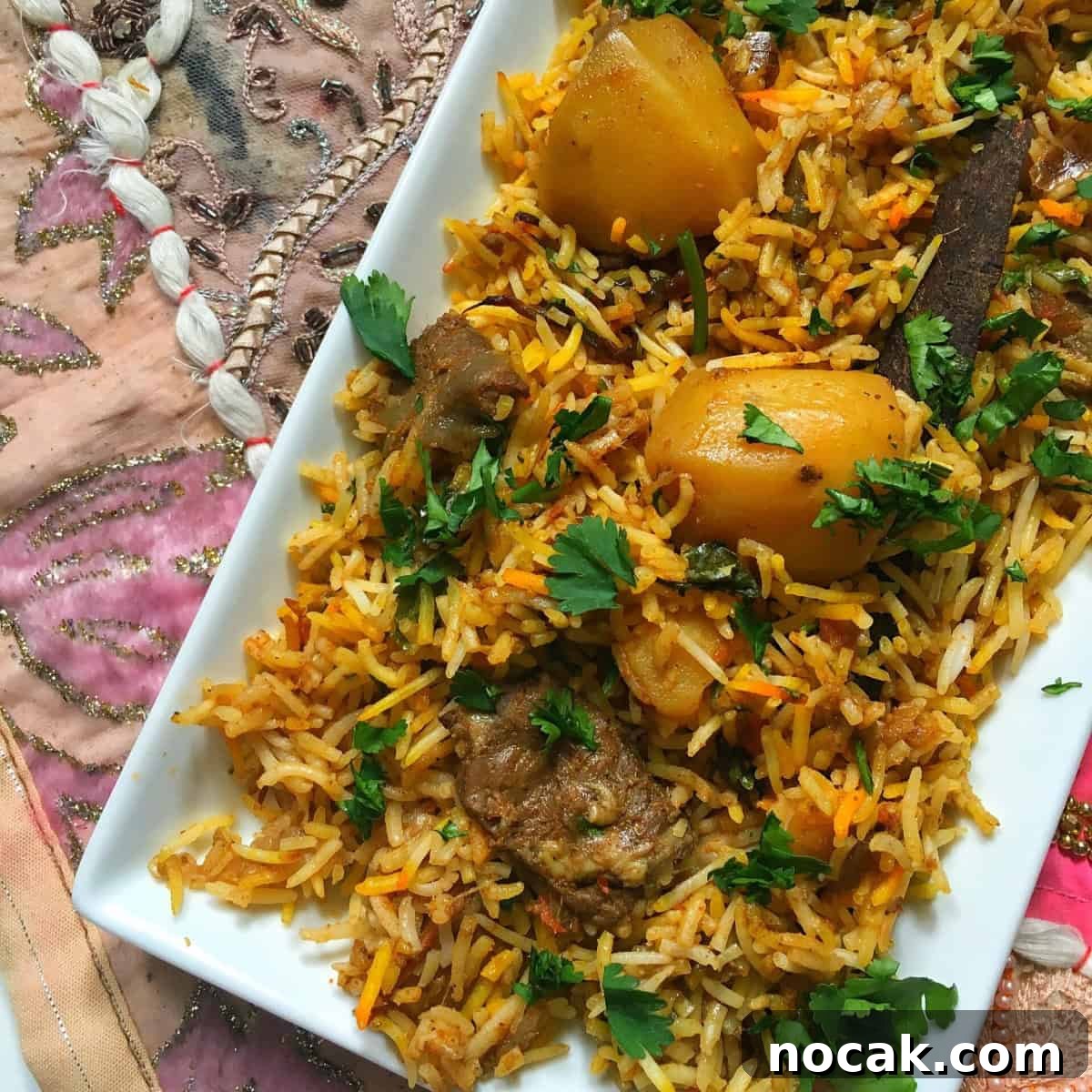
A well-made lamb biryani needs no grand introduction — its colour, layers and bold aroma announce themselves the moment it appears. This dish is unapologetically celebratory: rich, fragrant and complex, with spices that only get used for special occasions.
Unlike the gentler pilau, biryani is loud and dramatic, a feast of texture and flavour that rewards the time and care invested in it.
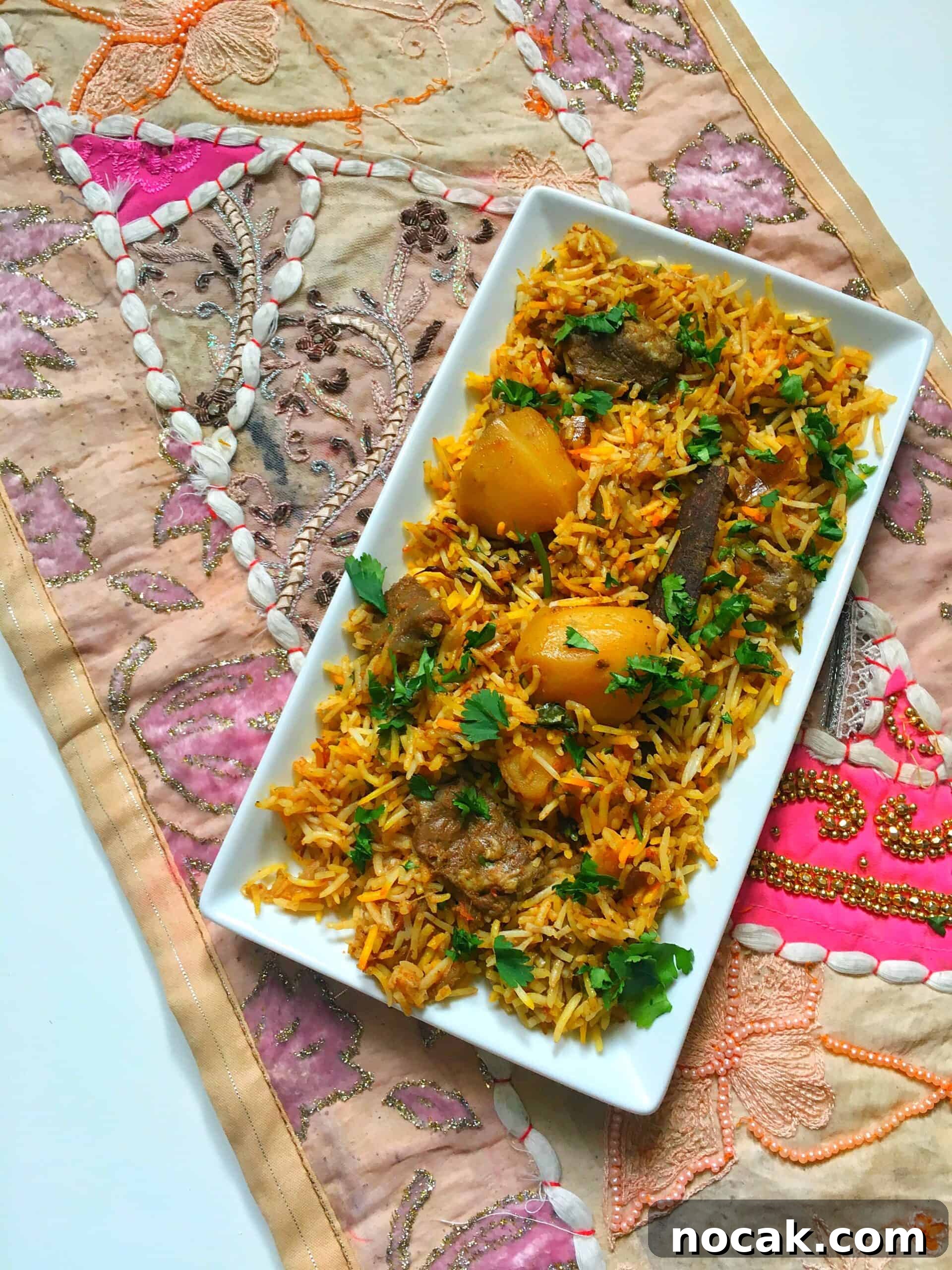
Biryani can be an elaborate project, but the result is always worth the effort: tender meat, fragrant rice and a medley of garnishes that make every bite memorable.
What is Biryani?
Biryani is a sumptuous rice dish popular across South Asia and the Middle East. It features layers of spiced meat or vegetables combined with aromatic basmati rice and a distinctive masala. It’s more than rice with curry mixed in — biryani is a carefully layered, slow-finished celebration of spices and textures.
Regional variations are many: Hyderabadi, Bombay, Bengali, Kachhi and more. Biryani can be made with chicken, lamb, beef, goat, fish, prawns or vegetables, making it a versatile centrepiece for any meal.
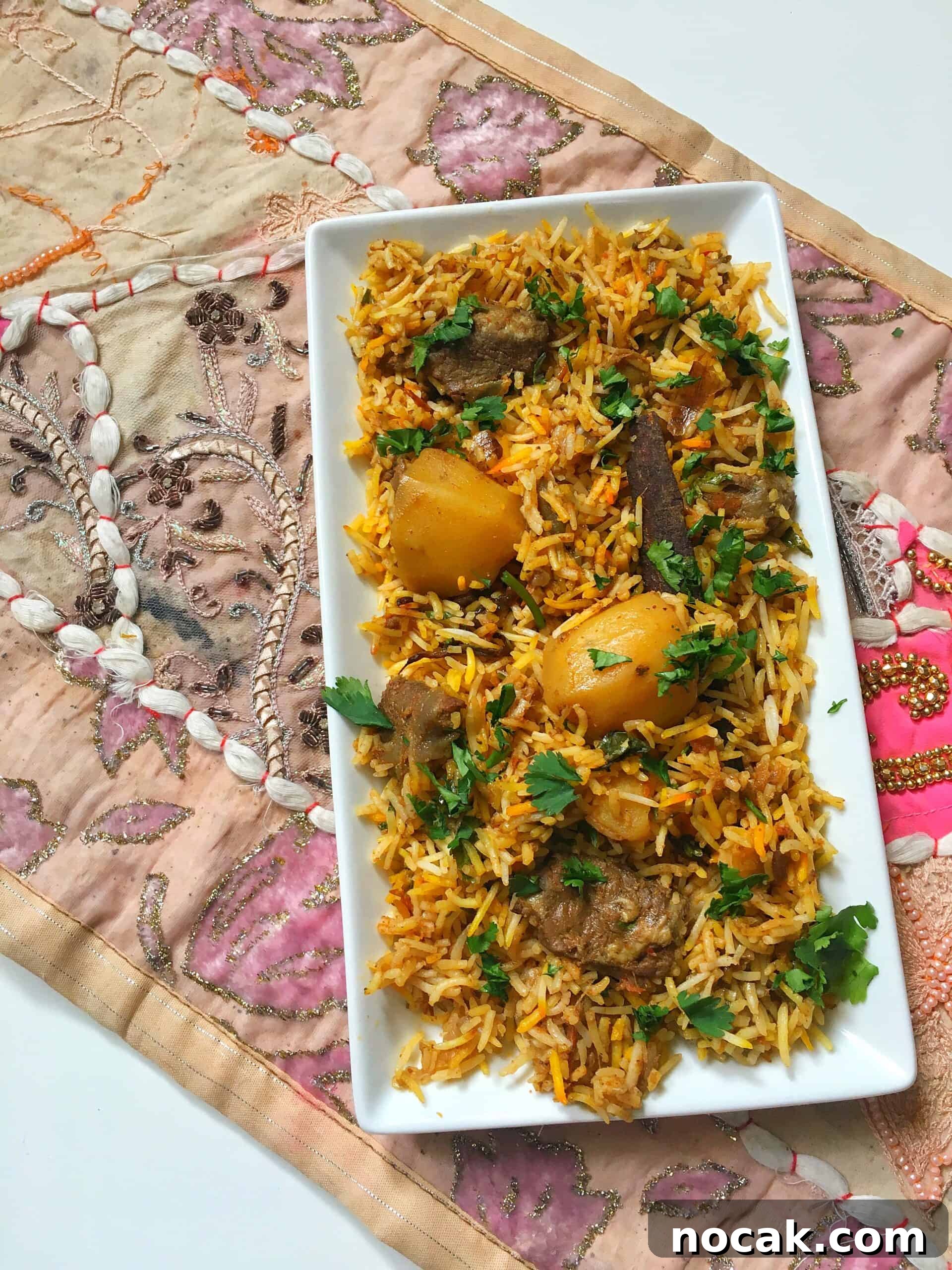
What is a Sindhi Biryani?
Sindhi biryani originates from Sindh (now in Pakistan). It’s known for bright, crisp flavours — mint, lemon and coriander are prominent, while dried plums add a characteristic tang. Sindhi biryani often includes potatoes and dried plums in the masala, and traditional recipes may finish with dried fruits and nuts as a garnish.
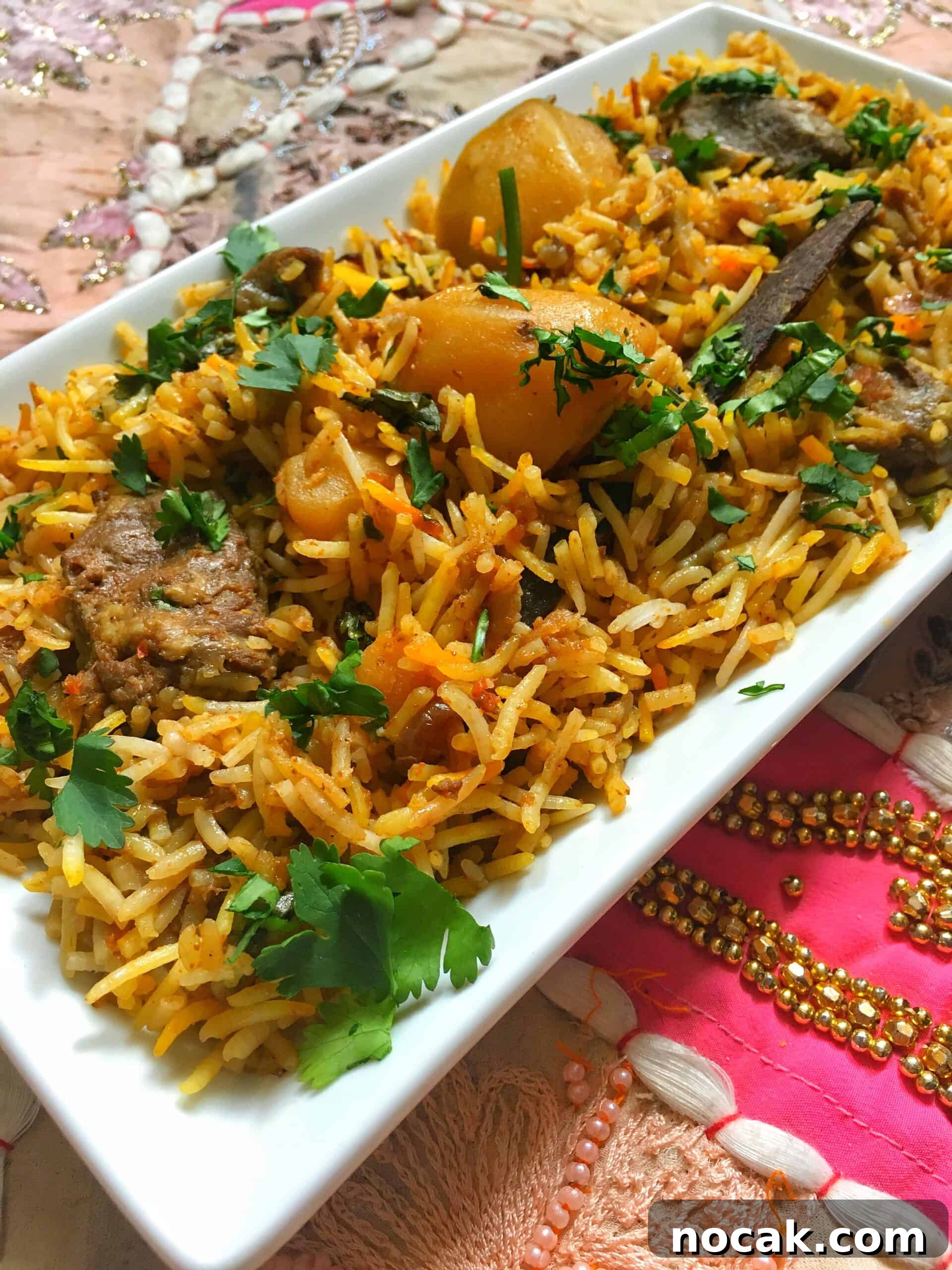
How biryani is made — a brief overview
Making biryani involves multiple stages and a bit of time, particularly when using red meat like lamb. The main stages are:
- Fry onions until golden and crisp; reserve half for garnishing.
- Cook the meat with spices and yogurt to create the biryani masala.
- Parboil basmati rice with whole spices until about 75% cooked, then drain.
- Layer the pot with a portion of the masala, then rice, then garnishes (fried onions, herbs, lemon, tomatoes, a splash of kewra and a little ghee or butter). Repeat the layers.
- Seal and steam on the lowest heat to allow the flavours to meld, then rest before serving.
The layered, slow-steamed finish — often called dum — is what turns good ingredients into an extraordinary biryani.
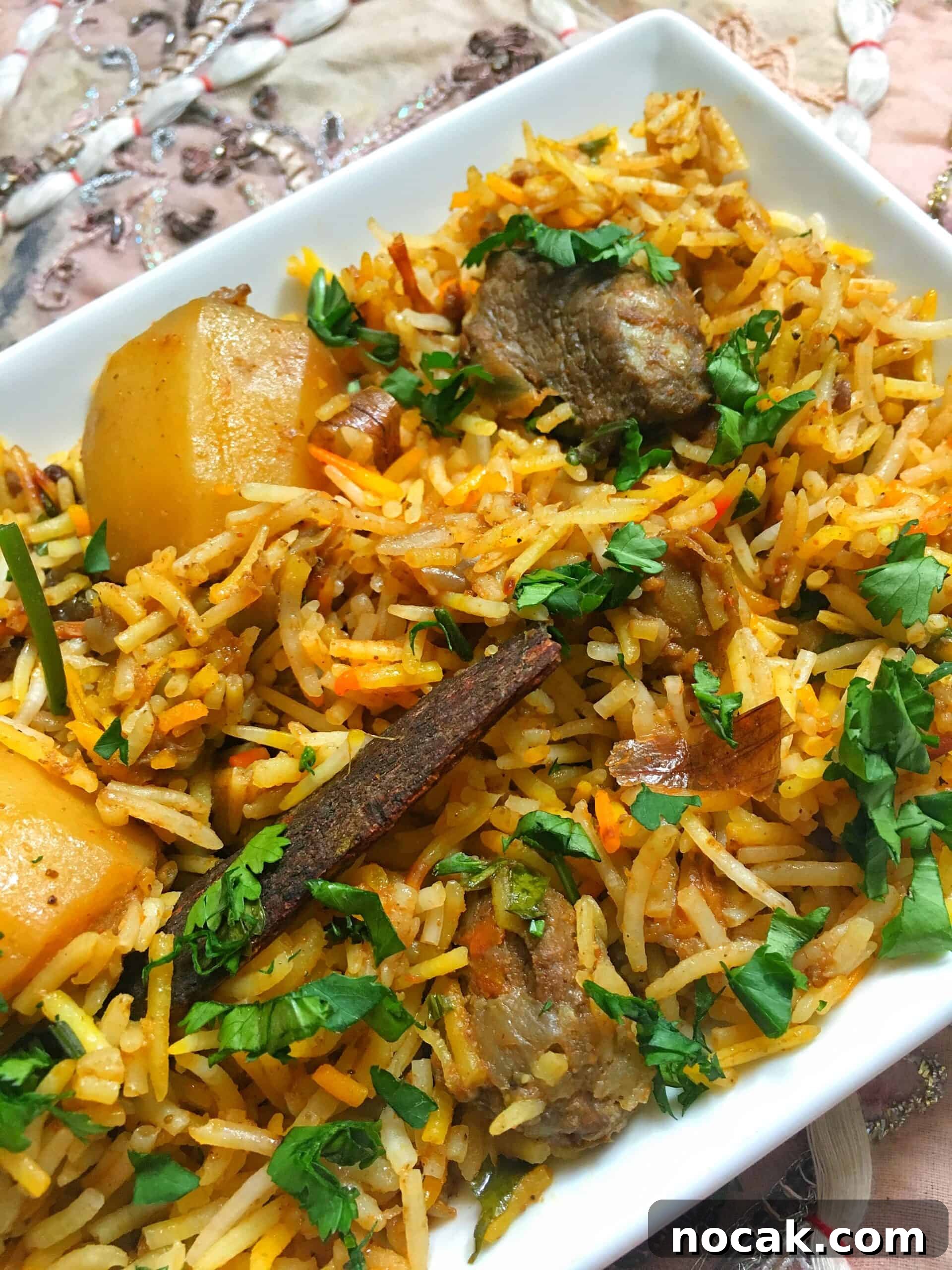
Using lamb in this recipe
In the UK, lamb is a common choice for biryani. In other regions, goat (mutton) or beef are more typical. This recipe easily adapts: substitute beef for lamb without other changes, or use goat — if using goat, cook the curry longer (about an extra hour) and add roughly a cup more water to tenderise the meat.
Why I love this Sindhi Lamb Biryani
This Sindhi lamb biryani wins me over with its combination of tender lamb, soft potatoes, tangy dried plums, fresh mint and coriander, and bright lemon notes. The addition of fried raisins and nuts — a nod to Kabuli pilau — adds occasional sweet, nutty pops that contrast beautifully with the savoury layers.
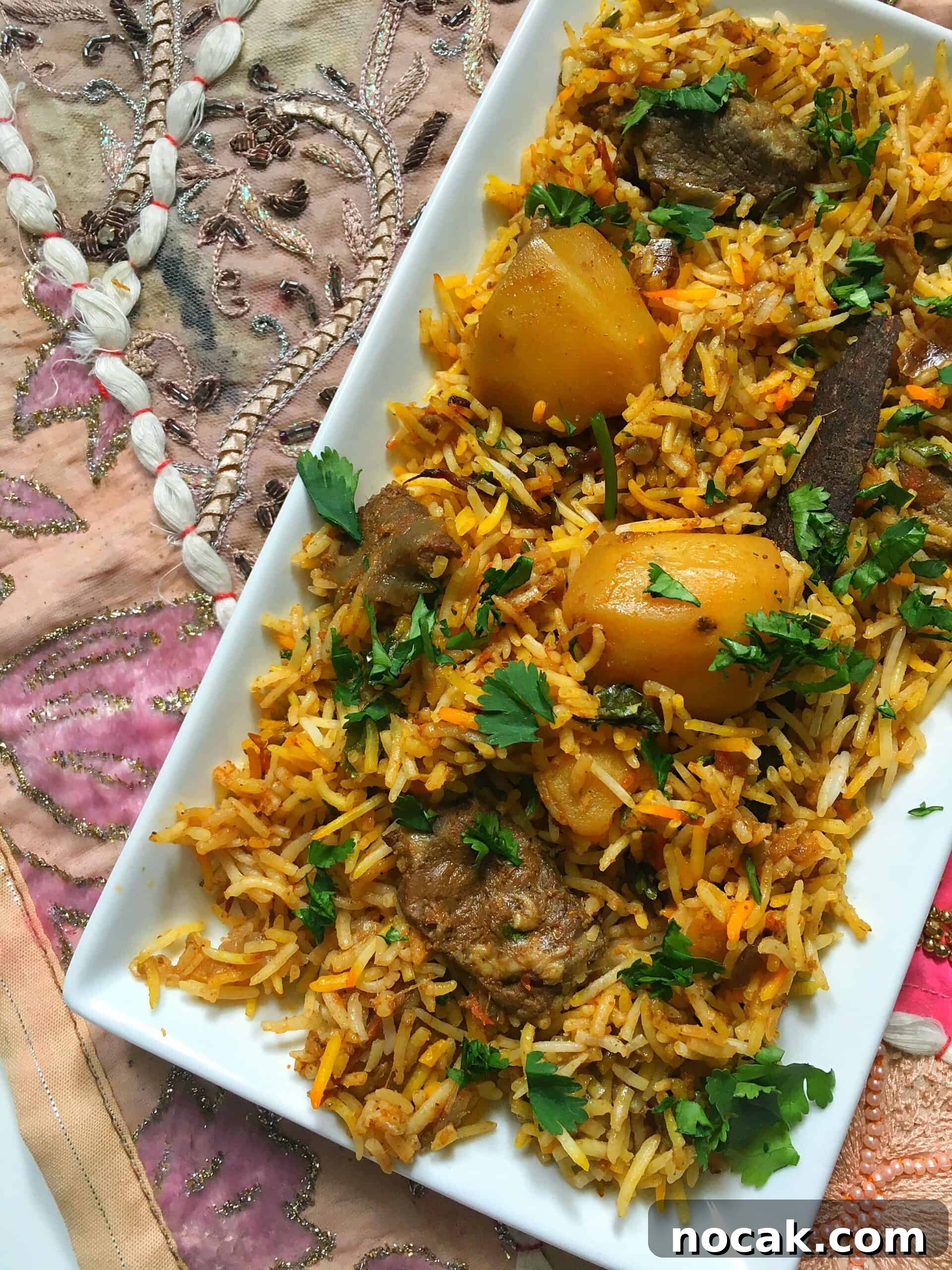
I prefer milder biryani that highlights cardamom, mint and lemon rather than heavy heat. This recipe retains traditional warmth but can be adjusted by reducing red chilli and black pepper to taste.
Potatoes — yes or no?
People tend to be passionate about potatoes in biryani. Sindhi biryani traditionally includes potatoes, and they add a lovely, floury texture that complements the meat. If you prefer not to include potatoes, reduce the meat quantity proportionally (for example, halve the lamb) to keep the balance of the dish.
How to serve Lamb Biryani
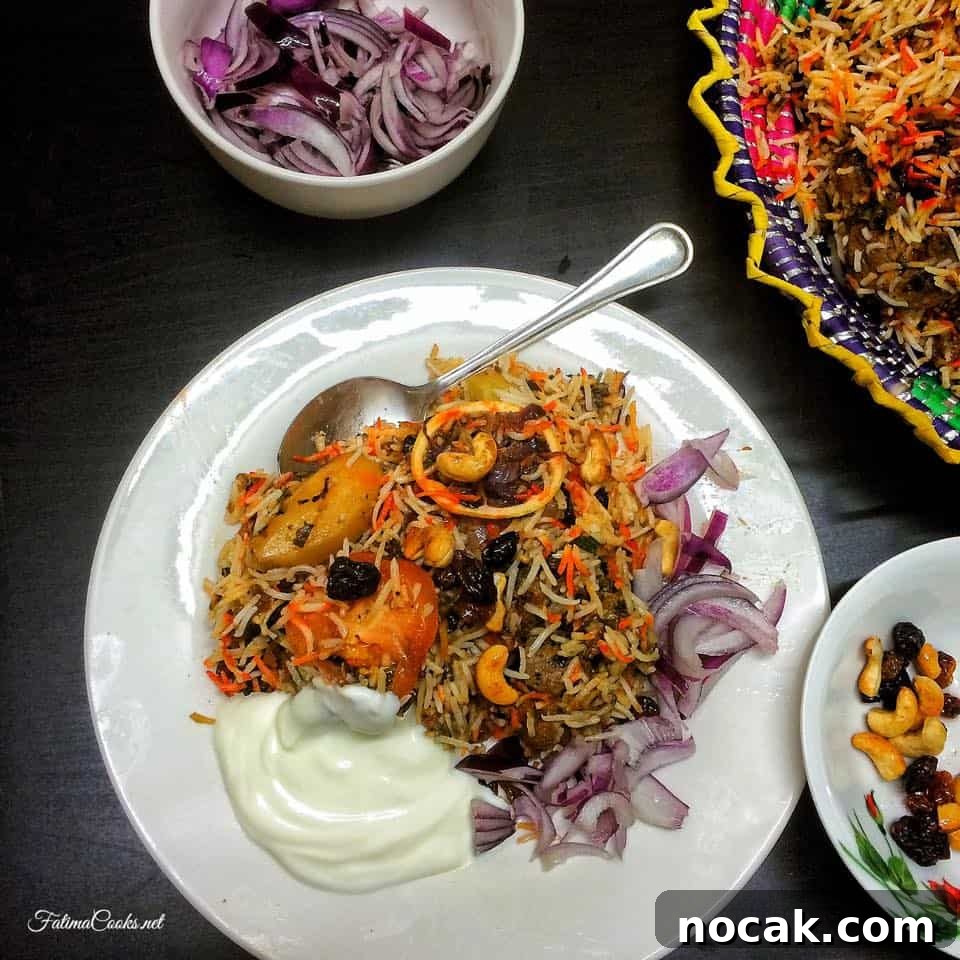
Serve this biryani with cooling raita and a simple salad — thinly sliced red onions soaked in a little vinegar work well if salad ingredients are limited. Offer fried raisins and nuts on the side for those who enjoy a sweet-savoury contrast. Allow the biryani to rest after steaming so the flavours settle, then serve warm and enjoy the compliments.
Enjoy, with love x
📋 Recipe
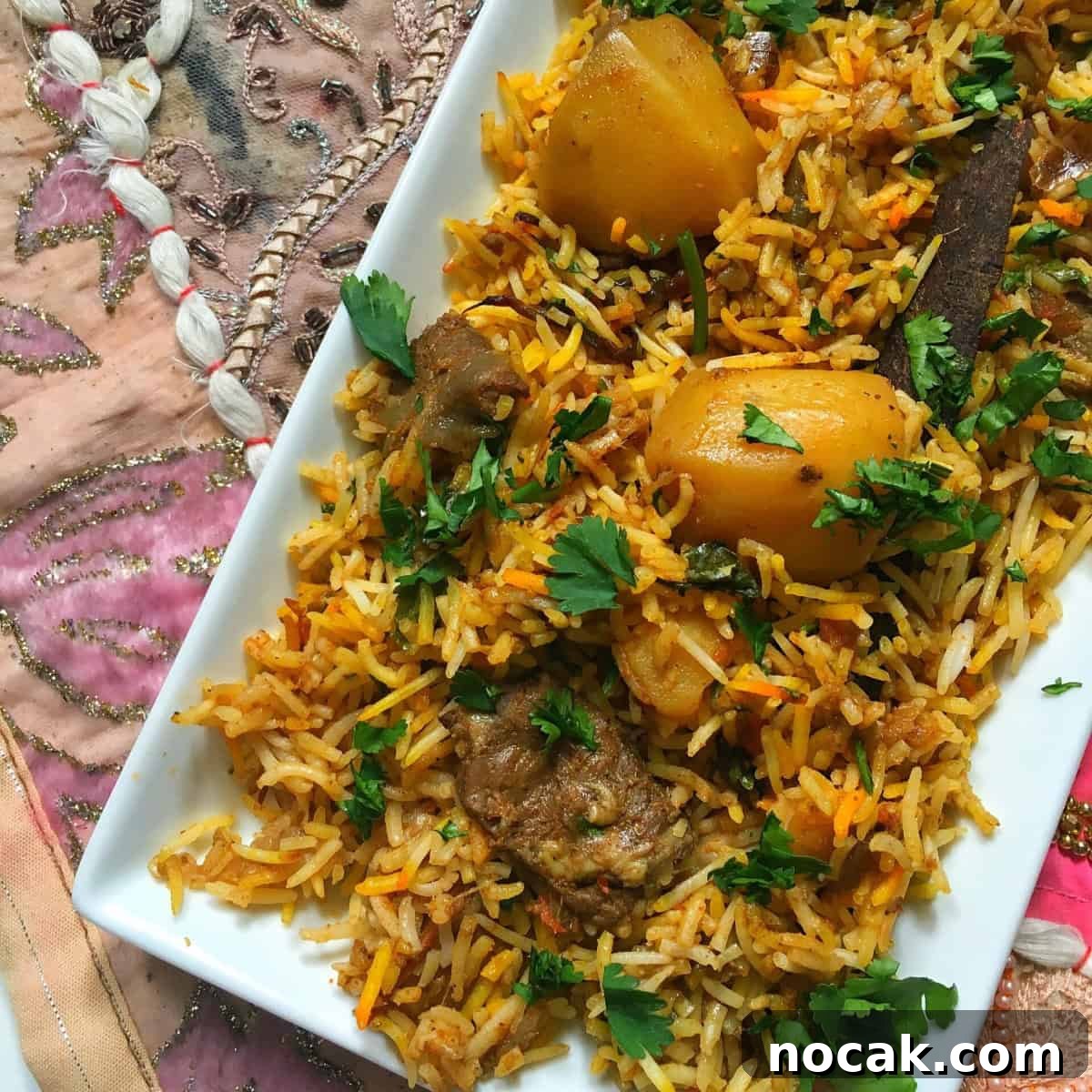
Sindhi Lamb Biryani
15 minutes
1 hour 30 minutes
1 hour 45 minutes
6
Ingredients
For the Biryani masala
- 5 small onions, sliced (approx 350 g)
- 1.5 tbsp garlic, minced (approx 10 cloves)
- 1 tbsp freshly minced ginger
- 1/2 cup full-fat yogurt (approx 130 g)
- 1.1 lb lamb or mutton, bone in
- 1 bay leaf
- 2 tsp salt
- 1 tbsp cumin
- 7 green cardamom pods
- 1 tbsp garam masala
- 1 tbsp black pepper
- 1 medium cinnamon stick
- 1 tbsp red chilli flakes
- 5 cloves
- 9 oz potatoes, peeled and chopped into chunks (approx 250 g)
- 10 dried plums (prunes can be used)
For the rice
- 2 cups white basmati rice (approx 400 g)
- 1 tbsp salt
- 10 green cardamoms
- 2 black cardamoms
- 1 bay leaf
For the garnish
- 1/2 bunch mint, chopped
- 1/2 bunch coriander, chopped
- 6 lemon slices
- 6 tomato slices
- 1 star anise
- 1 tbsp cumin
- a few pinches orange/yellow food colour (optional)
- 1 tsp kewra water
Instructions
For the potatoes
- Halve and deep fry the potatoes until nearly cooked but not falling apart. Set aside.
For the Biryani masala
- Heat oil in a deep pot and fry all the onions on medium-high until golden brown. Remove half and set aside for garnish.
- To the remaining onions, add minced garlic and ginger and cook until golden.
- Add the lamb and sear on high until the meat loses its pink colour.
- Stir in yogurt, dried plums and the spices. Sauté briefly, then add 3–4 cups water. Bring to a boil, cover and simmer for 1–1.5 hours until the meat is tender (mutton may take up to 1 hr 45 mins). Avoid overcooking so the meat doesn’t fall off the bone.
- When the meat is tender, stir in half the chopped mint, half the chopped coriander and the fried potatoes. Turn off the heat.
For the rice
- In a separate pot, bring water to a boil with the whole spices and a little oil. Add rice and boil rapidly for 5–7 minutes until the rice is about 75% cooked. Drain immediately in a colander.
Assembling the Biryani
- In a heavy-bottomed pot, spread half the biryani masala.
- Top with half the parboiled rice.
- Sprinkle 2–3 pinches of food colouring (optional) and 1/2 tsp kewra water over the rice.
- Add half of the reserved fried onions, 3 lemon slices and 3 tomato slices.
- Scatter 1/4 bunch chopped mint and 1/4 bunch chopped coriander.
- Repeat the layering with the remaining masala and rice, finishing with the remaining garnishes.
- Reduce heat to the lowest setting, cover tightly and steam for 15–20 minutes (dum). Let rest for 15 minutes before opening.
- Serve with raita and salad. Fried raisins and cashews make a lovely optional accompaniment.
Notes
You can grind the biryani masala spices to a powder if you prefer not to find whole spices like cloves in the rice.
If you don’t have dried plums, prunes are a suitable substitute.