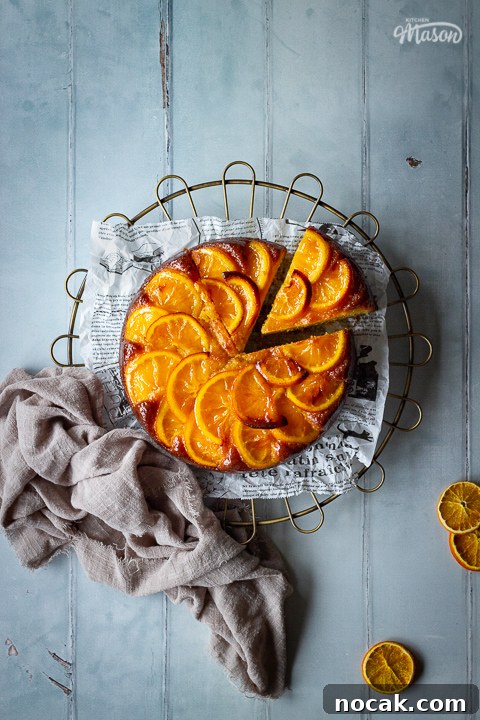
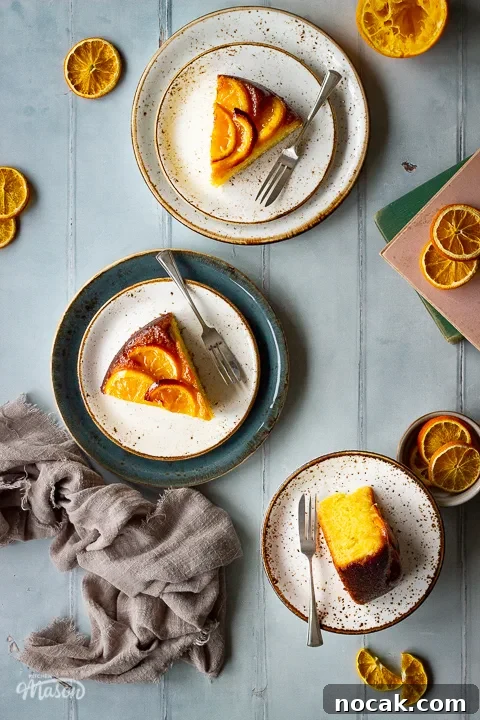
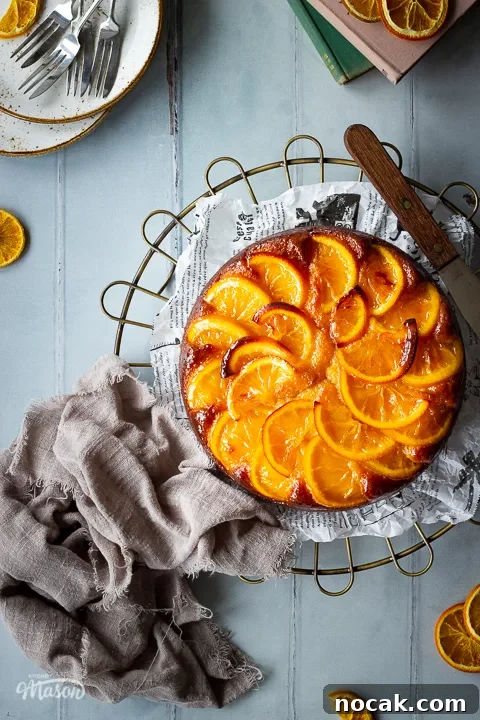
This stunning sticky orange cake looks impressive and tastes even better. It delivers a fresh citrus zing and exceptional moisture that keeps every slice tender and flavorful.
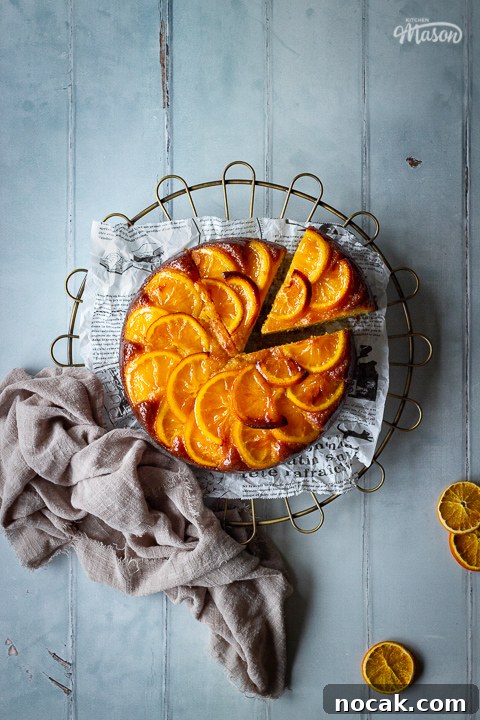
When I say fresh, I mean true orange freshness—not artificial, overly sweet orange flavour. This cake tastes like a peeled orange transformed into cake: bright, vibrant and unmistakably citrus.
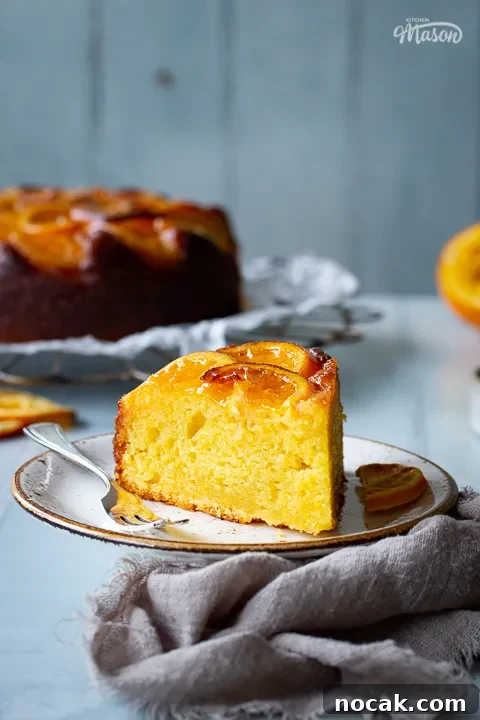
The combination of whole orange, Greek yoghurt and oil yields a texture that’s impossibly moist and soft. The yoghurt adds richness while the oil keeps the crumb tender—resulting in a cake that’s deeply satisfying.
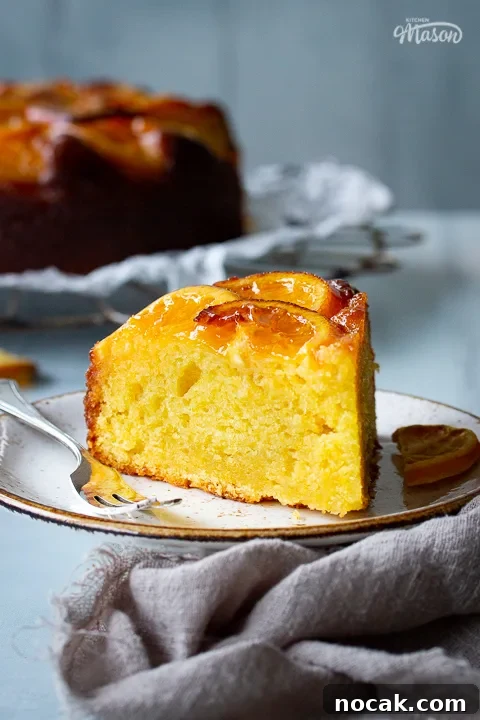
Unlike bakes that depend on zest or pre-flavoured chocolate, this recipe uses the whole orange—zest, juice and slices—so the citrus flavour is bright, natural and layered throughout the cake.
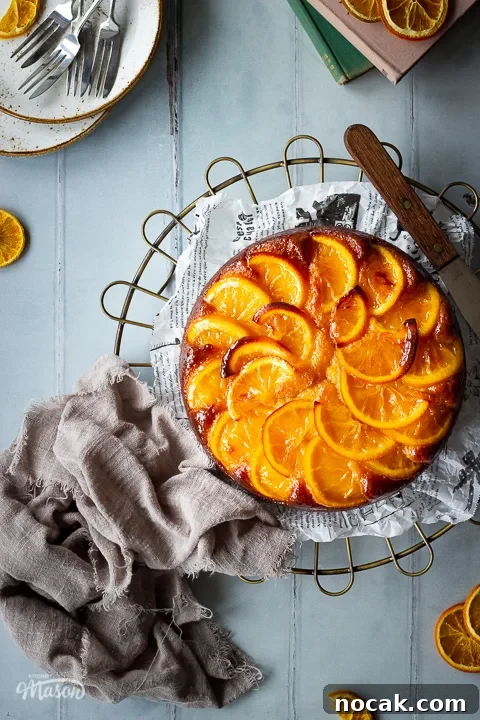
The cake’s texture is indulgent: soft, springy and incredibly moist. Using Greek yoghurt and oil instead of butter helps retain moisture and keeps the crumb tender for days.
If you’re newer to baking, consider reviewing a beginner’s guide for basic techniques and confidence—this recipe is straightforward, but a few small tips help ensure success.
Ready to make this sticky orange cake? Here’s a concise, SEO-friendly summary and the full steps to follow.
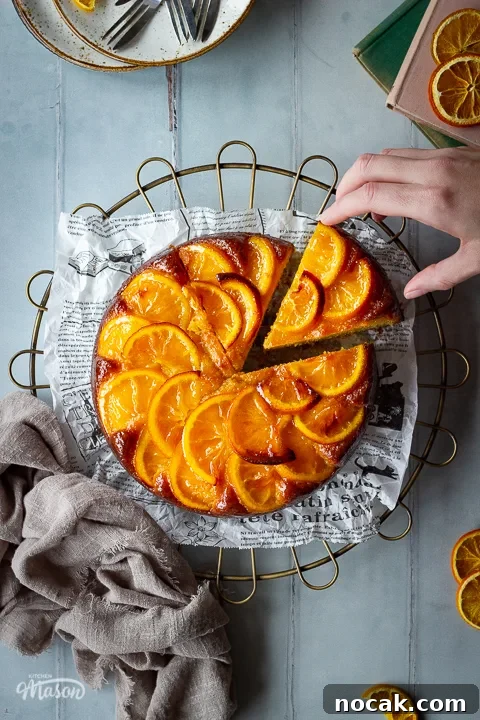
How to make sticky orange cake – recipe summary
For the decoration
- Slice oranges into semicircles and simmer with orange juice, water and sugar until the slices soften.
- Remove the slices and reduce the remaining liquid to a syrup.
For the cake
- Whisk oil, sugar, eggs, Greek yoghurt and orange zest until smooth.
- Fold in baking powder, flour and salt to form a batter.
- Pour the batter into a lined tin and arrange the orange slices on top.
- Bake for 45–50 minutes until golden and a skewer comes out clean.
- Slowly pour the warm syrup over the cake and let it soak for 10–15 minutes.
- Remove from the tin and cool completely on a rack.
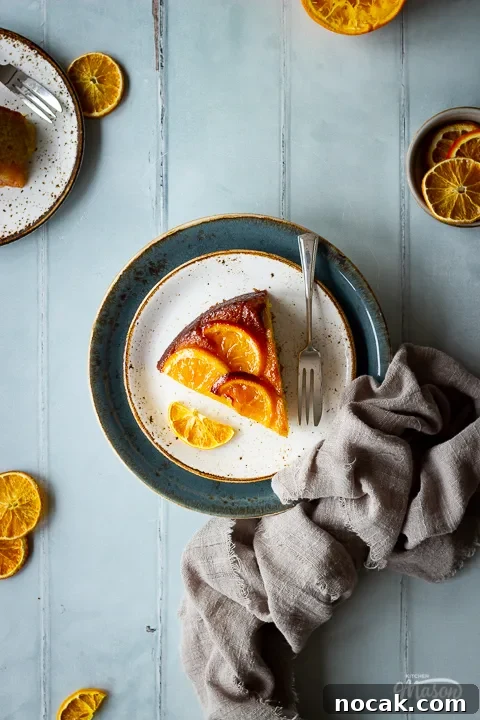
Ingredients
Everything you need for this sticky orange cake, listed by section.
For the decoration
- Oranges – Small to medium. You’ll use zest, juice and slices, so choose fresh, firm fruit.
- Sugar – Golden caster sugar adds a mild caramel note, but regular caster (superfine) sugar works fine too.
For the cake
- Oil – Neutral-flavored oil such as rapeseed, vegetable or sunflower.
- Sugar – Golden caster or regular caster sugar.
- Eggs – Medium-sized.
- Yoghurt – Greek or natural (full fat preferred).
- Baking powder – For rise.
- Flour – Plain (all-purpose) flour; do not substitute self-raising.
- Salt – Table salt is fine.
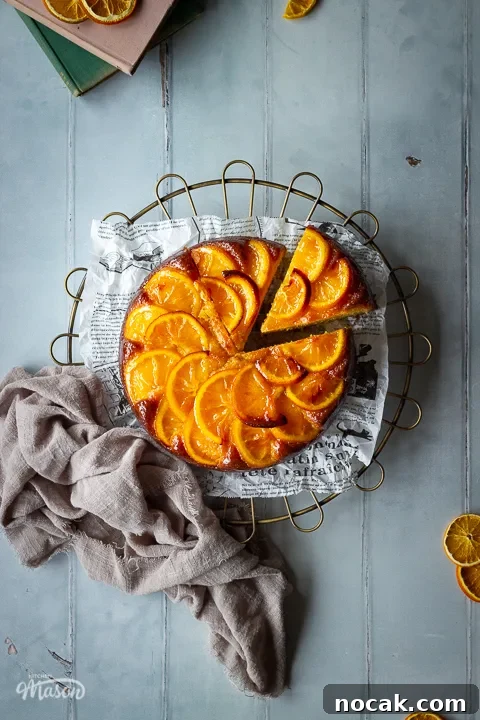
Recipe tips
Practical tips to help your bake turn out perfectly.
- Only grate the orange’s colored zest—avoid the white pith, which is bitter.
- Remove seeds from juice to prevent unexpected bites.
- Use a 20cm (8″) tin. Smaller tins change baking time and may burn the decoration.
- Bake on a lower oven shelf to protect the orange slices from burning.
- If the top seems to be burning, cover the cake loosely with foil and continue baking.
- Slice decorative oranges no thinner than about 4mm to prevent charring.
- Do not use the zested oranges for the decorative slices—those will burn more easily.
- Pour the syrup slowly so it soaks into the cake instead of running off the sides.
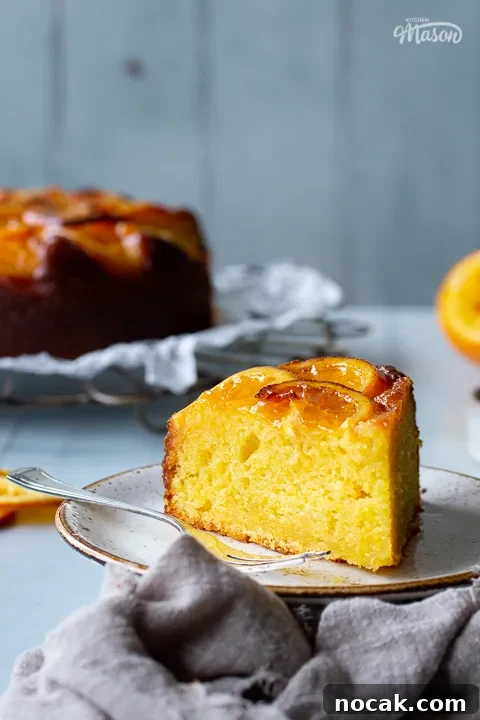
Sticky Orange Cake – Step by Step Picture Recipe
(Printer‑friendly recipe card is available in the recipe section below.)
This recipe gives both UK metric and US cup measurements.
Ingredients (serves 8)
For the decoration
- 3 Oranges
- 100g (1/2 cup) Golden caster sugar
- 100ml (1/3 cup + 1 tbsp) Water
For the cake
- 150g (about 3/4 cup) Golden caster sugar
- 175ml (2/3 cup + 1 tbsp) Rapeseed or neutral oil
- 2 Eggs
- 175g (about 2/3 cup) Greek yoghurt
- 2 tsp Baking powder
- 175g (1 + 1/3 cup) Plain flour
- 1/4 tsp Salt
Essential equipment
- 20cm (8″) round loose-bottom tin
- Fine grater, sharp knife, chopping board
- Citrus juicer, saucepan and wooden spoon
- Slotted spoon, large mixing bowl, spatula
- Small bowl and cooling rack
Decoration instructions
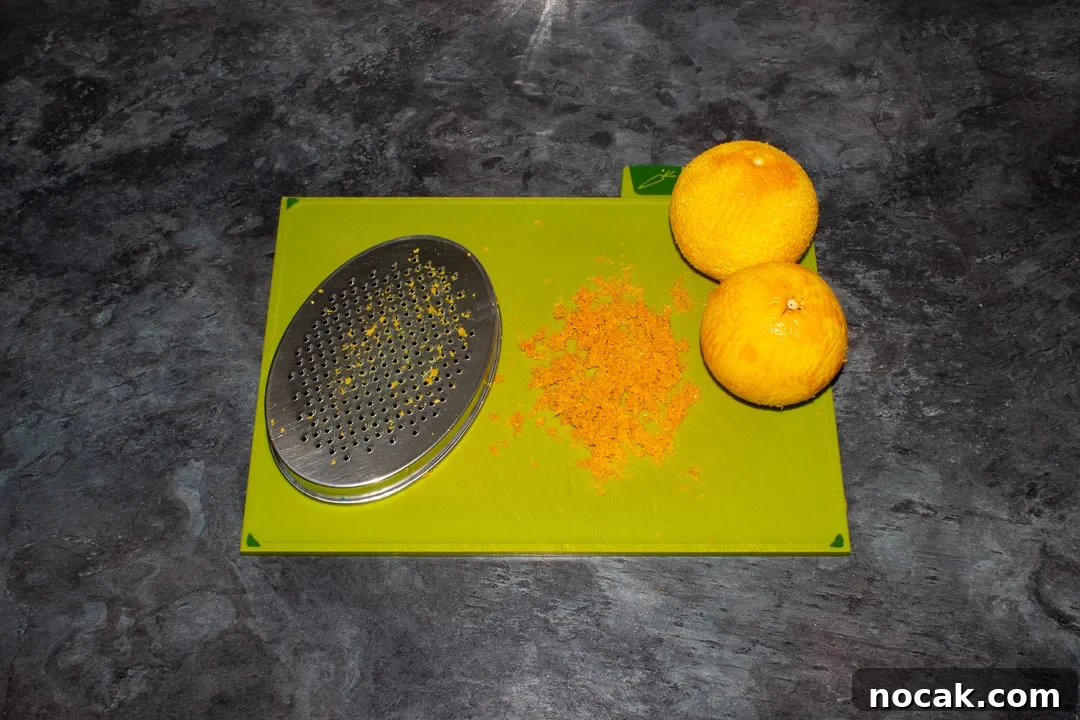
Grease the tin and line the base with baking paper. Preheat the oven to 180ºC / Fan 170ºC / 356ºF. Zest 1½ oranges and set the zest aside.
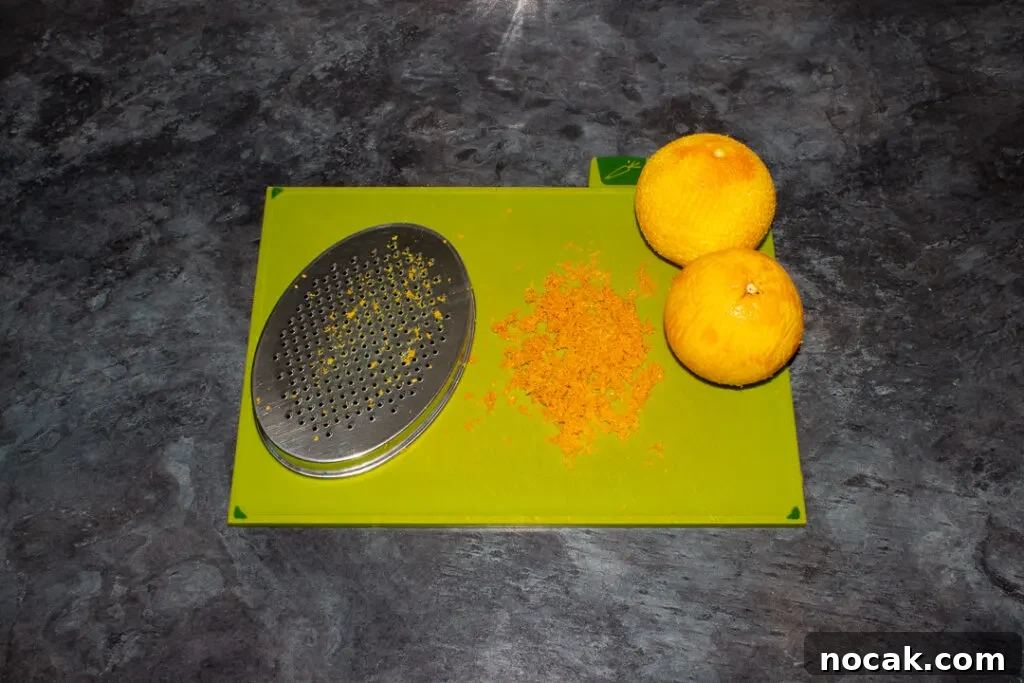
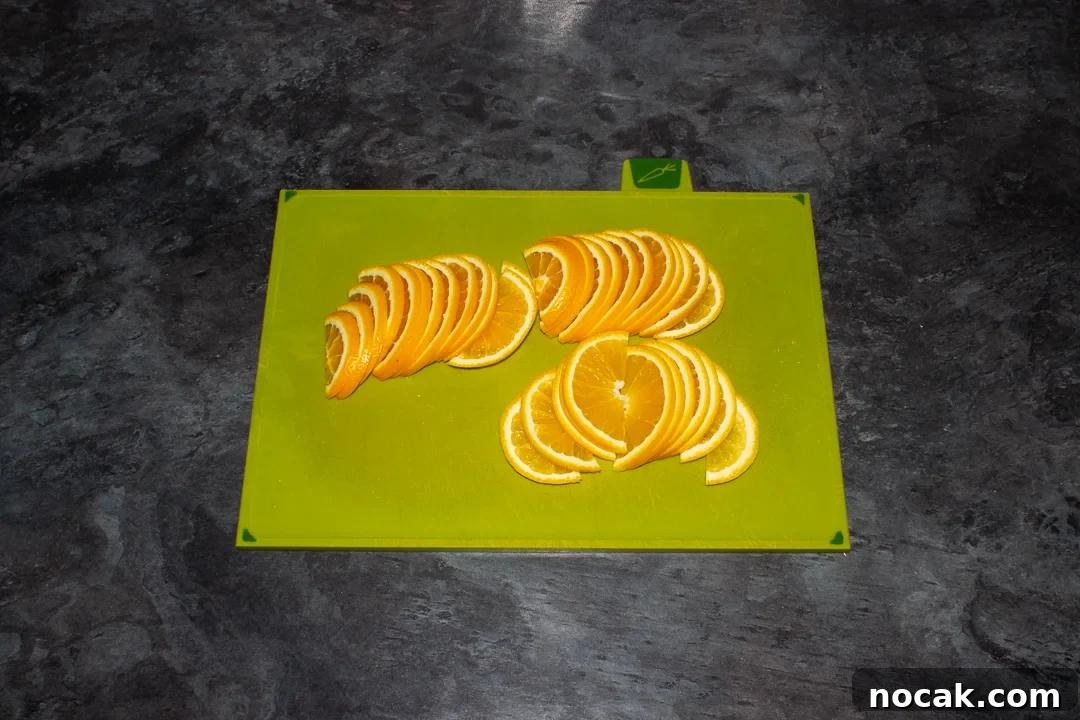
Slice the remaining 1½ oranges into semicircles about 4mm thick—do not use the zested oranges for these slices. Juice the zested oranges and combine the juice with the sugar, water and sliced oranges in a saucepan.
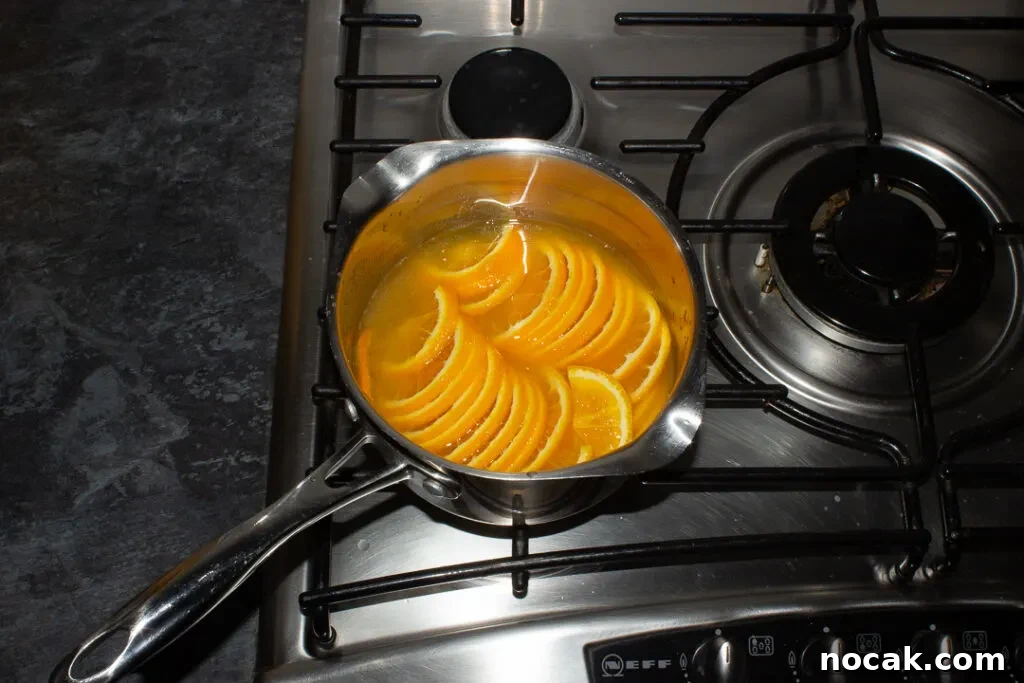
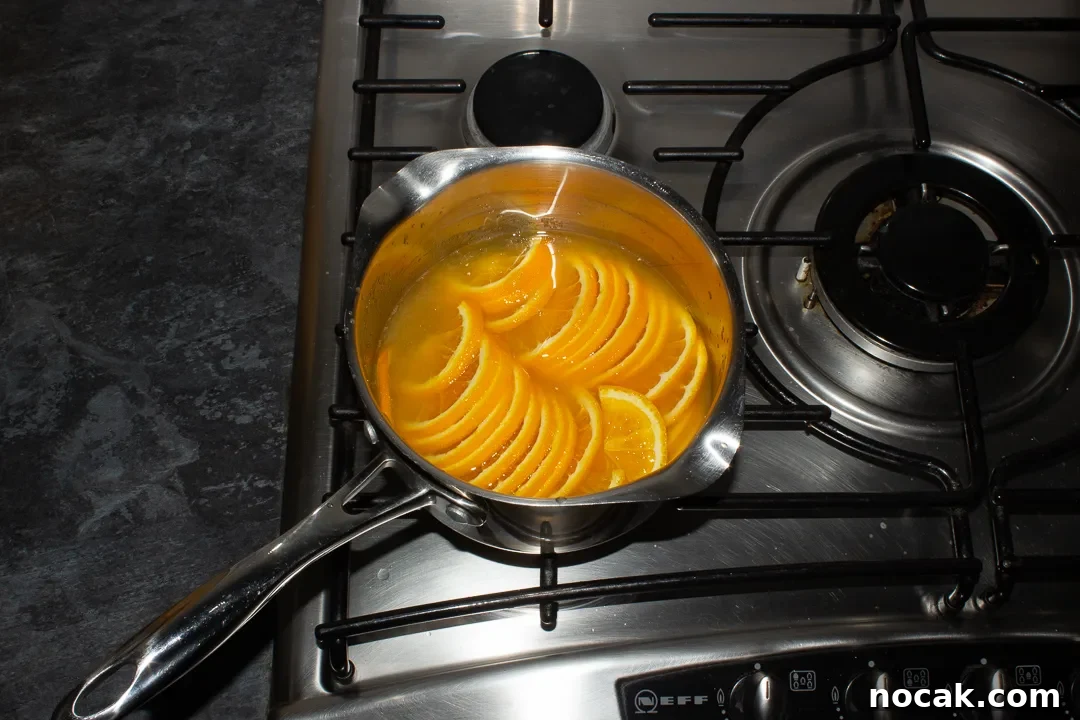
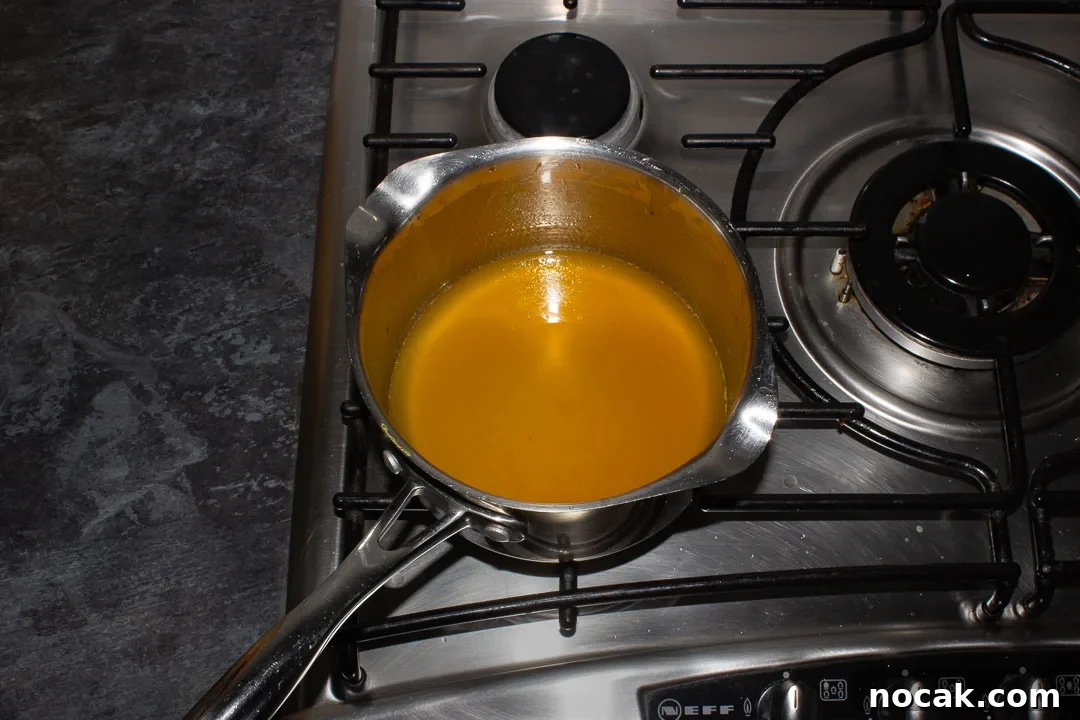
Bring to a gentle boil, then reduce to a simmer for about 5 minutes until the slices soften. Remove the slices with a slotted spoon and continue simmering the liquid until about 90ml of runny syrup remains. Set the syrup aside.
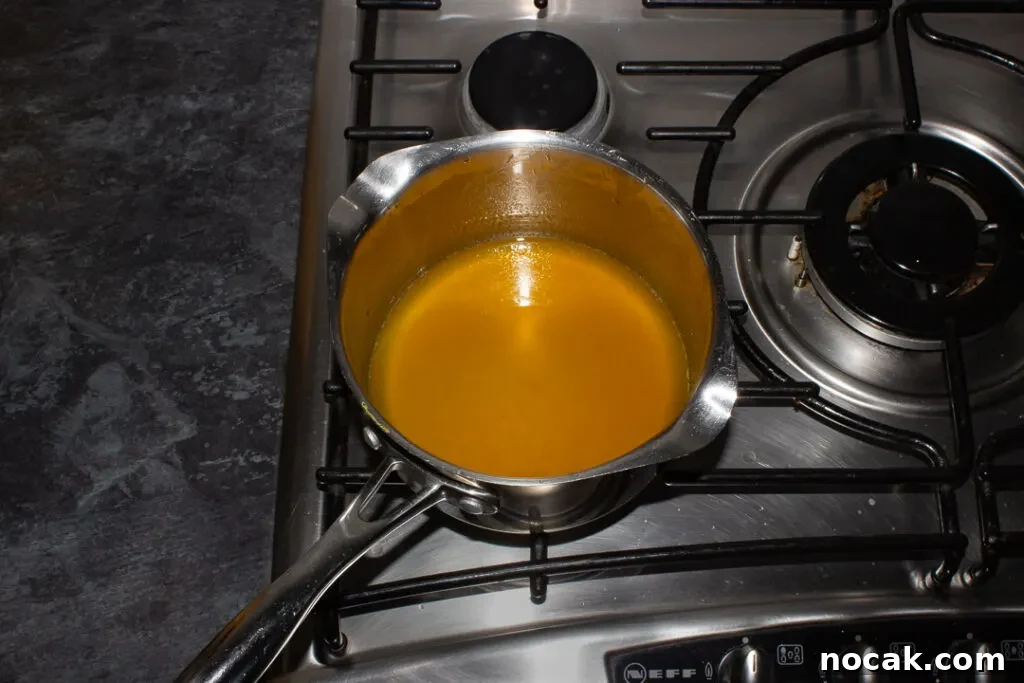
Cake instructions
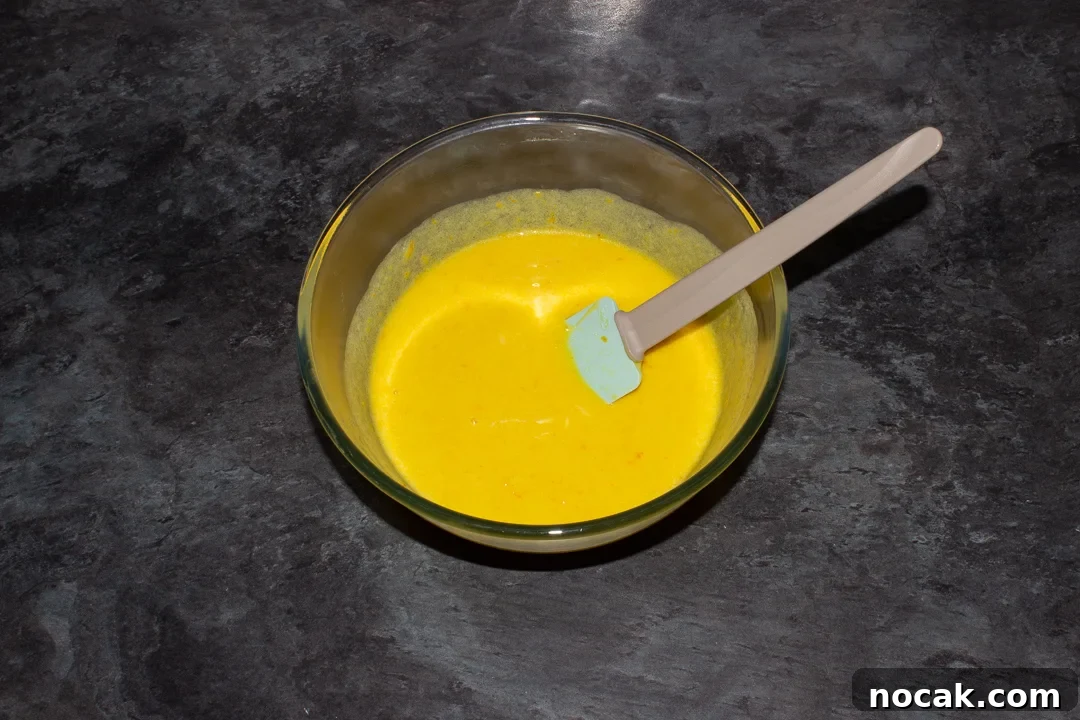
In a large bowl combine the sugar, oil, eggs, Greek yoghurt and reserved orange zest. Beat until smooth.
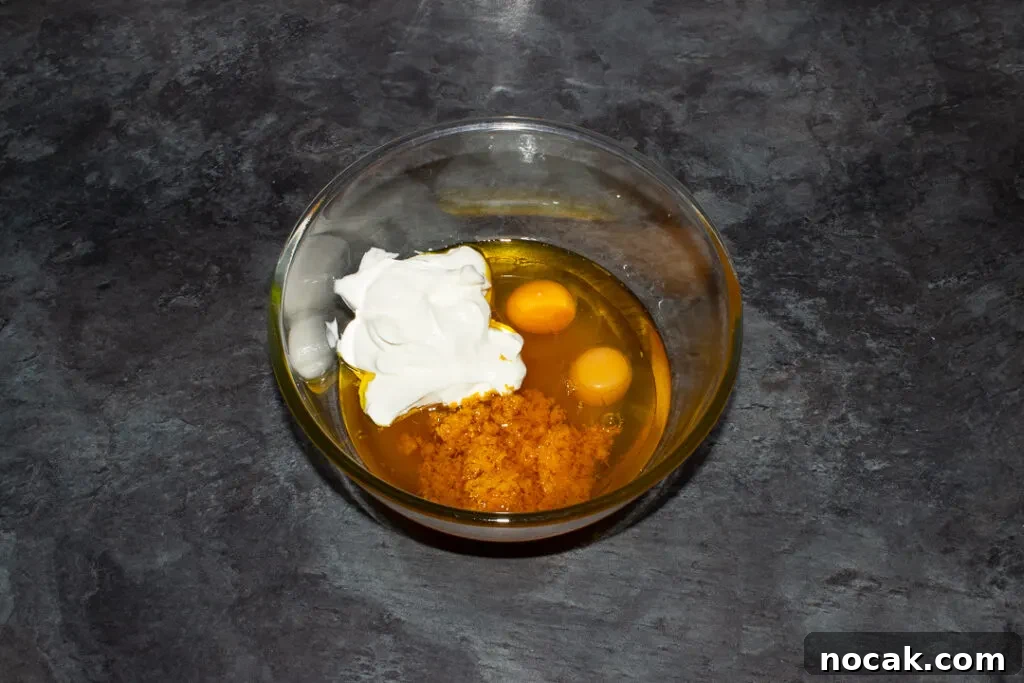
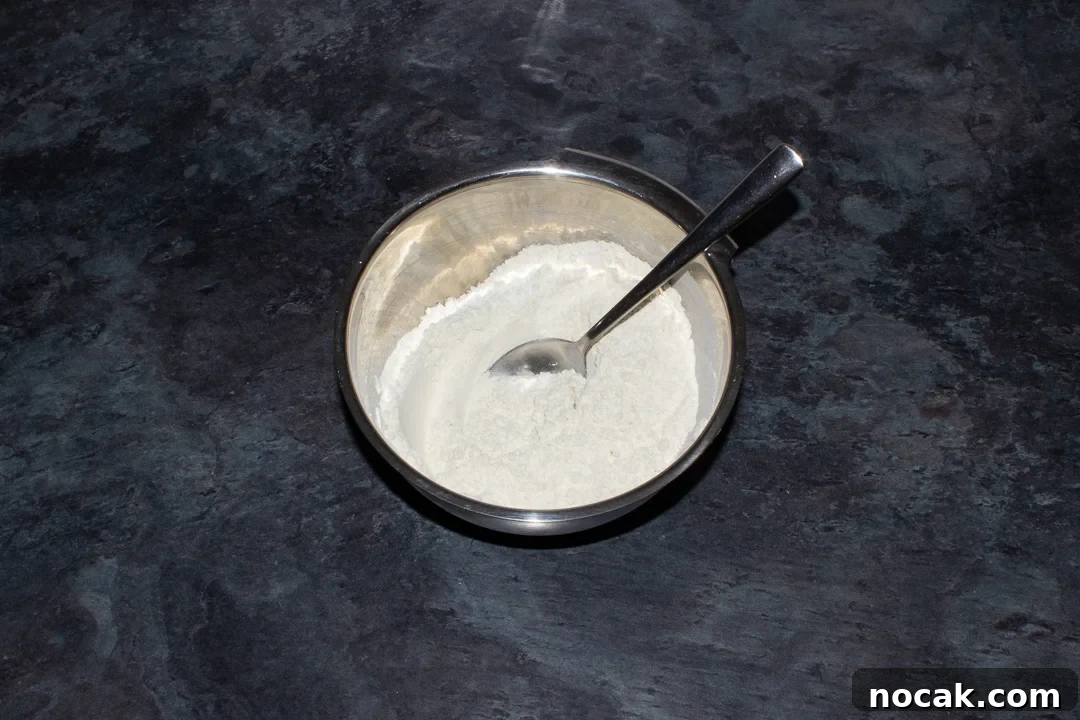
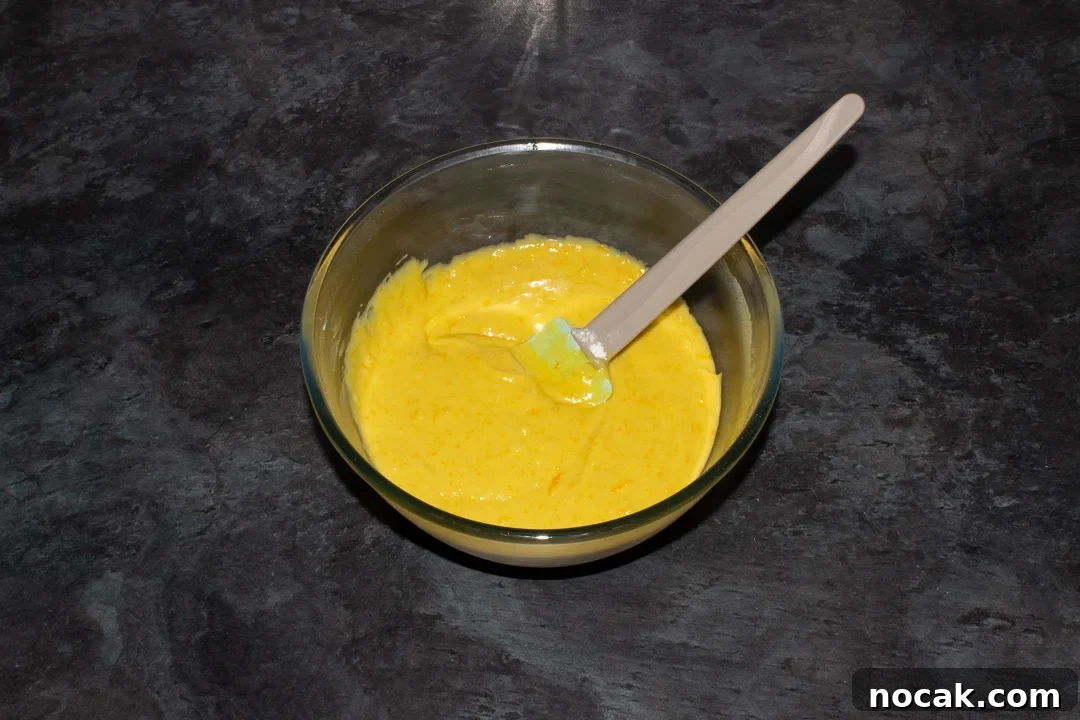
Whisk together the baking powder, flour and salt in a small bowl, then fold into the wet ingredients. Stir just until the batter is smooth and free of visible streaks—don’t overmix.

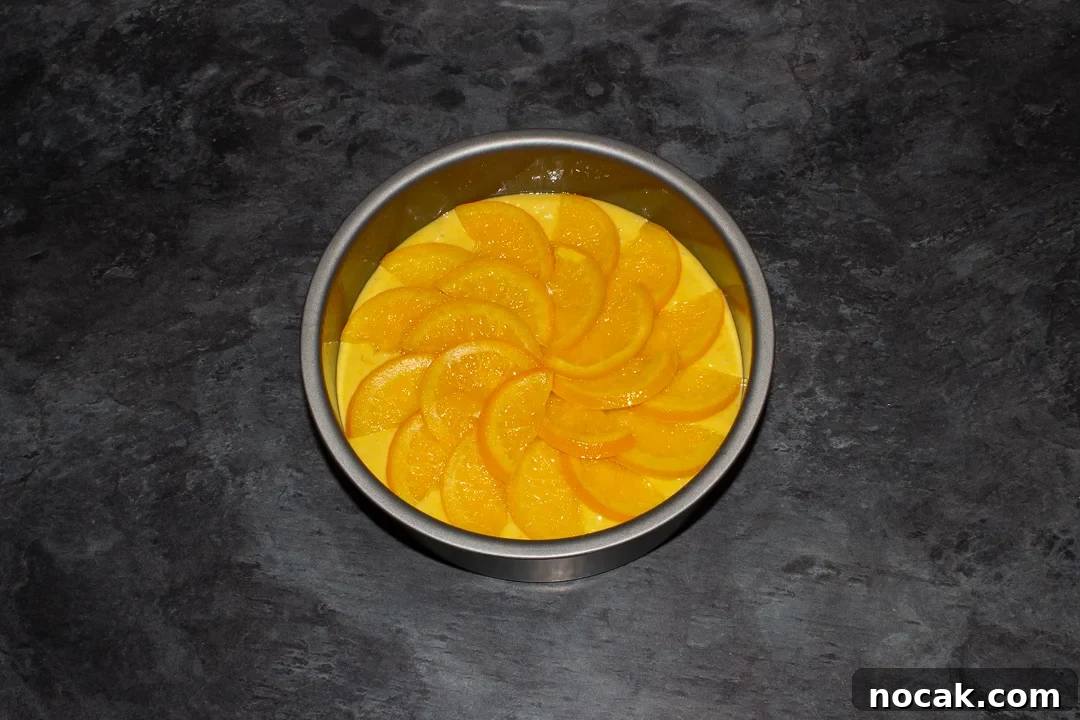
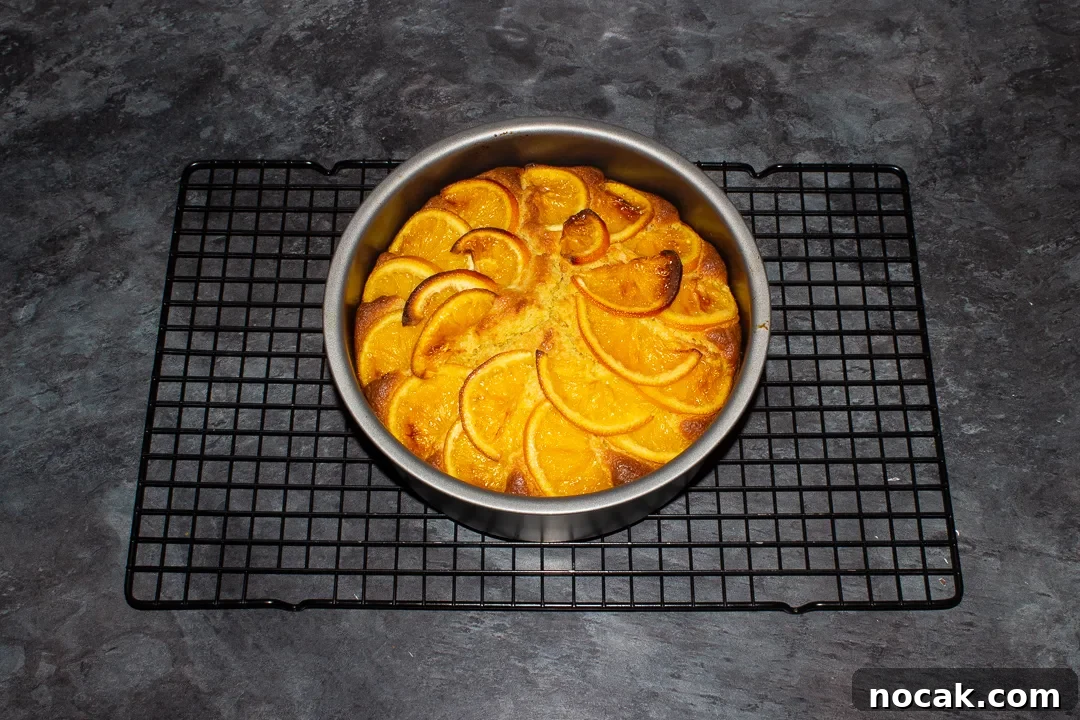
Pour the batter into the prepared tin and smooth the surface. Arrange the cooked orange slices on top in concentric circles.
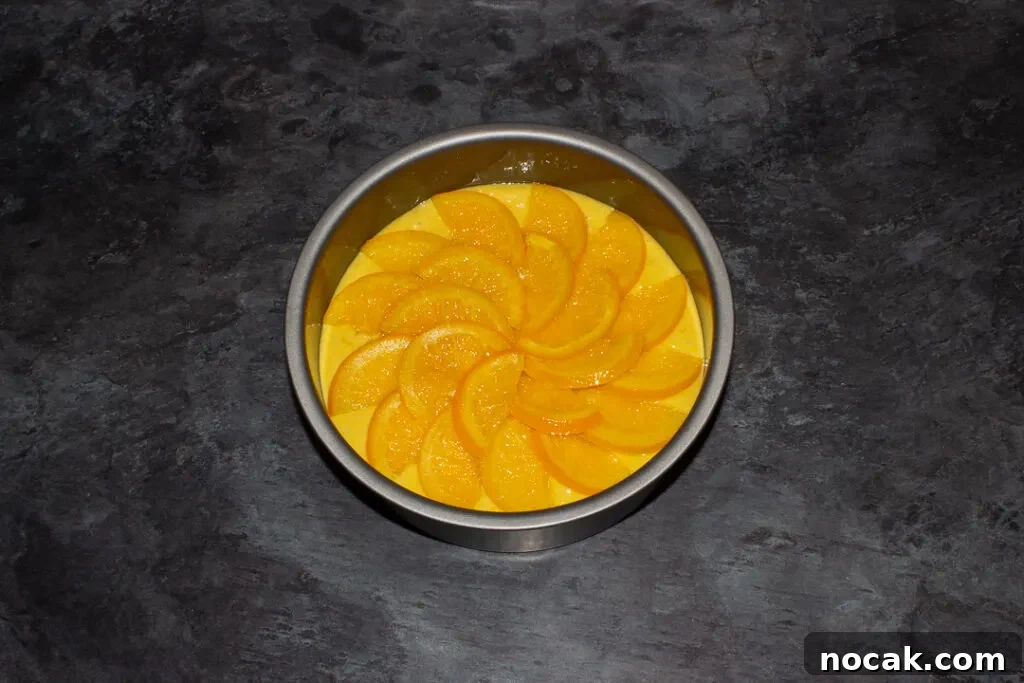
Bake on a lower shelf for 45–50 minutes until the cake is golden and a skewer comes out clean. Ovens vary—watch for burning and cover with foil if needed.
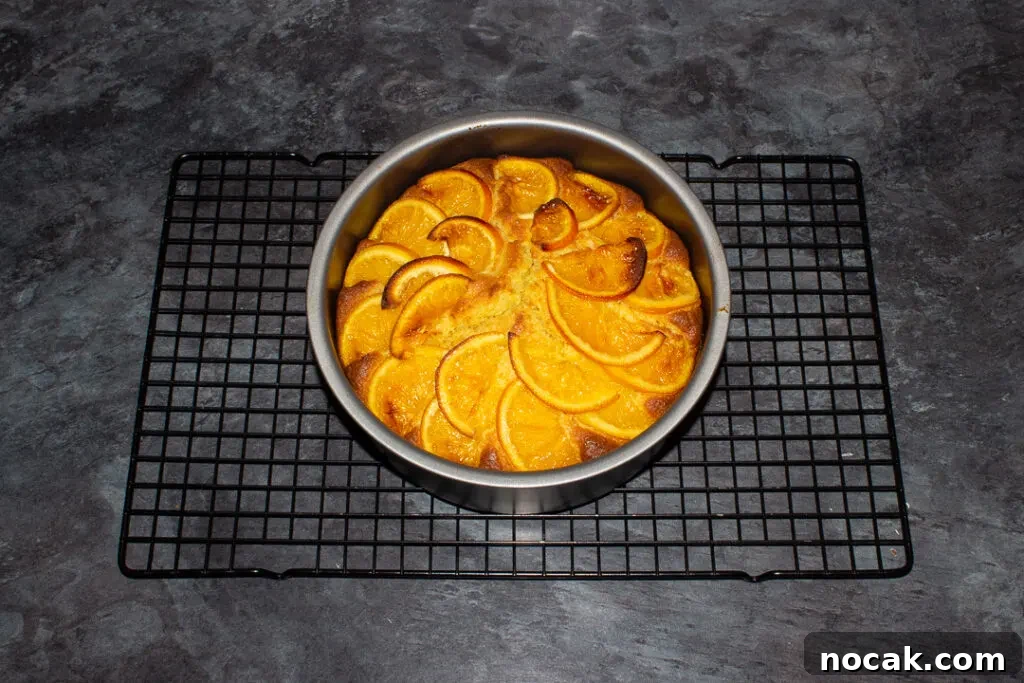
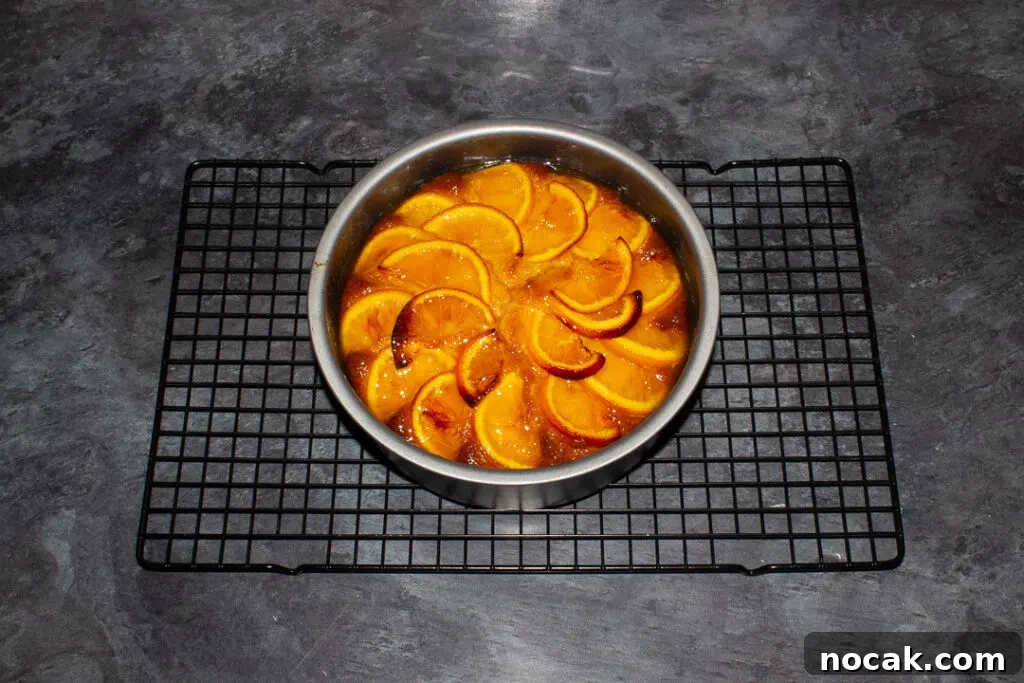
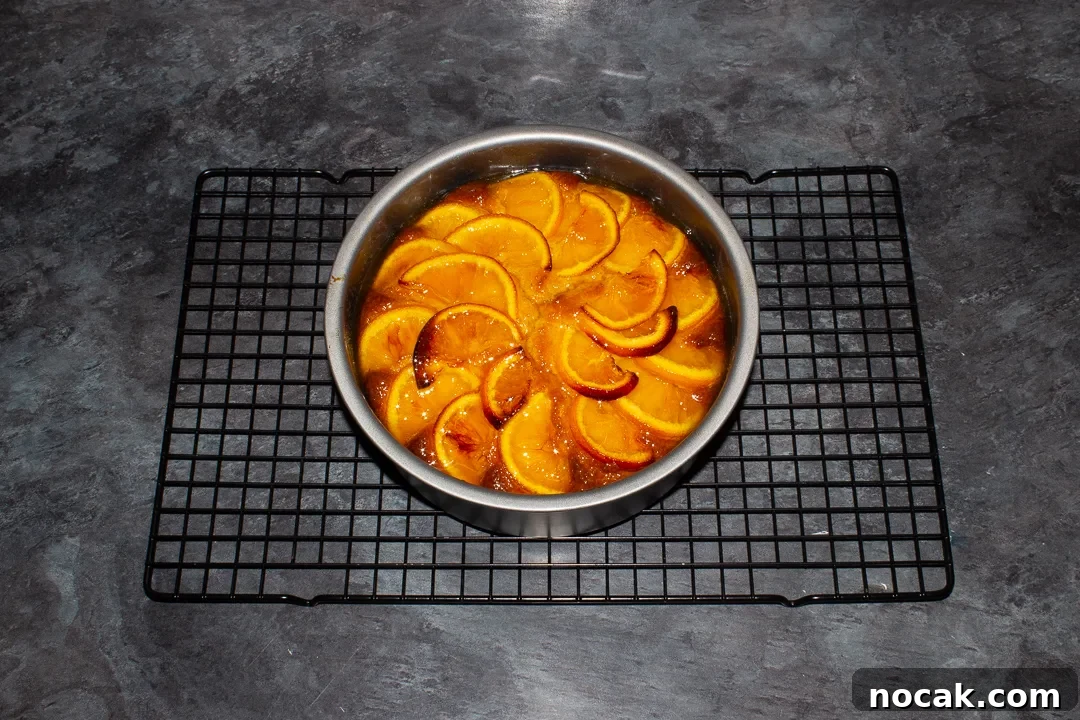
Immediately after removing from the oven, keep the cake in the tin and very slowly pour the warm orange syrup over the top. Let it sit for 10–15 minutes so the syrup soaks in, then remove from the tin and cool completely on a rack.
How to store sticky orange cake
Store the cooled cake in a metal tin lined with baking paper at room temperature to avoid sweating and preserve texture. Consume within five days for best freshness.
Troubleshooting: bitter orange flavour
If your cake tastes bitter, possible causes include:
- Grating into the pith when zesting—only grate the orange outer layer.
- Over-reducing or burning the syrup, which creates a bitter taste.
- Baking on a high shelf or using zested oranges for the decorative slices, which can burn and taste bitter.
Baking note: baking powder vs bicarbonate of soda
Do not substitute bicarbonate of soda for baking powder. Bicarbonate requires an acid to activate; baking powder contains its own acid and only needs liquid. Follow the recipe’s leavening instruction for reliable results.
Enjoyed this recipe?
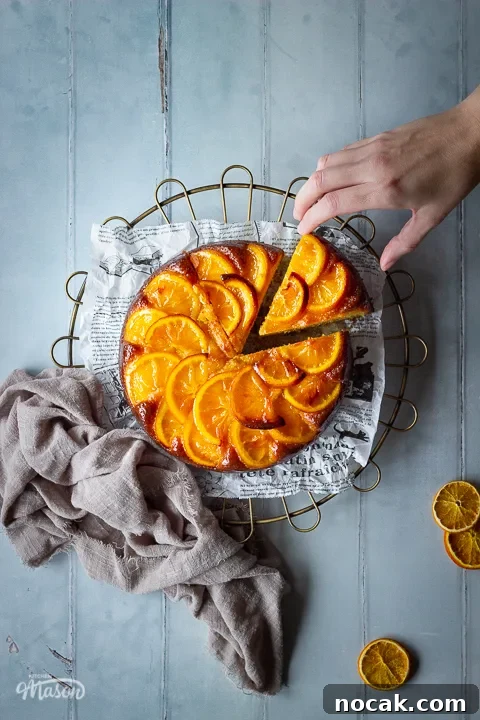
If you try this sticky orange cake, I’d love to hear how it turned out—share photos, comments or questions on social channels or by email.
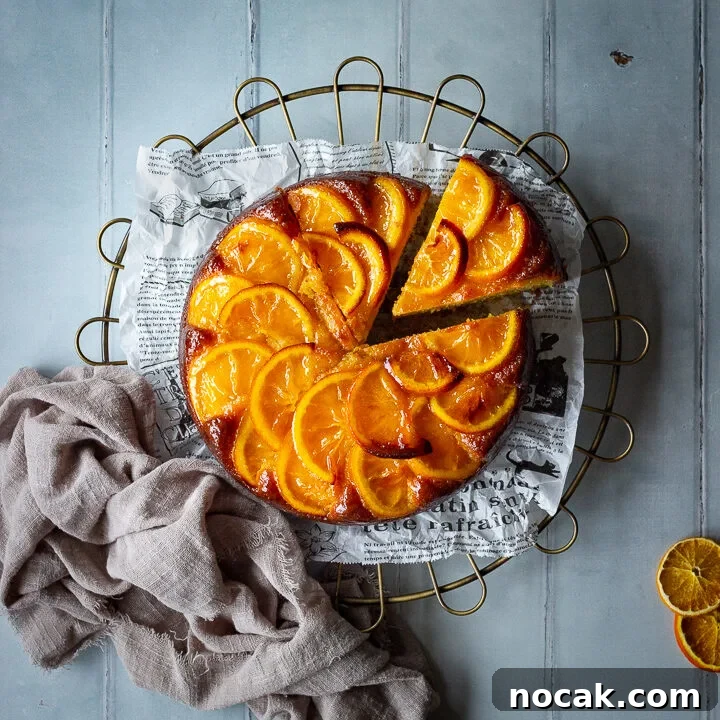
Beautiful Sticky Orange Cake Recipe
8
20 minutes
50 minutes
1 hour
This sticky orange cake combines fresh citrus flavour with an incredibly moist crumb—perfect for teatime or dessert.
Ingredients
For the Decoration
- 3 Oranges
- 100g (1/2 Cup) Golden Caster Sugar
- 100ml (1/3 Cup + 1 tbsp) Water
For the Cake
- 150g Golden Caster Sugar
- 175ml Rapeseed Oil
- 2 Eggs
- 175g Greek Yoghurt
- 2 tsp Baking Powder
- 175g Plain Flour
- 1/4 tsp Salt
Essential Equipment
- 20cm (8″) Round Loose Bottomed Baking Tin
- Chopping Board
- Fine Grater
- Sharp Knife
- Citrus Juicer
- Saucepan
- Wooden Spoon
- Slotted Spoon
- Large Mixing Bowl
- Spatula
- Small Bowl
Instructions
For the Decoration
- Lightly oil the tin, line the base with baking paper and preheat the oven to 180ºC / Fan 170ºC / 356ºF. Zest 1½ oranges and set aside.

- Slice the non-zested 1½ oranges into semicircles about 4mm thick.
- Juice the zested oranges and add the juice, sugar, water and orange slices to a saucepan. Bring to a boil, reduce to a simmer and cook for about 5 minutes until the slices soften. Remove the slices with a slotted spoon and set aside.
- Continue to simmer the remaining liquid until about 90ml of runny syrup remains. Remove from the heat and set aside.
For the Cake
- Place the sugar, oil, eggs, Greek yoghurt and reserved orange zest into a mixing bowl and beat until smooth.
- Mix together the baking powder, flour and salt in a small bowl.
- Fold the flour mixture into the wet ingredients until smooth and lump-free.
- Pour the batter into the prepared tin, smooth the top and arrange the orange slices in concentric circles.
- Bake on a lower shelf for 45–50 minutes until golden and a skewer comes out clean.
- While still in the tin, slowly pour the orange syrup over the cake and allow it to soak for 10 minutes. Remove from the tin and cool completely on a rack.
Notes
If you want more step-by-step photos, consult the full post content above for additional tips and FAQs.
Tips
- Only grate the colored zest—avoid the bitter white pith.
- Check for seeds when juicing.
- Use the recommended tin size to ensure correct baking time and even cooking.
- Bake on a lower shelf and cover with foil if the top starts to burn.
- Use un-zested oranges for the decorative slices to reduce the risk of burning.
- Pour the syrup slowly to ensure it soaks into the cake.
Nutrition Information:
Yield: 8
Serving Size: 1
Amount Per Serving:
Calories: 438Total Fat: 22gSaturated Fat: 2gTrans Fat: 0gUnsaturated Fat: 19gCholesterol: 48mgSodium: 229mgCarbohydrates: 56gFiber: 2gSugar: 37gProtein: 5g
Nutritional information is a guideline and not professional advice. Check labels for allergens where applicable.