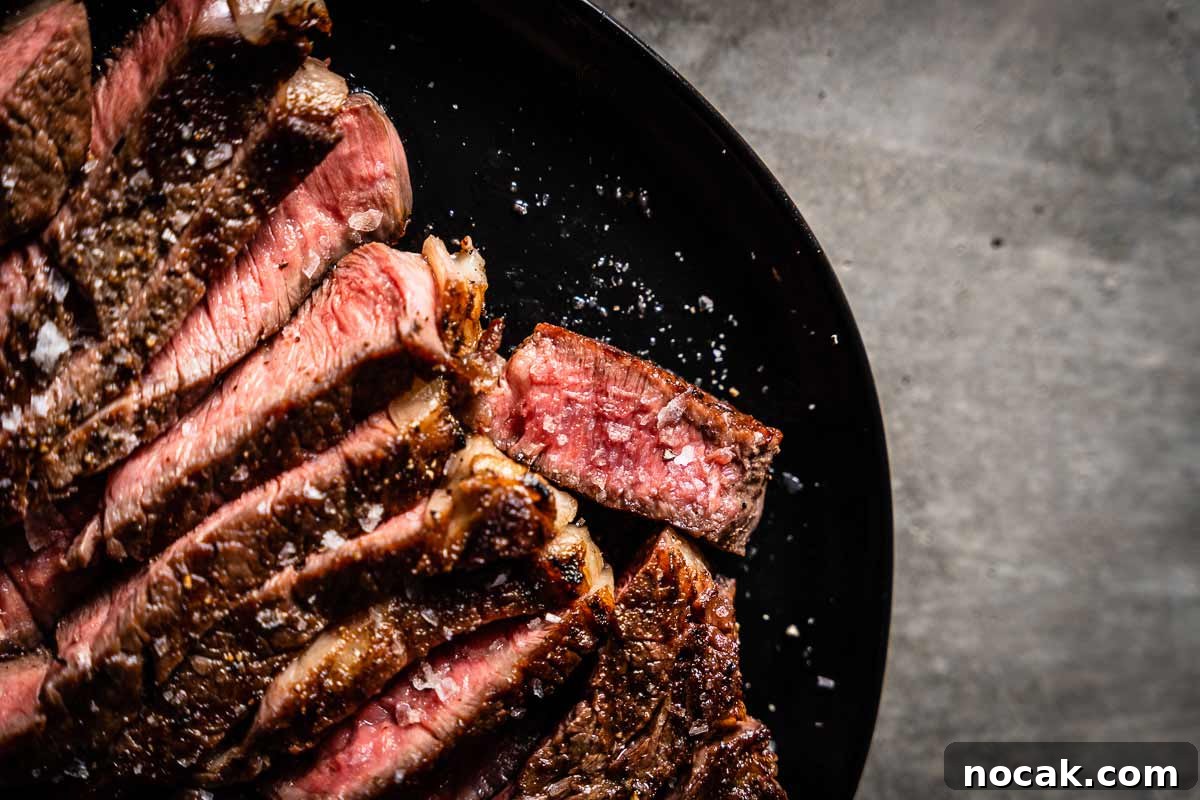
A perfectly cooked steak comes down to hitting the right internal temperature for your preferred doneness. Many chefs and home cooks prefer medium-rare for the best balance of flavor and tenderness, but tastes differ. This guide explains the main doneness levels—from rare to well-done—covers carryover cooking, shows the pull temperatures to remove steaks from heat, and shares practical tips for consistent results.
Steak Doneness Chart
| Steak Doneness | Temperature (after resting) |
|---|---|
| Rare | 120 to 130° F |
| Medium-Rare | 130 to 135° F |
| Medium | 135 to 145° F |
| Medium-Well | 145 to 155° F |
| Well-Done | 155° F + |
Click each doneness level to jump to a description and the pull temperatures.
Carryover Cooking and Steak
After you remove a steak from the heat, its internal temperature will continue to rise because of the residual heat. This is called carryover cooking. For most steaks, expect roughly a 5–7° F increase, depending on thickness and cooking method.
To hit your target finished temperature, remove the steak from the heat about 5 to 7° F below the desired final temp. Thicker cuts and higher cooking temperatures retain more heat and will experience greater carryover.
Steak Temperatures
Below are clear descriptions of each doneness level and recommended pull temperatures so the steak reaches the target finished temperature after resting.
Rare Steak Temp
Rare steaks are cool and bright red in the center with a very tender texture.
Stop Cooking at: 115 to 125° F
Finished Temperature: 120 to 130° F
Recommended Cut: Filet mignon or beef tenderloin—lean, tender cuts that are best enjoyed rare and can dry out if overcooked.
Medium Rare Steak Temp
Medium-rare has a warm, reddish-pink center and is widely regarded as a sweet spot for flavor and tenderness.
Stop Cooking at: 125 to 130° F
Finished Temperature: 130 to 135° F
Recommended Cut: Ribeye, strip steak, T-bone—cuts with good marbling that shine at medium-rare.
Medium Steak Temp
Medium steaks are warm throughout with a vibrant pink center and no red remaining.
Stop Cooking at: 130 to 140° F
Finished Temperature: 135 to 145° F
Recommended Cut: Flank, hanger, or flat iron—these slightly tougher cuts benefit from the extra cooking to become more tender.
Medium Well Steak Temp
Medium-well steaks show only a faint pink in the center and the texture begins to firm up.
Stop Cooking at: 140 to 150° F
Finished Temperature: 145 to 155° F
Recommended Cut: Ribeye or other well-marbled cuts that resist drying out when cooked closer to well-done.
Well Done Steak Temp
Well-done steaks are uniformly brown or grey-brown through and have no pink. They tend to be firmer and drier unless the cut is fatty or prepared with additional moisture.
Stop Cooking at: 155° F
Finished Temperature: 155° F +
Recommended Cut: For very well-done meat, consider braised cuts such as beef short ribs or low-and-slow cuts like brisket that are meant to be cooked thoroughly while staying tender.
Pro Tips and Things to Consider for Achieving the Perfect Steak Temp
- Cook to temperature, not time. Thickness, fat content and cut determine cook time more than weight. Marbled steaks (e.g., ribeye) are more forgiving than very lean cuts (e.g., filet).
- For rarer steaks, use hotter, faster cooking. High heat sears the outside quickly and preserves a rare center.
- For well-done steaks, cook lower and slower. Gentle, even cooking reduces the risk of drying out before the center reaches temperature.
- Salt early. Applying kosher salt up to 24 hours before cooking enhances flavor and improves tenderness and crust development.
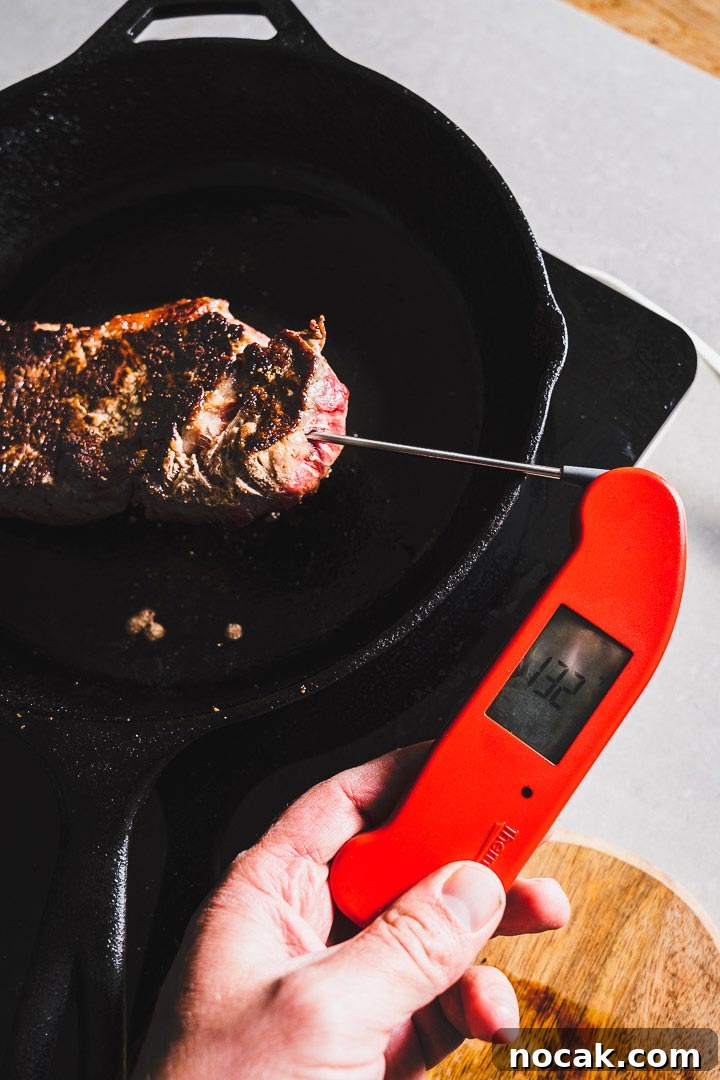
- Use an instant-read thermometer. A quality instant-read probe is the most reliable way to check doneness and avoid overcooking.
How to Take a Steak’s Temp
- Insert an instant-read probe into the thickest part of the steak and push past the center, avoiding bones and large pockets of fat.
- Slowly withdraw the probe until you see the lowest temperature reading—that indicates the true center temperature.
The Importance of Resting Steak
Resting is essential for juiciness. During cooking muscle fibers tighten and push out moisture; resting lets those fibers relax so juices redistribute rather than spill out when you slice. Rest steaks at least 5 minutes, and up to 10 minutes for thick cuts. Remember: the steak reaches its final temperature during the resting period.
The Best Ways to Cook a Steak
Several methods produce excellent results depending on the cut and your equipment. Pick the technique that suits the steak and desired doneness.
- Grill – Direct high heat creates a flavorful crust and adds smoky notes.
- Reverse Sear – Slow, low initial cooking for even doneness, finished by a hot sear for crust.
- Sous Vide – Precise water-bath temperature control yields edge-to-edge doneness before finishing with a sear.
- Smoking – Low-and-slow smoking adds deep flavor; finish with a hot sear for texture.
- Quick Flip Cold Pan – Start in a cold skillet and bring to high heat, flipping frequently for even browning and interior cook.
- Oven – Roasting is convenient; sear before or after for a crisp exterior.
- Cast Iron Skillet – Excellent heat retention for superior browning and crust formation.
- Butter Basting – Spoon herb- and garlic-infused butter over the steak while cooking to boost flavor.
- Braising – For tough, connective-tissue-rich cuts, braising in liquid breaks down collagen and yields tender meat.
Steak Recipes
Smoked Chuck Roast
What is Picanha?
Smoked Meatloaf
Tri-Tip Sandwich
Grilled Tri-Tip
Sous Vide Tri-Tip
More Informative Content
- Salt 101 Guide to the Essential Seasoning
- The Two Zone Grilling Setup
- Guide to the Best Woods for Smoking Meat
- The Types of Smokers and Which is Right For You — check out more Cooking Tips & Guides
- When to Salt Meat