Few things make a person more frustrated than an unpredictable number on the scale.

On the one hand, we understand it’s just one metric. The scale doesn’t define who we are. We know cultural pressures that expect women to be tiny are misguided. We want strength, confidence, and to feel comfortable in our own space. We’ve also seen transformation photos where the body composition changed dramatically but the scale barely moved.
And yet, when the number climbs, it’s normal for your chest to tighten and your mood to drop.
Some fluctuations are easy to explain — a weekend of less-than-ideal choices, a night of salt-heavy takeout, or a missed workout. In those cases the temporary rise on the scale makes sense.
But what about when you’ve been strict for days or weeks? You hit your macros, ate plenty of fiber, and crushed your workouts. Why would the scale still go up?
First: after consistently following the numbers your coach provided for a week or more, you did not suddenly gain fat. Repeat: one week (or a few) of staying within your macro targets will not cause notable fat gain.
Second: weight fluctuations are normal. Even when you do everything right, the scale will move up and down. That’s simply how weight behaves. Coaches focus on long-term trends, not day-to-day swings. The objective is a steady downward trend over time, not perfection every morning.
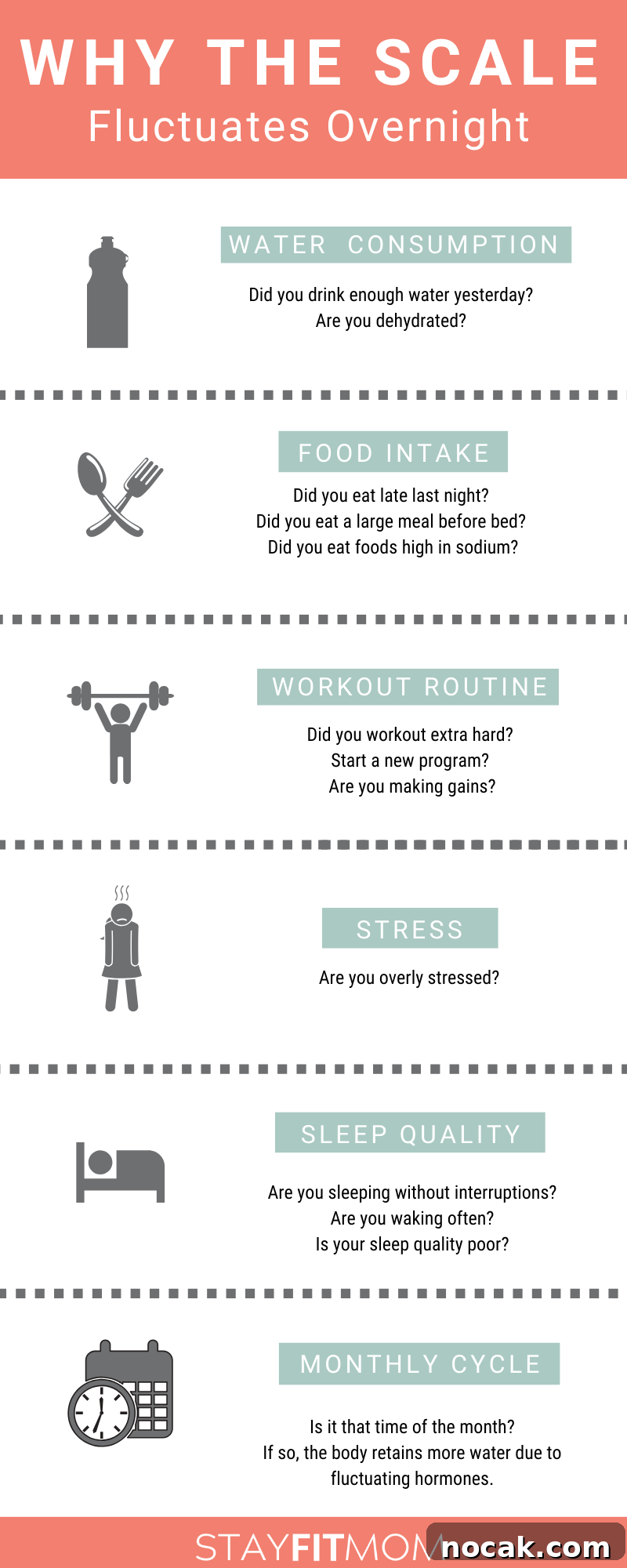
What causes these short-term fluctuations? Here are common reasons:
- Water intake and output — how much you drink and how much you sweat or urinate.
- Food intake and output — what and when you ate, and whether you’ve had a bowel movement.
- Sodium consumption — salty meals can cause water retention.
- Intense workouts — muscle microtears attract fluid as they heal, temporarily increasing weight.
- Menstrual cycle — hormonal shifts often cause water retention around your period.
- Stress — it affects hormones and fluid balance.
- Poor sleep — interrupted or low-quality sleep impacts hormones and weight regulation.
- Medications or hormonal treatments — these can change fluid balance or appetite.
- Muscle gain — if you’re building muscle while losing fat, the scale can hold steady or rise while your measurements shrink.
- Dietary adjustments — if you’re new to tracking macros, higher protein, carbs, or overall food volume can cause bloating or changes in bowel habits until your system adapts.
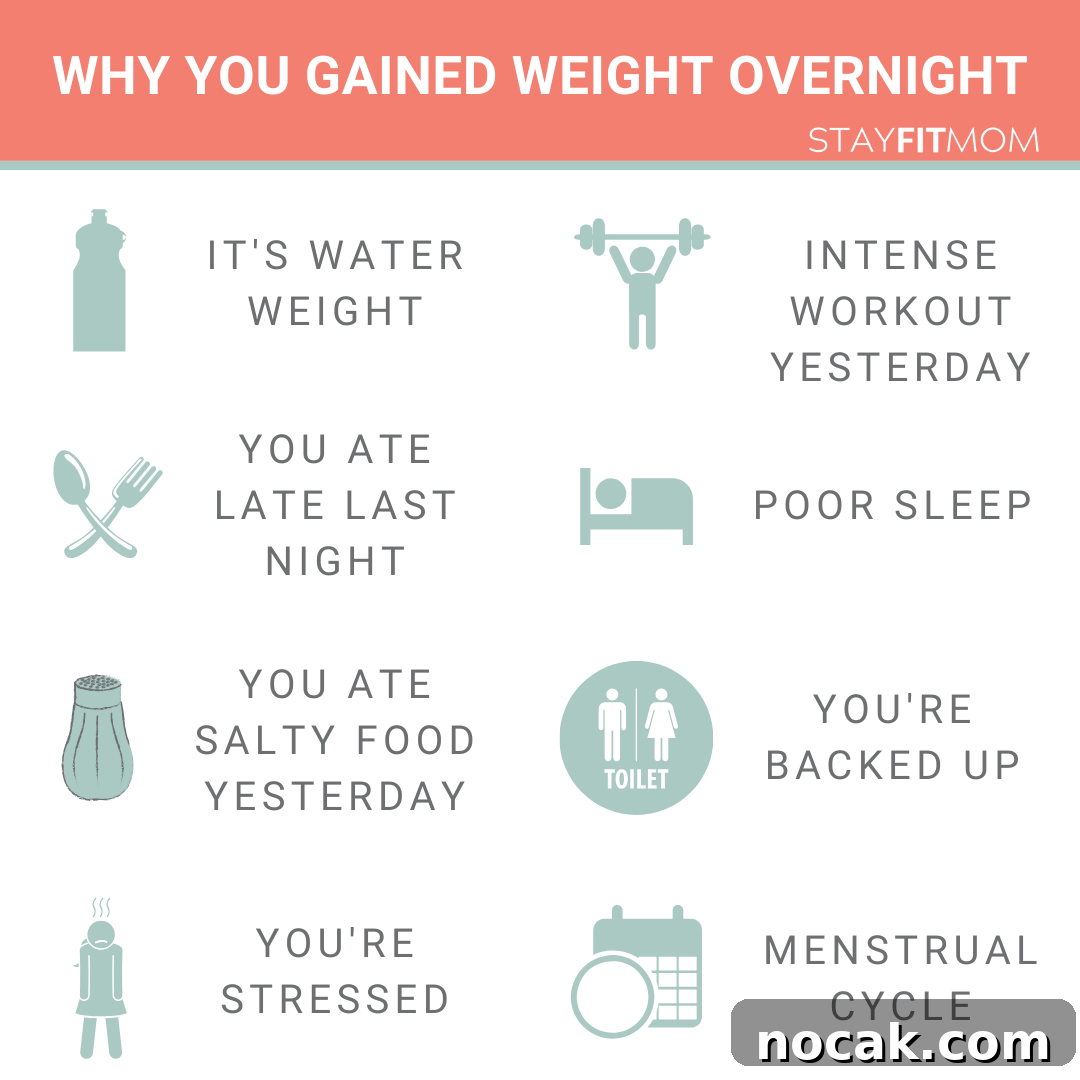
Your body isn’t a static object — it’s a living, fluid system. Day-to-day differences in food, water, fiber, and sodium intake, plus variations in activity and digestion, all change the number on the scale. That’s why the scale alone rarely tells the whole story.
Use multiple data points: progress photos, body measurements, how your clothes fit, energy levels, and strength in the gym give a fuller picture than a single morning weigh-in. Because you can’t control every daily fluctuation, set goals around behaviors you can control: plan meals, prep food, and consistently hit your macro targets.
A practical target is consistency — aim to meet your numbers most days (for example, 13 out of 14 days). Focus on consistency and habits; over time the scale will reflect those efforts.